When a Spring Breaks on a Cold Morning in Texas City
Why garage door springs in Texas City homes built 1965-2004 fail on the rare cold mornings, what to check yourself, and what actually drives the cost of a repair.
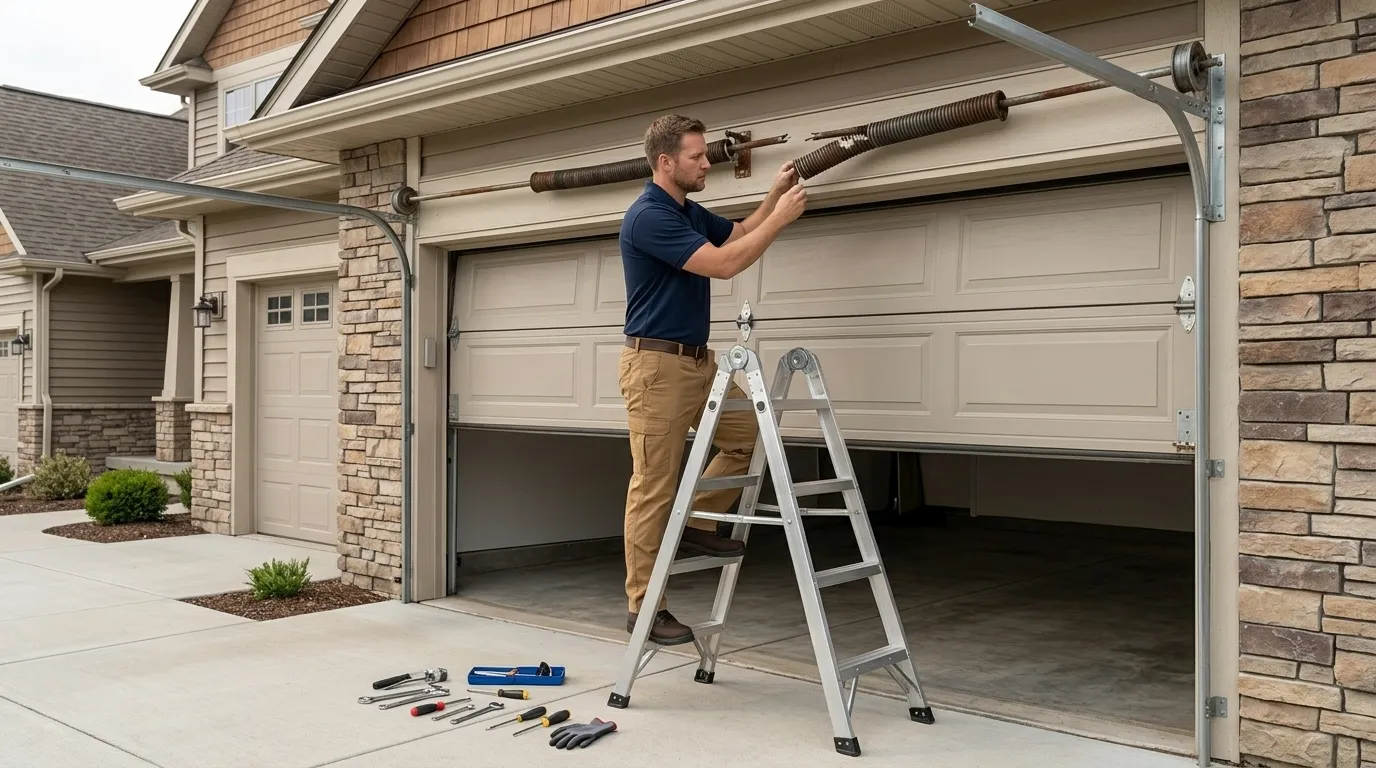
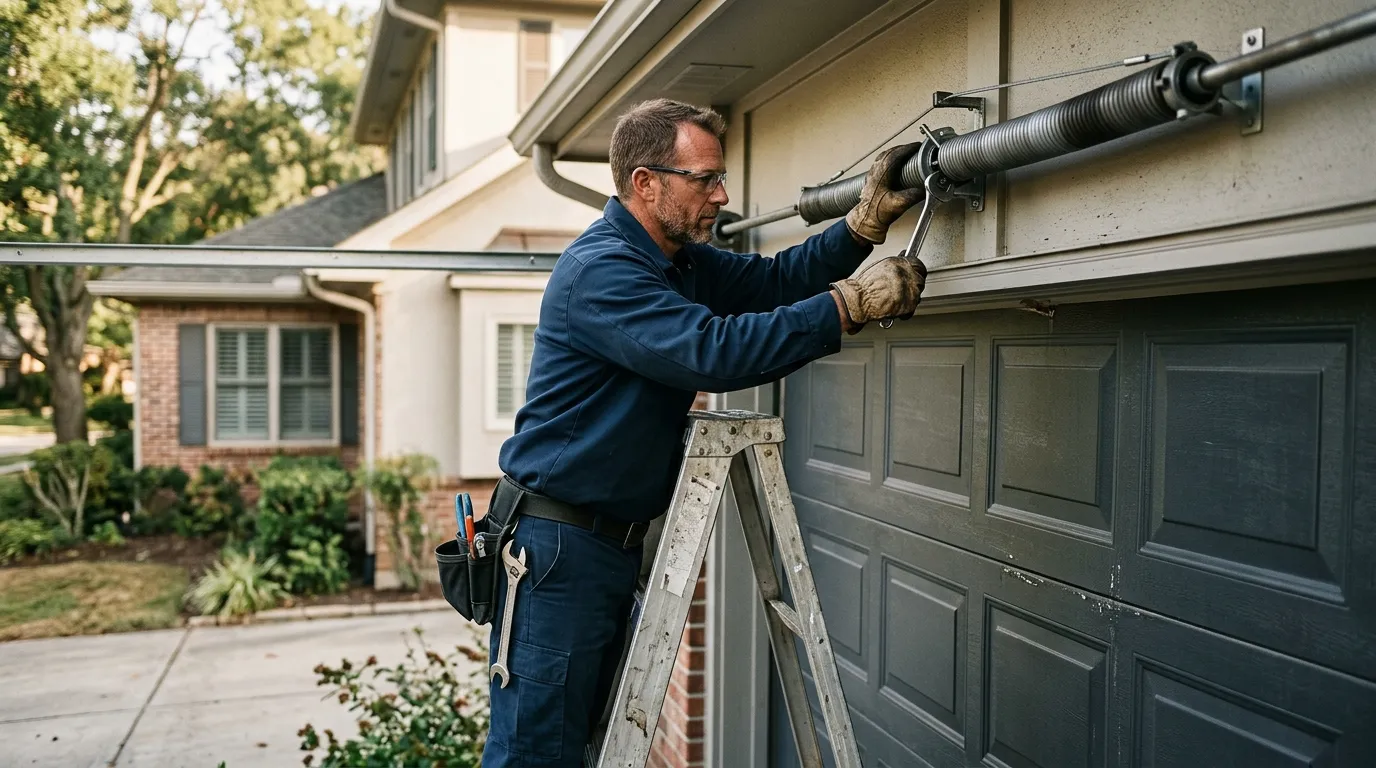
Before you call anyone, look at the spring itself. Most houses in this area went up between 1965 and 2004, with a lot of that stock dating to the 1980s and 90s, which means you're likely looking at a torsion spring mounted on a bar above the door rather than the older side-mounted extension type. If you see a gap in the coil - a clean break, not just rust - that spring is done and the door isn't safe to run, even by hand. Don't try to open it with the opener; if one spring on a two-spring setup has gone, the other is carrying double load and can fail while you're standing under it.
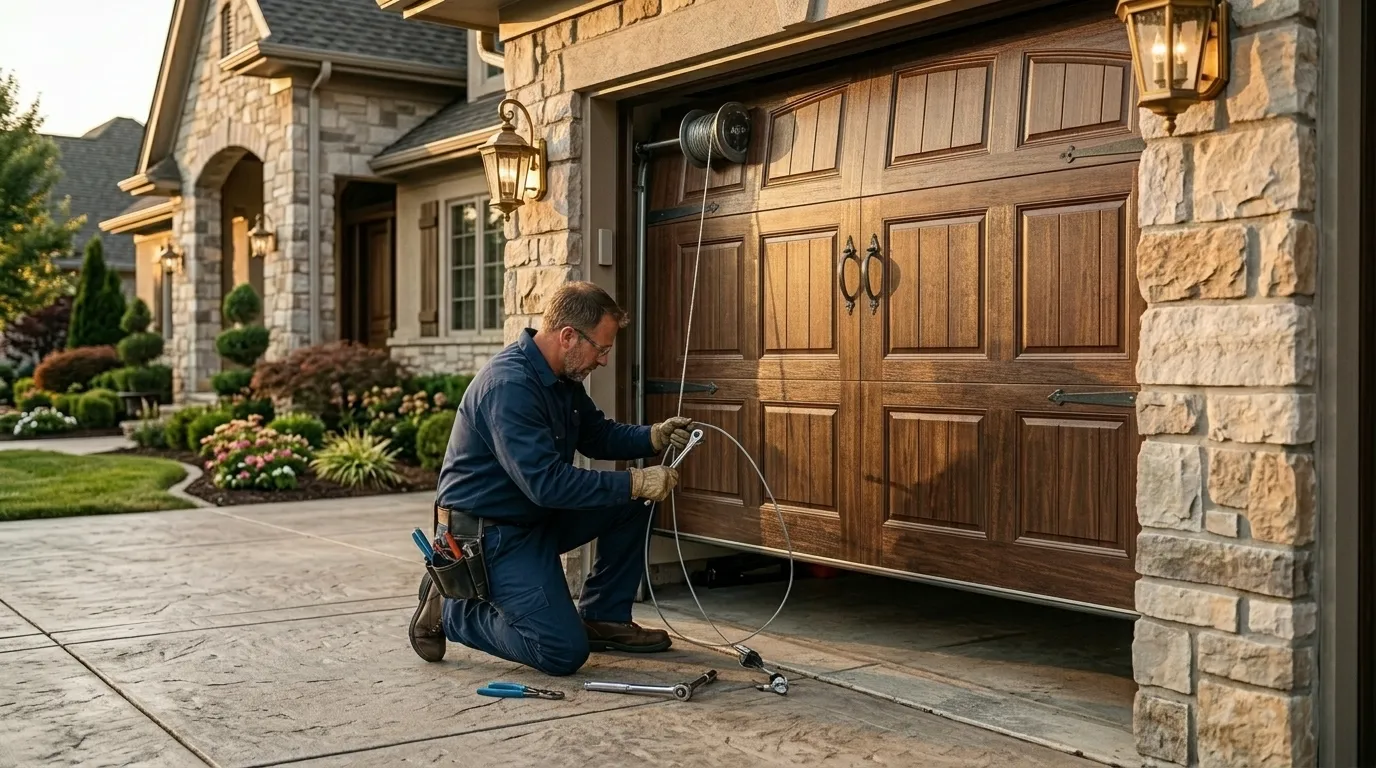
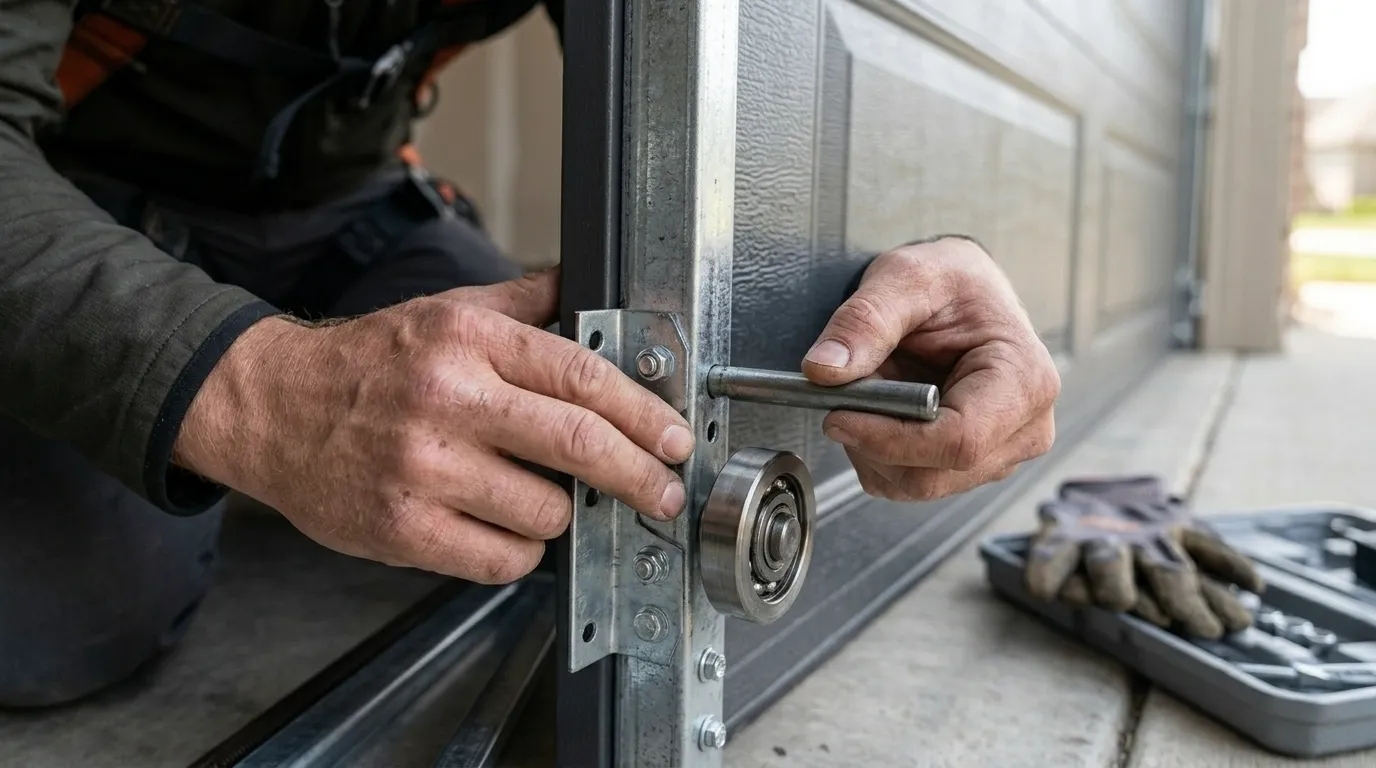
Check the cable on the broken side too. When a spring snaps, the sudden release sometimes kinks or frays the cable, and that's a separate repair. Look at the bottom brackets on each side of the door for anything bent or pulled loose - a spring failure sometimes yanks on the bracket hardware. If the door is a single piece from that same 1980s-90s era, take a photo of the spring's wire gauge and coil length before you call anyone; it saves a trip out just to identify the part.
What you shouldn't do is disconnect the opener and try to lift the door yourself to test it. A broken torsion spring means the door's full weight - often over a hundred pounds on a double door - has nothing holding it up but the cables and drum.
What the Weather Here Does to It
Texas City sits in a mild temperate band, so we don't get the deep freezes that snap springs by the dozen the way a northern winter does. But mild doesn't mean never. Steel contracts when the temperature drops, and on the handful of mornings a year when it dips into the 30s overnight, a spring that's already fatigued from twenty-plus years of daily cycling is the one that lets go. That's the pattern we see: it's rarely a brand-new spring failing in the cold, it's an original spring from a house built in the 1980s or 90s finally reaching the end of its coil life on the one cold morning that pushes it over.
Because the climate here doesn't put springs through the same stress a harsher winter would, a lot of homeowners assume garage door hardware just lasts. It does last longer than it would somewhere with hard freezes and thaws every week, but it's not indefinite. A spring rated for a certain number of cycles is going to reach that number eventually, cold morning or not - the cold just tends to be what finishes the job.
What You Pay
We don't publish a flat number here because spring jobs vary by door weight, spring size, and whether one or both springs need replacing - and on a house from the 1965-2004 era, we sometimes find the original hardware is a size that's no longer common, which changes the job. What we can tell you is that a single spring replacement on a standard door is a different job than replacing a matched pair on a heavier double door, and pricing should reflect that difference rather than a flat rate for both.
Given the median household income in this service area sits around $80,000, most of the calls we get are homeowners who want a straight answer on cost before we show up, not a surprise on the invoice. Ask for the number over the phone before the truck rolls, and if a shop won't give you one, that's worth noting.
The Problem
The honest issue with cold-weather spring failures in this area is that they're intermittent enough that nobody plans for them. A house built in the 1990s has had thirty-plus years of daily door cycles, and the spring doesn't send a warning - it just goes, usually on a morning when everyone's rushing to work. We don't stock every spring size that shows up in the 13 named areas we cover, since the housing stock spans four decades of hardware, so occasionally a specific torsion spring has to be ordered rather than pulled off the truck. That's the one limitation worth knowing up front: same-day service is normal, same-day for an unusual spring size sometimes isn't.
The other part of the problem is homeowners waiting on a spring that's clearly failing - grinding, uneven closing, a visible gap starting in the coil - because it still technically works. That's the spring most likely to go on the next cold morning, and it's cheaper and safer to replace it on your schedule than on its own.
How it works
From “it’s stuck” to “it’s fixed”
1
Tell us what’s wrong
Describe the symptom - won’t open, loud bang, opener runs but the door won’t move.
2
On-site diagnosis
A technician tests the door under power and by hand and finds what actually failed.
3
Clear, up-front plan
You get the fix that’s needed and what drives the cost - before any work starts.
4
Repaired & tested
The repair is done, the door is set true and tested, and the work area left clean.
Next step
Serving Texas City, TX - tell us what your door’s doing and we’ll take it from there.
Why did my spring break when it's not even that cold outside?
In a mild climate like this one, springs rarely fail from cold alone. What usually happens is a spring that's already near the end of its cycle life from years of daily use gets pushed over the edge by the added stress of steel contracting on a cooler morning. The cold is often the trigger, not the root cause.
Is it normal for houses in this area to still have original springs?
It's common. A lot of houses here were built between 1965 and 2004, and if nobody's had a reason to touch the garage door, the original torsion spring can still be in place decades later. That doesn't mean it's still good - most springs have a rated cycle life that a home this old has likely already used up.
Should I replace one spring or both?
If your door has two springs and one breaks, we generally recommend replacing both, since they're usually the same age and the second one is now carrying extra load. It's not required, but a mismatched pair tends to mean a second call sooner than you'd like.