Most Texas City houses date to 1965-2004. Here's what a grinding, popping, or slamming garage door means for hardware from that era, and when it's a real problem.
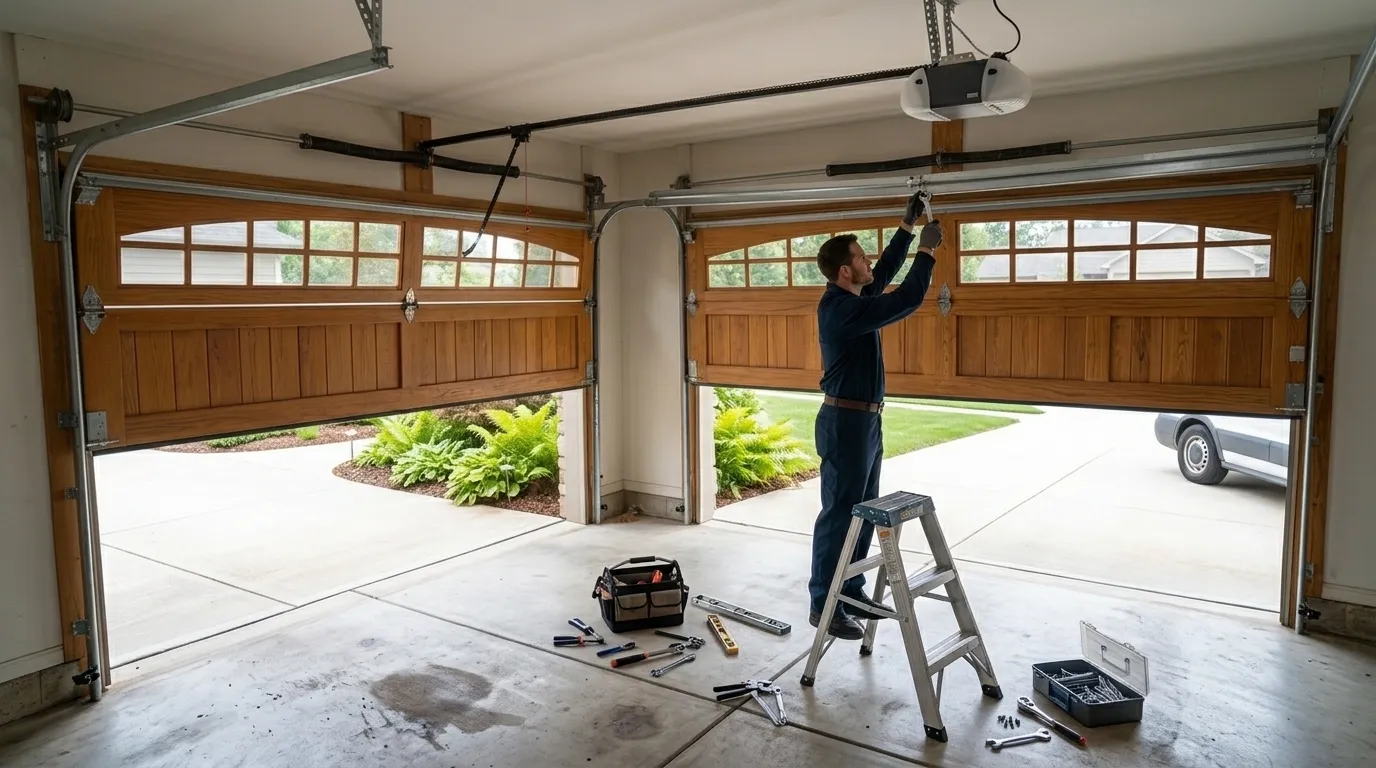
Before you call anyone, listen for a minute with the door open and closed a few times. Most of the houses we get called to went up somewhere between 1965 and 2004, with the bulk of that stock clustered in the 1980s and 90s across the thirteen neighborhoods we cover. That matters because a door from that window is almost always original torsion or extension spring hardware paired with a chain-drive opener, not the belt-drive setups going into new builds now.
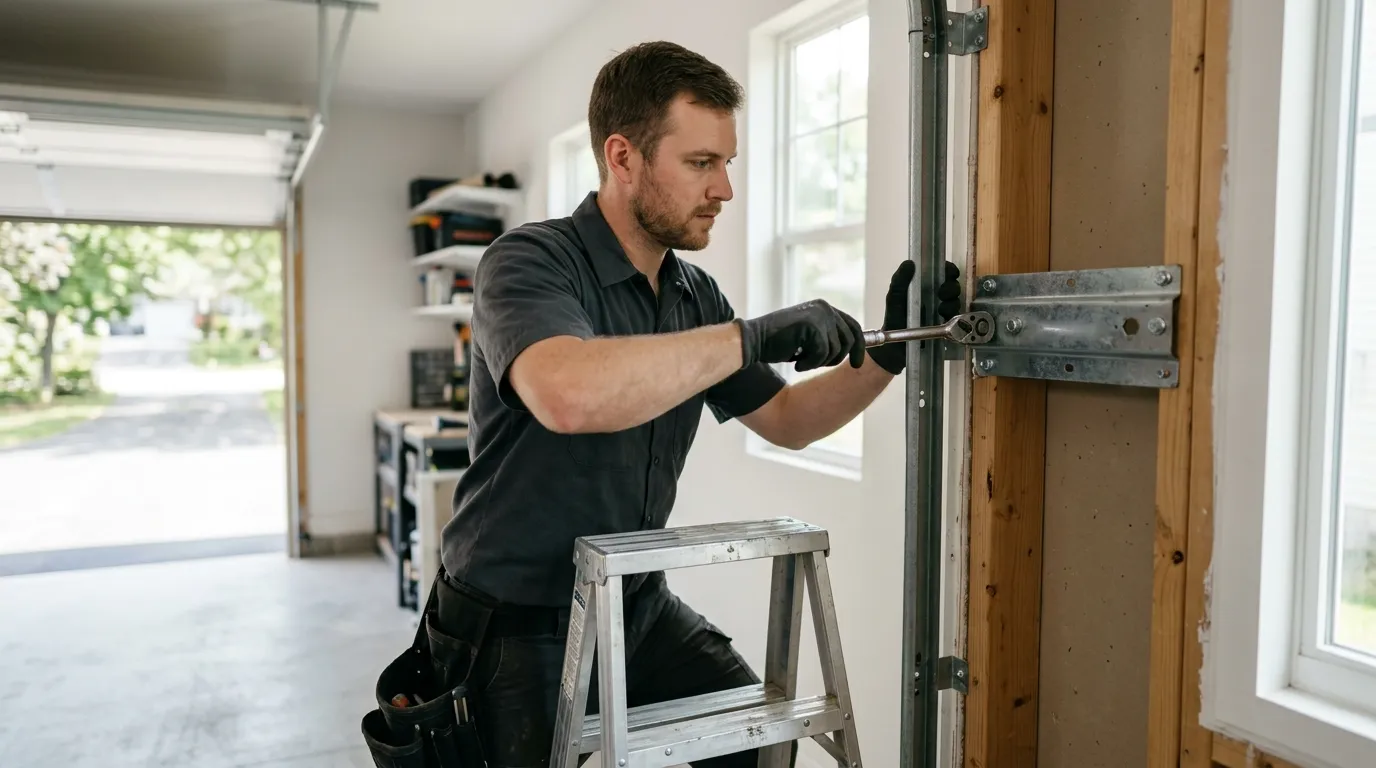
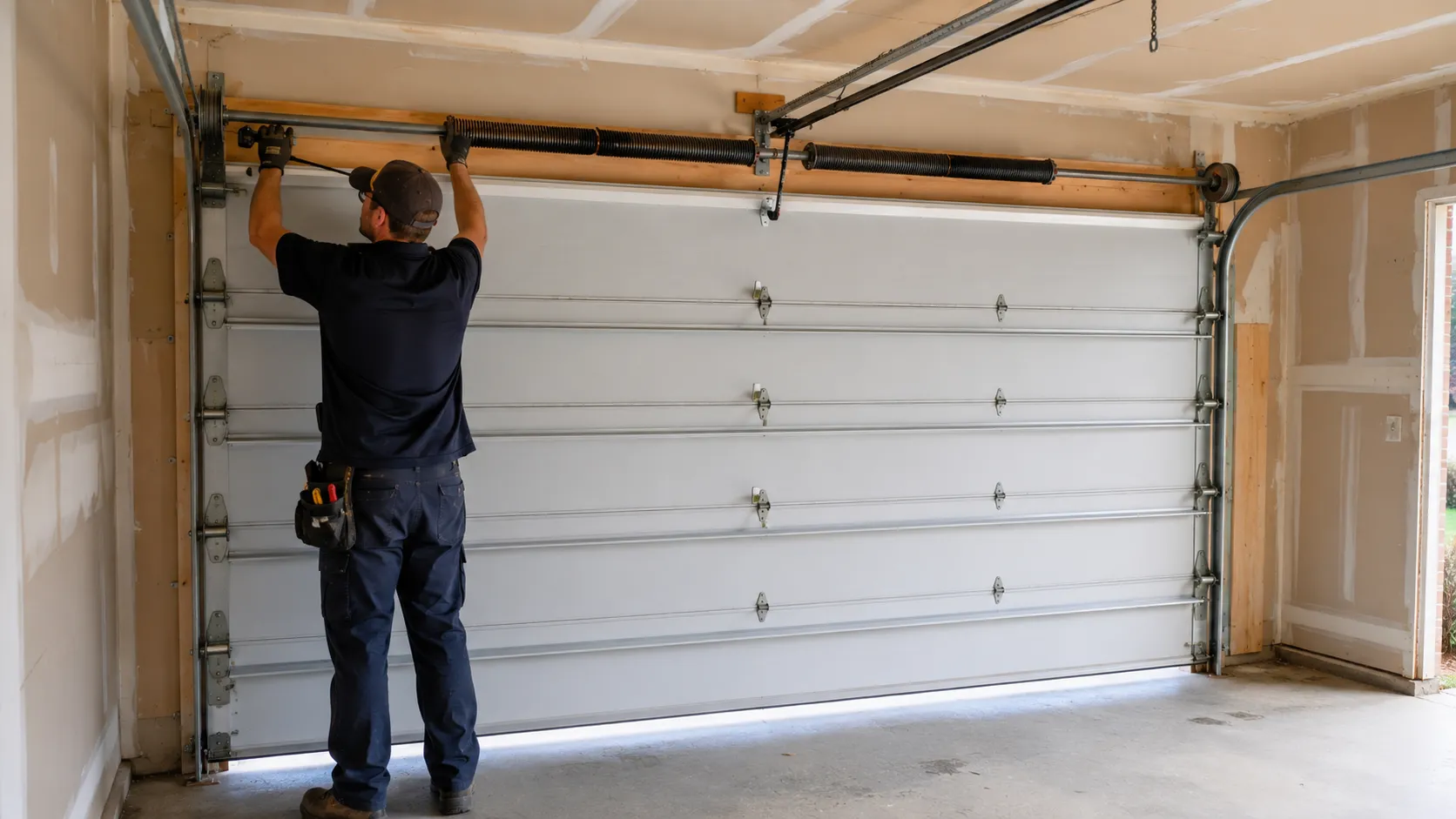
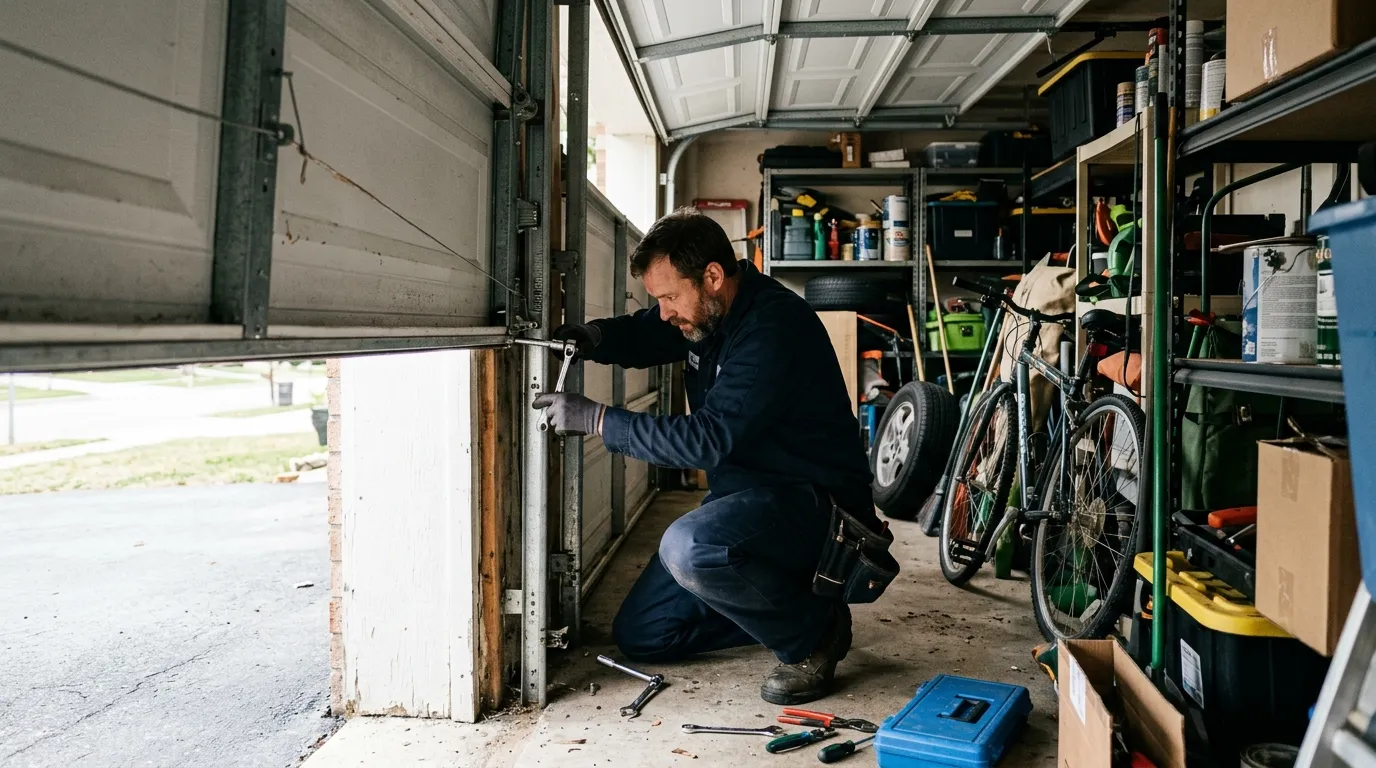
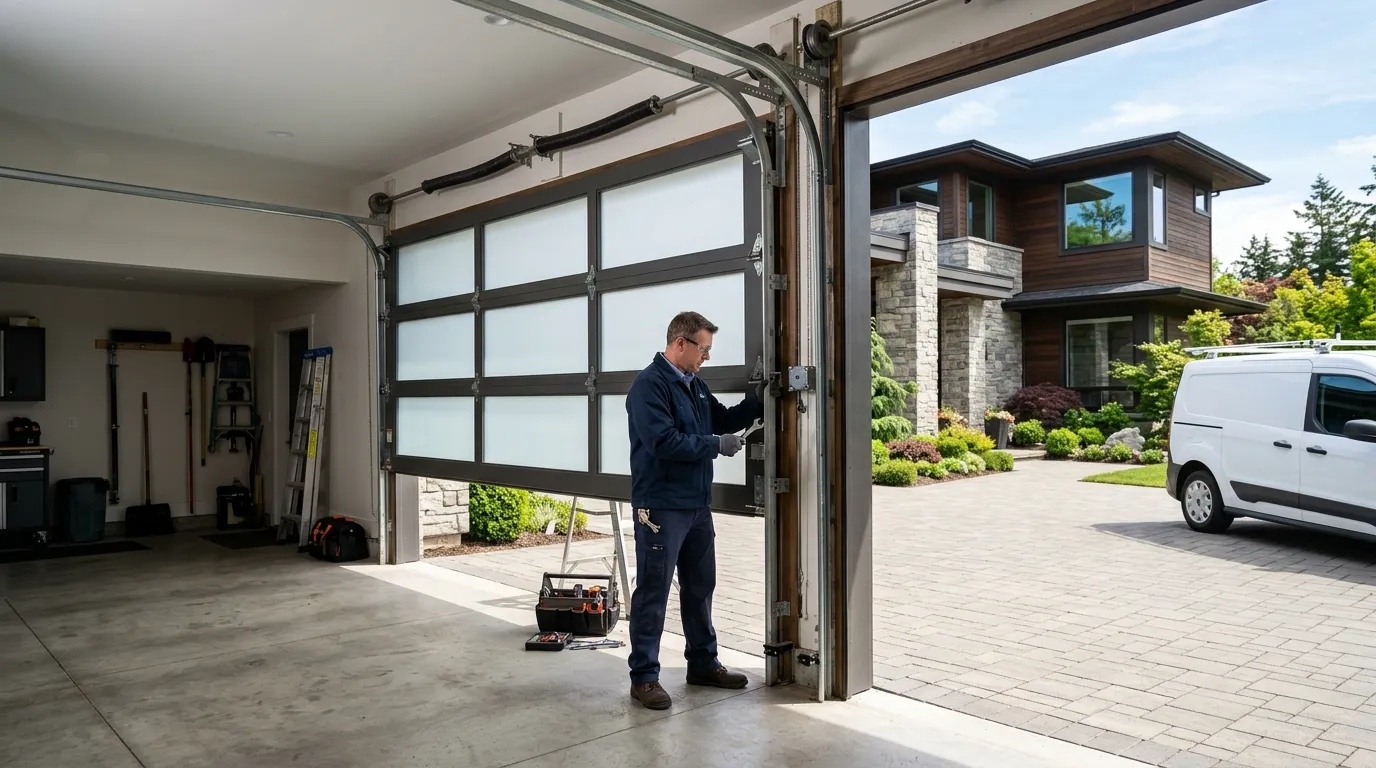
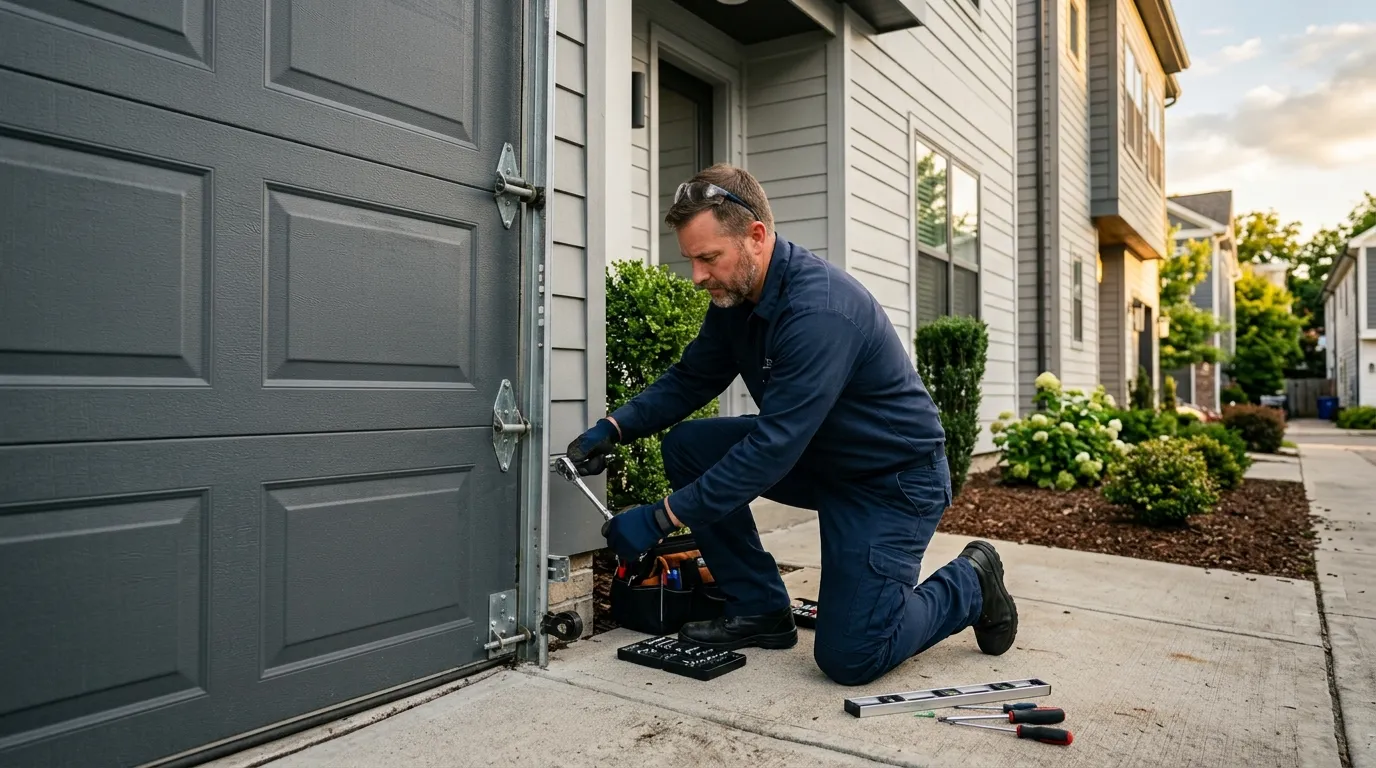
A sharp metallic pop, once, usually right after the door stops moving - that's a torsion spring losing tension, and it's not going to fix itself. A steady grinding the whole way up or down is almost always a roller, and on hardware this old the rollers are usually the original nylon ones, dry and cracked. A rattle that gets louder as the door climbs points to a bent track or loose hinge bolts, both common once a door's put in fifteen-plus years of daily cycles.
What you're checking for is whether the noise is new or has always been there. A door that's always creaked a little is different from one that started slamming or banging this month. New noise on old hardware is the one worth acting on.
What the Weather Here Does to It
Texas City sits in a mild temperate band, which sounds gentle until you account for how much the humidity here actually swings across a year. That kind of moisture cycling doesn't crack hardware outright, but it works steel springs and steel tracks in a way dry climates don't: rust starts fine and invisible on a spring's coil before it ever shows as flaking, and a spring rusting from the inside out breaks with less warning than one that's just old.
Wood jambs and door frames swell and shrink with that same humidity swing, which is why a door that closed square in January can bind or drag against the weatherstrip by August. If your door's started catching on one side only, that's usually the frame moving, not the door itself failing.
We don't have severe-weather event data for this area to point to - no named storm, no wind-load number I can hand you - so I'm not going to pretend the mild-climate label means nothing happens here. It means the wear is steady and unglamorous: corrosion and humidity cycling, not one bad night.
What You Pay
I don't have pricing to hand you here, and I'd rather say that than guess at a number that might be wrong the day you read it. What I can tell you is what drives the range on a given call.
Houses in this area built in that 1965-2004 window, and especially the 1980s-90s cluster that makes up most of the stock, tend to need one of a short list of things: a spring replacement, a roller set, an opener that's aged out, or track that's bent from age rather than damage. A spring job is a different repair than an opener swap, and a full opener swap is a different repair than replacing a door panel that's rusted through at the bottom. None of those cost the same, and I'm not going to flatten them into one number.
With a median household income of $80,037 across the service area, we see plenty of homeowners choose a full opener replacement over nursing a fifteen-year-old chain drive along - but just as many choose to repair. Neither is the wrong call. We tell you what we find on the door in front of us and let you decide from there.
The Problem
The reason noise matters more here than the sales pitch usually lets on: a door built between 1965 and 2004 is now old enough that its original hardware has outlived its expected working life, and a chain-drive opener from the 1980s or 90s is well past the point where parts for it are common stock. That combination - original springs, original rollers, an aging opener - is what's actually behind most of the grinding, popping, and slamming calls we get across the 26,165 owner-occupied houses in this area.
If you're out toward San Leon or Bacliff, five to eight miles from us, or up toward Hitchcock or Santa Fe, the door on a house from that same building wave is usually making the same worn-roller rattle, just at a different address. This isn't a one-house problem, it's an age-of-stock problem.
One honest limitation: if a door's springs, rollers, and opener are all original and all failing at once, replacement is usually the better call than three separate repairs spread over a year. We'll tell you that straight when we see it, even though a repair is the easier sale.
How it works
From “it’s stuck” to “it’s fixed”
1
Tell us what’s wrong
Describe the symptom - won’t open, loud bang, opener runs but the door won’t move.
2
On-site diagnosis
A technician tests the door under power and by hand and finds what actually failed.
3
Clear, up-front plan
You get the fix that’s needed and what drives the cost - before any work starts.
4
Repaired & tested
The repair is done, the door is set true and tested, and the work area left clean.
Next step
Serving Texas City, TX - tell us what your door’s doing and we’ll take it from there.
My garage door makes a loud bang once when it closes. Is that the spring?
Usually, yes. A single sharp pop right as the door finishes closing is the classic sign of a torsion spring losing tension or breaking. Given how much of the housing stock here dates to the 1980s and 90s, that's often the original spring finally giving out after decades of cycles. Don't run the door again until it's checked - a broken spring under load is a real hazard.
Why does my door grind the whole way up, not just at one spot?
Grinding across the full travel usually means the rollers, not the spring. Original nylon rollers from a door this age dry out and crack over time, and the humidity swings typical of our mild temperate climate speed that along. It's a cheaper fix than a spring, but left alone it wears the track edges too.
Is it worth fixing an opener from the 90s, or should I just replace it?
Depends what's failing. If it's the logic board or the motor, parts for an opener that old are hard to source and a swap usually makes more sense. If it's just a sensor or the remote, that's a simple fix. We look at the actual opener before recommending either way.