What an Older Door in Texas City Is Actually Dealing With
Most Texas City houses went up between 1965 and 2004. Here's what that building era and the mild Gulf climate mean for your garage door, panels, and opener.
Most of the housing stock in this service area went up between 1965 and 2004, with a median build year around 1990, and that matters more than people think when you're looking at your own door. A door installed on a house from that window is old enough that its panels were built to a much lower insulation standard than what's sold today, and old enough that the hardware has had three decades to loosen, rust a little at the fasteners, or just wear down.
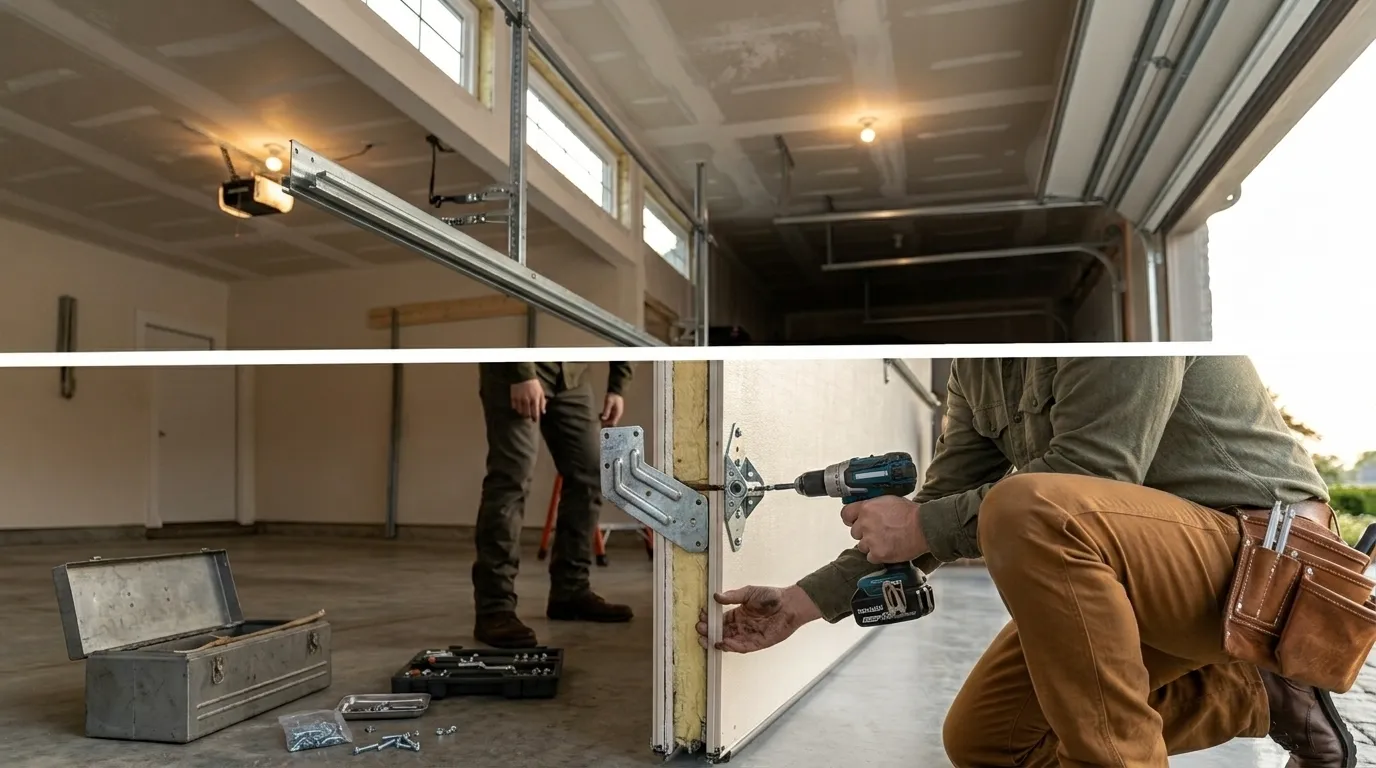
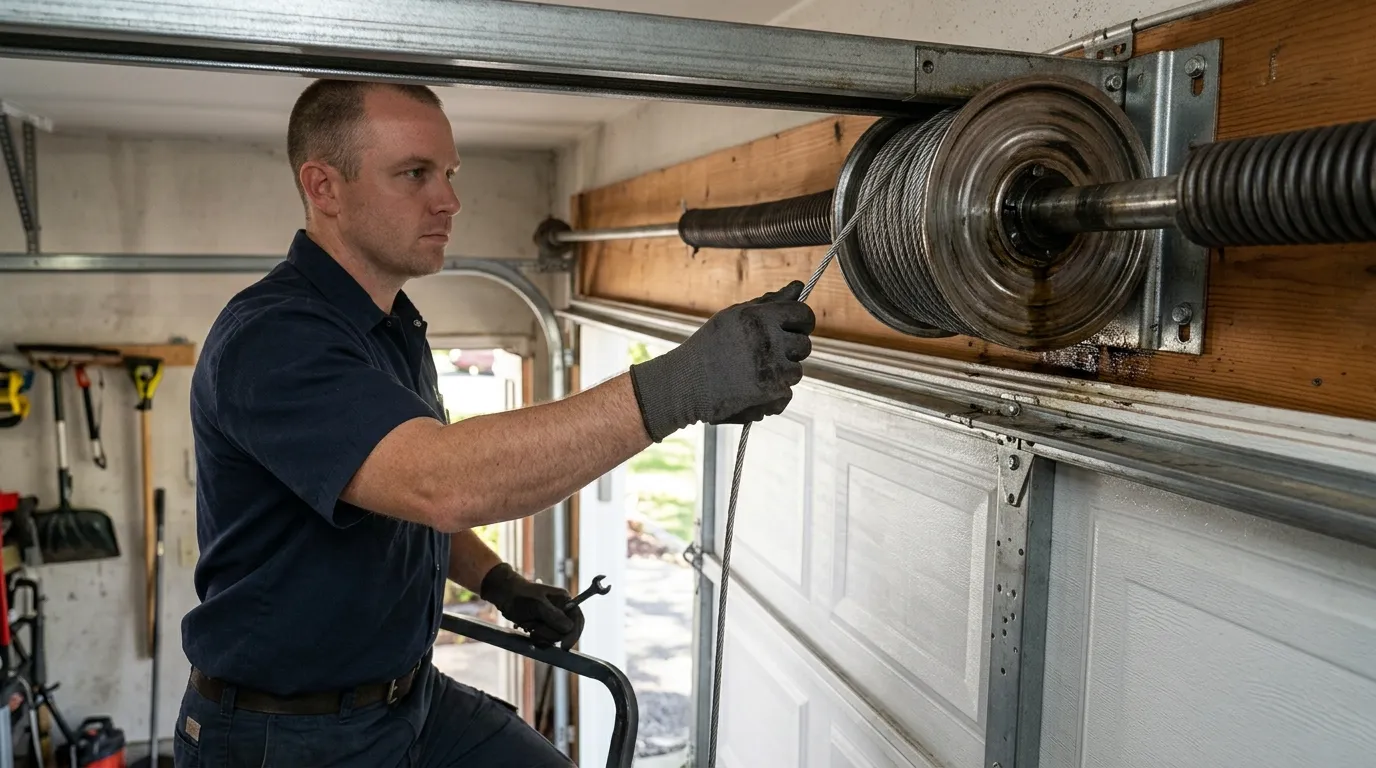
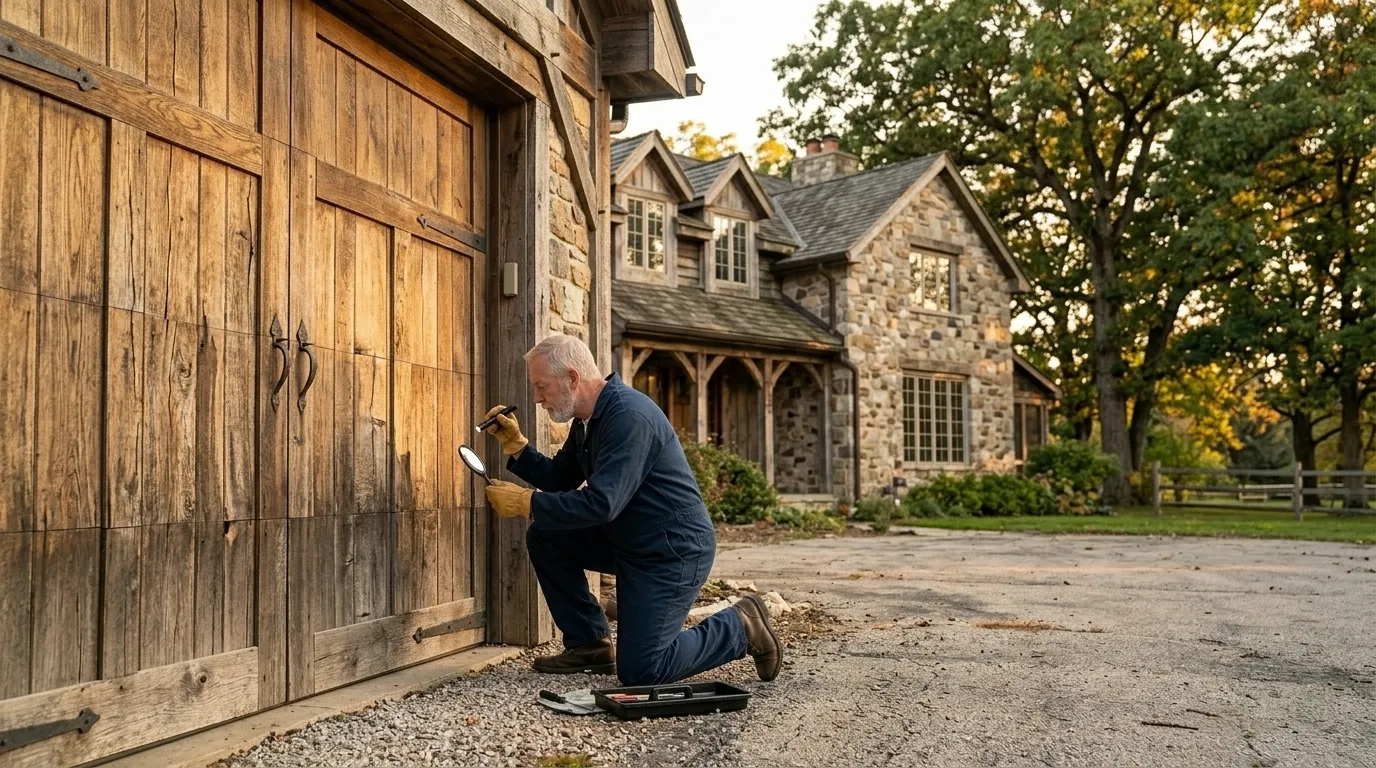
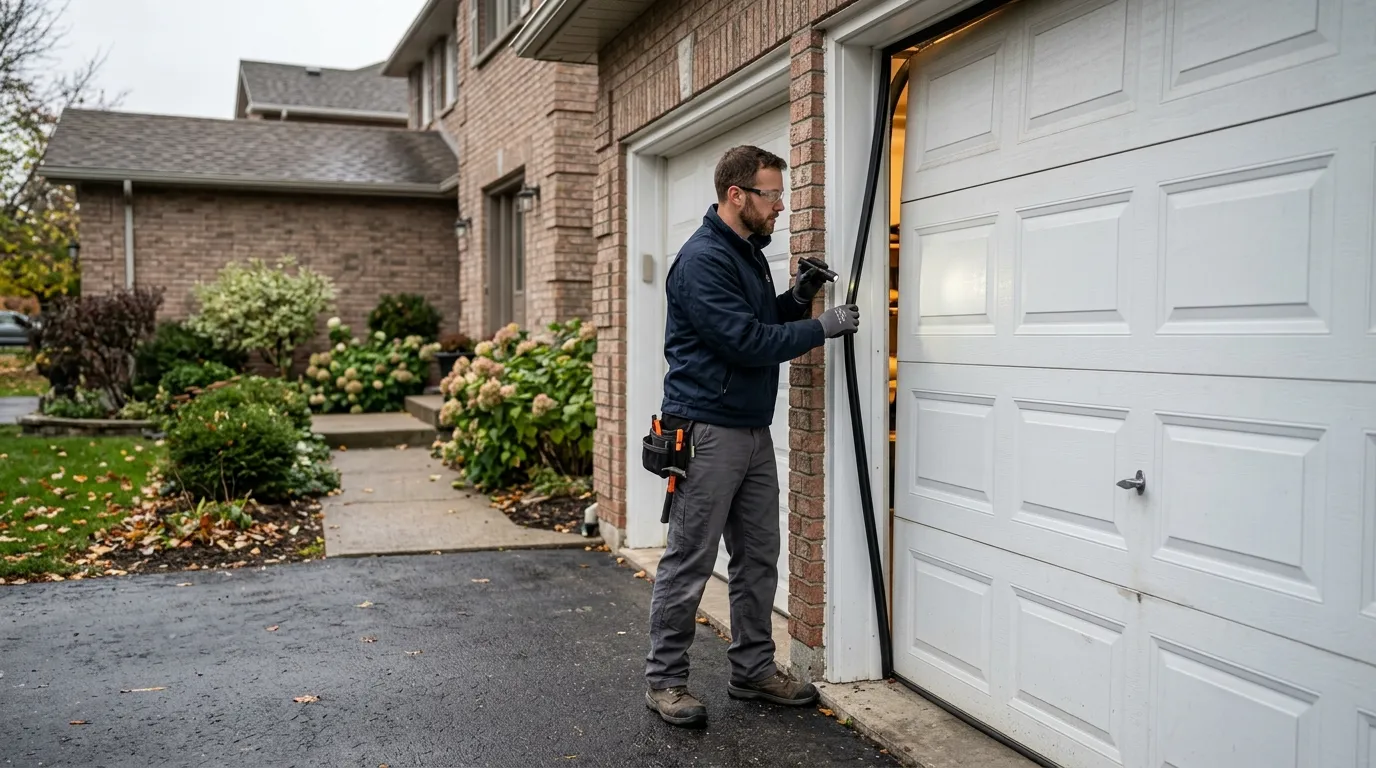
Start at the bottom corner of each panel. On houses from the 1980s and 90s especially, this is where you'll find the earliest sign of trouble - a hairline gap where the panel has started to bow or the weatherstrip has compressed flat. Next, pull the release handle with the door closed and try to lift the door by hand. It should move smoothly and stay roughly where you put it. If it drops or feels heavy, the spring is losing tension, which is common on doors that have never had the spring replaced since the house was built.
Check the rollers last. Steel rollers from an older build era are noisy and often chipped at the edges. None of this means you need a new door today. It means you know what you're looking at instead of guessing.
What the Weather Here Does to It
The climate band here is mild temperate, not the freeze-thaw cycle that tears apart hardware further north. That's a real advantage - you're not fighting ice expansion in the track or metal that contracts hard enough to crack a weld. But mild and humid isn't the same as gentle on a door, especially one built to an older insulation spec.
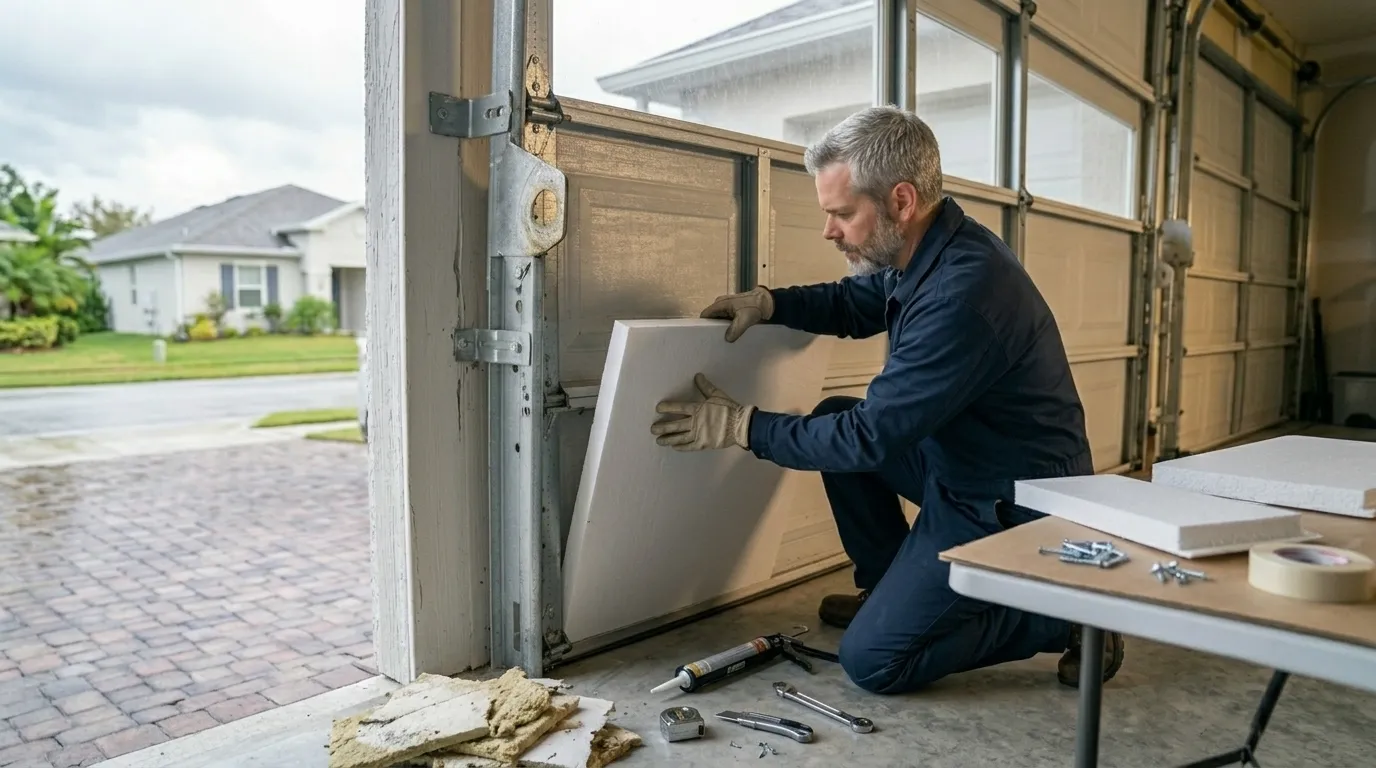
A panel from the 1965-2004 era typically has thinner steel skins and less foam core than current doors, and that thinner skin flexes more with daily temperature swings. Flex over enough years works fasteners loose and stresses the seams where panels are joined. It also means the door does less to keep conditioned air inside the garage, which matters if the garage sits against a bedroom or laundry wall.
Humidity is the other piece. Without freeze-thaw, corrosion here is a slower, steadier process - track brackets and spring anchors rust from moisture sitting rather than from ice prying at metal. On an older bracket that's been through thirty-plus years of that cycle, a light surface rust is normal. Heavy pitting or a bracket that flakes when you touch it is not, and that's worth having looked at before it lets go under spring tension.
What You Pay
We don't have a set price to quote you here, and giving you a made-up number would do you no favors. What we can tell you is that cost on an older door usually comes down to whether you're replacing hardware on a panel structure that's still sound, or replacing the whole door because the panel itself is the problem.
Houses built in the 1965-2004 window carry a wide range of door conditions depending on whether anything's been swapped out since. A door that's had its spring or opener replaced once already is usually a repair job. A door that's original to a house from the earlier end of that range, say built in the 1960s or 70s, is more often a case where the insulation gap and the wear add up to a straight replacement being the better use of your money.
Median household income in this area runs a bit above $80,000, and most of the owner-occupied houses we see calls from fall into that same working-family range - not people looking to spend more than they have to. We'll tell you plainly which side of that line your door sits on before we start any work, not after.
The Problem
The real problem with doors on houses built before insulation rules tightened isn't that they fail dramatically. It's that they fail quietly. A panel built to 1980s or 90s spec doesn't blow out - it sags a little more each year, the seams work a little looser, and the R-value nobody was thinking about when the house went up keeps dropping.
Across the roughly 26,165 owner-occupied houses in this service area, a large share sit in that same 1965-2004 build window, which means this isn't a rare situation - it's the norm for the neighborhood. Most owners don't notice until the door is visibly out of square, or the opener starts straining on a spring it was never sized for after a replacement years back.
We won't tell you every older door needs replacing - plenty of them are fine with a new spring, better weatherstrip, and rollers that don't rattle. But if the panel steel is thin-gauge and the foam core has gone soft or gapped from decades of heat cycling, patching it is money spent on a door that's still going to feel cold and loose afterward. That's the point where we'd rather say so than sell you a repair that doesn't hold.
How it works
From “it’s stuck” to “it’s fixed”
1
Tell us what’s wrong
Describe the symptom - won’t open, loud bang, opener runs but the door won’t move.
2
On-site diagnosis
A technician tests the door under power and by hand and finds what actually failed.
3
Clear, up-front plan
You get the fix that’s needed and what drives the cost - before any work starts.
4
Repaired & tested
The repair is done, the door is set true and tested, and the work area left clean.
Next step
Serving Texas City, TX - tell us what your door’s doing and we’ll take it from there.
Not necessarily. Age alone doesn't decide it - condition does. A door from the 1980s or 90s with intact panel steel and a straight track is usually a fine repair candidate. One with soft, gapped foam core or a bowed panel is usually past the point where repair makes financial sense. We'll check the panel itself, not just guess by the build year.
Why does my garage feel hot even with the door closed?
Doors built before current insulation standards, common on houses from the 1965-2004 era here, use thinner steel skins and less foam core than doors sold today. That lets more heat through, especially with the sun on it for hours. It's not a malfunction - it's the door doing what it was built to do, which wasn't much on the insulation side.
Does the humidity here cause rust on garage door hardware?
Yes, though it's a slow, steady process rather than the freeze-thaw damage colder climates see. Track brackets and spring anchors on older doors develop surface rust from sitting moisture over the years. Light surface rust is normal on a decades-old bracket. Heavy pitting or flaking metal is a sign to have it checked before it fails under tension.