What Actually Happens When We Come Look at Your Door
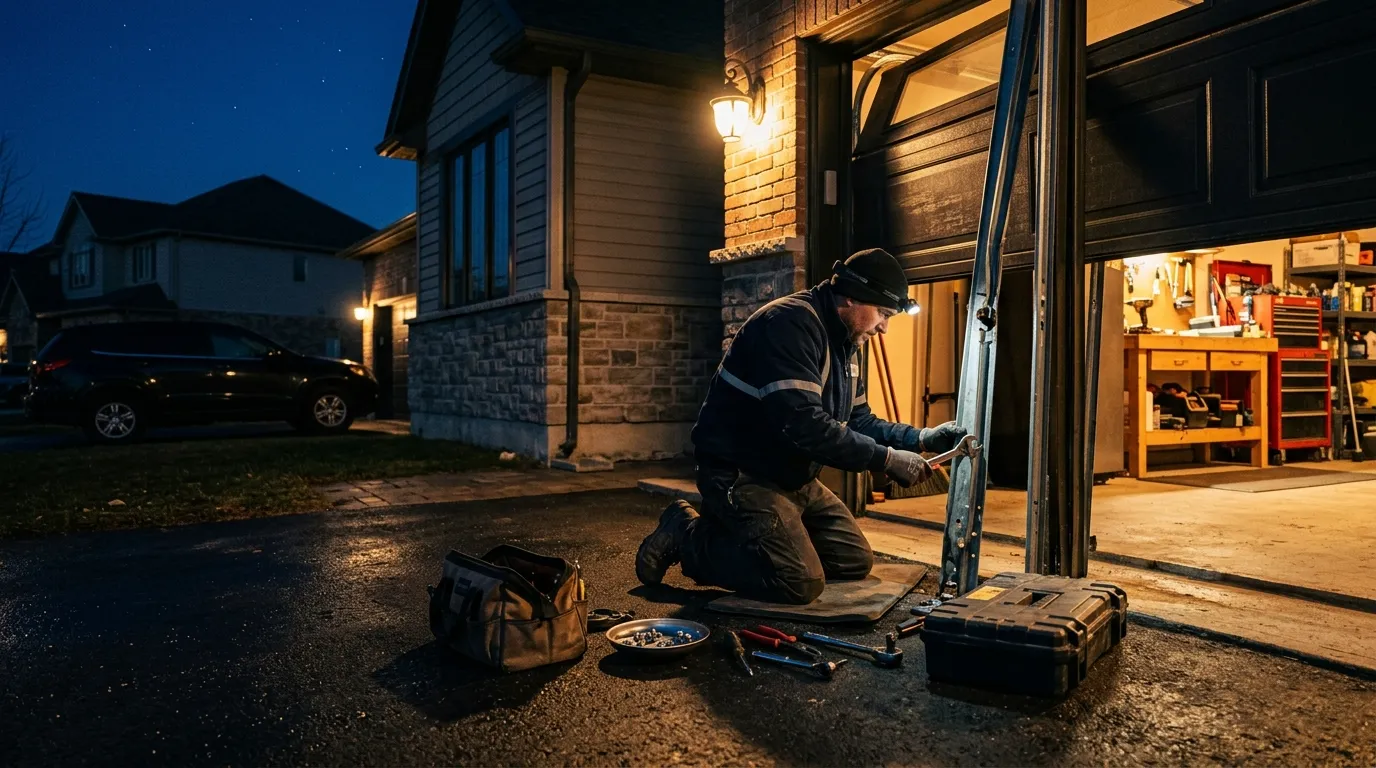
A straight look at what happens when Texas City Garage Door Pros comes to your house - what we check, what the local housing stock means for your door, and what drives the bill.
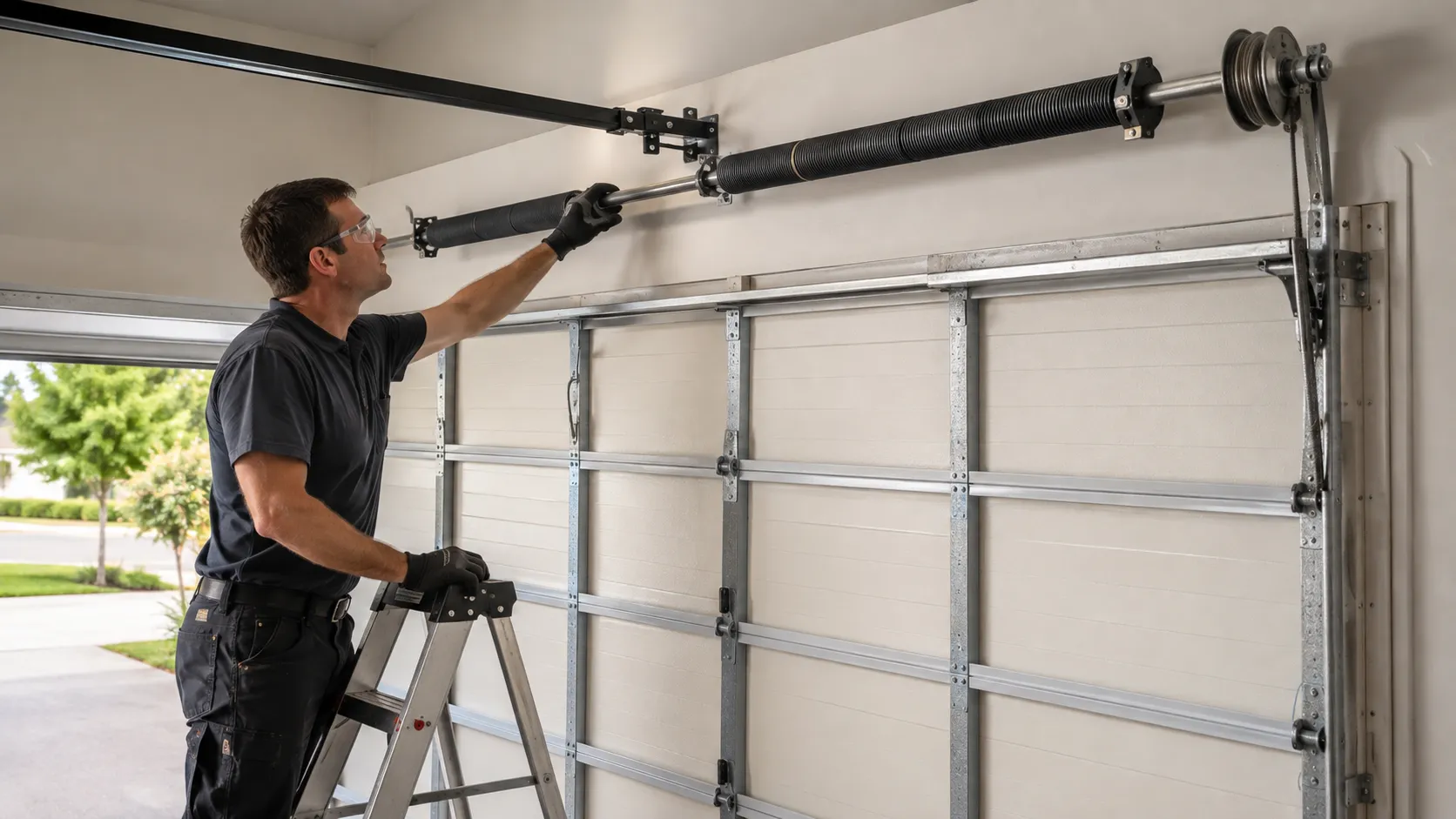
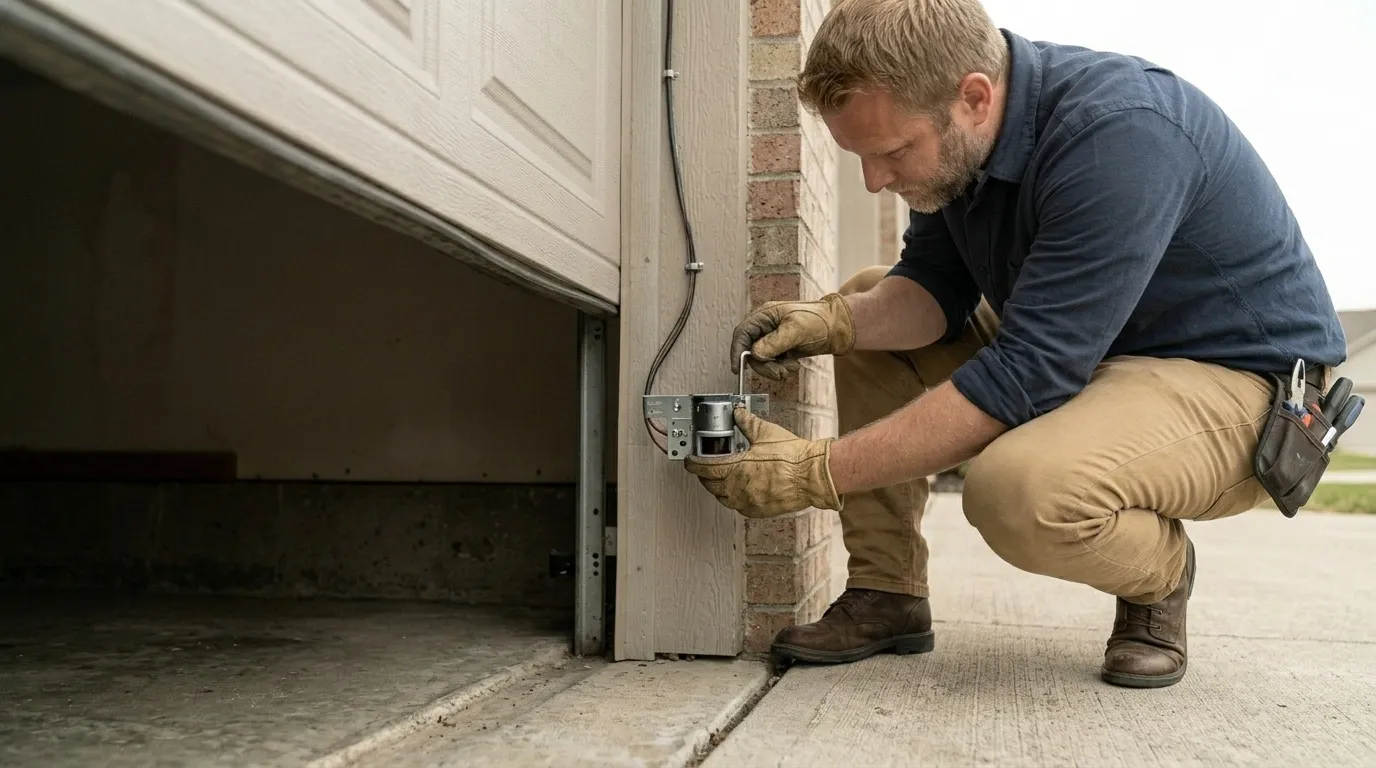
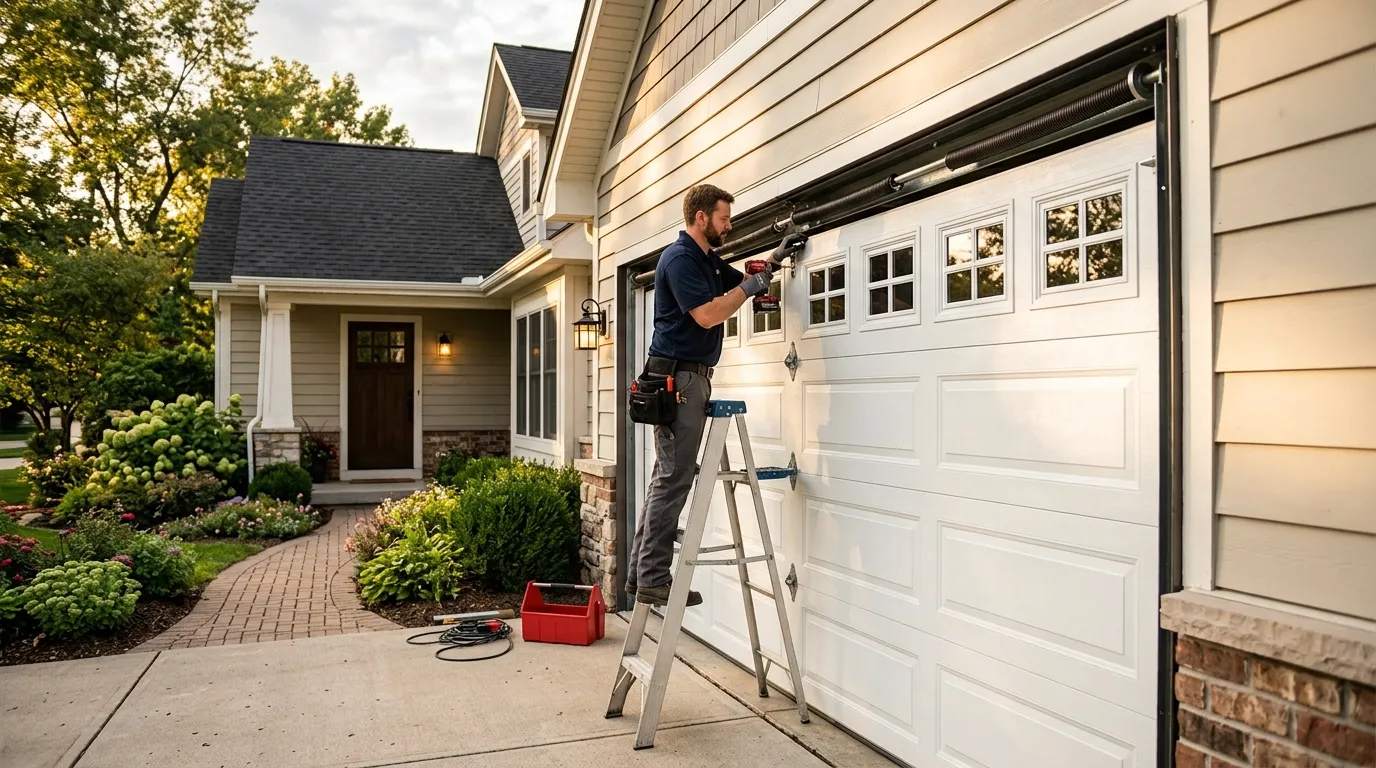
Before you pick up the phone, walk out and look at three things. First, the tracks - stand back and sight down each one for a bend or a gap where it meets the wall bracket. Second, the springs above the door: a torsion spring that's snapped will show a clean gap in the coil, easy to spot. Third, the sensors near the floor on each side - a lot of "the opener won't close the door" calls turn out to be one sensor knocked out of alignment by a stray box or a bike.
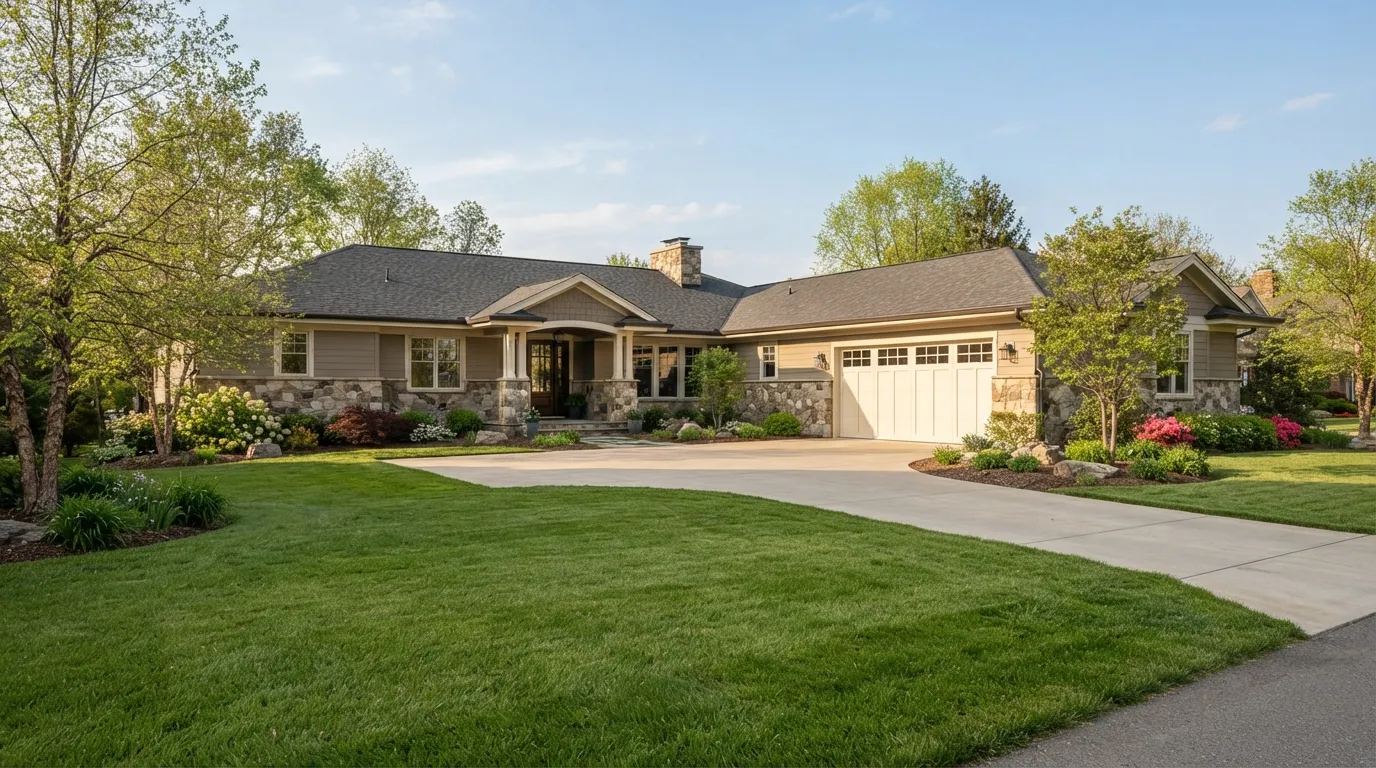
Most houses in this area went up between 1965 and 2004, with the bulk of the stock dating to the 1980s and 90s. That matters because a door installed in, say, 1988 is running original torsion hardware that was never rated for forty years of cycles. If your opener is the same age as the house, don't be surprised if the gear that turns the sprocket is worn to plastic dust - that's a part, not a sign the whole unit needs replacing, and it's worth checking before you assume the worst.
What you can't safely check yourself: spring tension. Leave that to the call.
What the Weather Here Does to It
This area sits in a mild temperate band - no hard freeze-thaw cycle grinding at metal fittings the way you'd get further north. That's good news for your track brackets and hinges; they're not fighting the same expansion and contraction that cracks welds in colder climates.
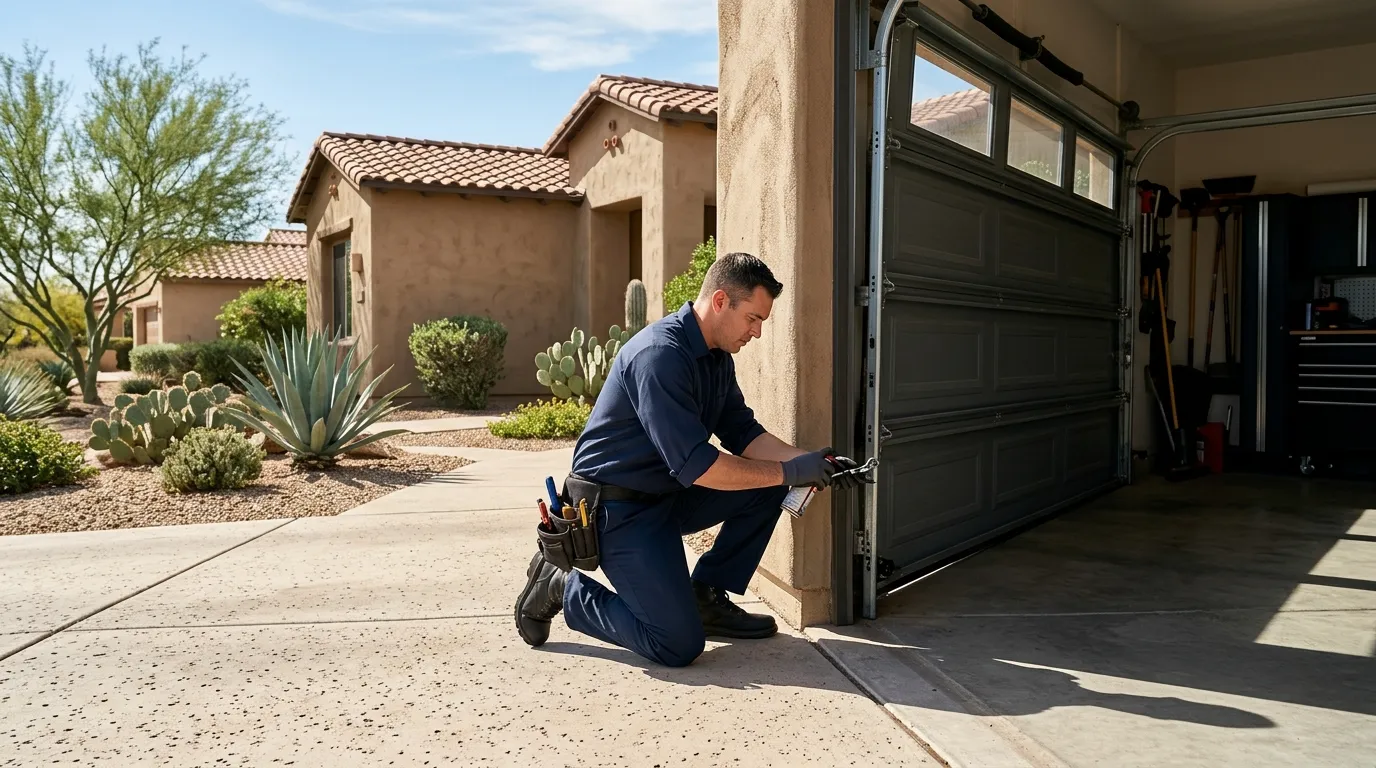
What it means in practice: when we get called out here, the failure is almost always mechanical wear from age and use, not weather damage. Springs give out because they've hit their cycle count, not because a hard freeze snapped them overnight. Rollers wear down because they've made tens of thousands of trips, not because ice worked into the track. That's actually a point in favor of a maintenance visit that's just about lubrication and adjustment - a $10 tune-up problem doesn't turn into a $300 spring-and-drum problem if you catch it while the failure mode is still "slow and worn" rather than "sudden and snapped."
What You Pay
We don't quote a number over the phone before we've seen the door, and we won't pretend otherwise here. What drives the bill is almost always the age and type of hardware we find once we're standing in front of it - a house built in the 1980s or 90s typically has torsion springs and a chain-drive opener that are original to the house, and by now those parts are well past where a patch job makes sense.
A service call covers the diagnostic - pulling the tension off the springs safely, checking the drums, cables, rollers, and opener gear, and telling you straight whether you're looking at a part swap or a full door reset. If a repair isn't worth it - say the door is original to a house from the early 1990s and the track, springs, and opener are all failing at once - we'll tell you that instead of nickel-and-diming you through three separate visits. That's the honest limitation here: we fix what makes sense to fix, and we say so when it doesn't.
The Problem
The underlying issue across this service area isn't any one broken door - it's that a huge share of the housing stock was built in the same twenty-year window. With a median build year around 1990 and most of the 13 named areas we cover - San Leon, La Marque, Bacliff, Tiki Island, Dickinson, Kemah, Hitchcock, Seabrook, Santa Fe, Taylor Lake Village, Nassau Bay, Morgan's Point, and Bolivar Peninsula - carrying that same 1980s-90s stock, a lot of original hardware is aging out at the same time.
Of the 41,325 households in the area, 26,165 are owner-occupied houses, which means a large base of homeowners are the ones dealing with a door that's original to their house rather than a landlord managing it. At a median household income of $80,037, most of the calls we get are people weighing whether a part replacement makes sense against a full opener swap - not people looking for the cheapest possible patch. That's the call we're built to make with you, honestly, on the spot.
How it works
From “it’s stuck” to “it’s fixed”
1
Tell us what’s wrong
Describe the symptom - won’t open, loud bang, opener runs but the door won’t move.
2
On-site diagnosis
A technician tests the door under power and by hand and finds what actually failed.
3
Clear, up-front plan
You get the fix that’s needed and what drives the cost - before any work starts.
4
Repaired & tested
The repair is done, the door is set true and tested, and the work area left clean.
Next step
Serving Texas City, TX - tell us what your door’s doing and we’ll take it from there.
How old does a garage door have to be before repair stops making sense?
It depends on what's failing, not just the age on paper. A house built in the 1980s or 90s with original torsion springs and an original chain-drive opener is a common combination we see, and when the track, springs, and opener are all going at once, replacement usually costs less over time than repeated repair visits.
Does the weather here cause garage door problems?
Not the way it does in colder regions. This area sits in a mild temperate band, so we're not dealing with freeze-thaw cracking in tracks or brackets. Most failures we find are from age and cycle count, not weather - which is exactly why routine lubrication and adjustment catches problems early.
Can you tell me a price before you come out?
No, and we won't pretend to. What a repair costs depends on what we find once we're looking at the actual hardware - a door built in the 1990s often needs different parts than one from 2004. We diagnose it in person and tell you straight what your options are.