Most of the housing across this service area - the 13 named neighborhoods covered here - went up between 1965 and 2004, with the bulk clustered in the 1980s and 90s. That matters because it tells you almost exactly what's behind your door skin. If your house falls in that window, you're likely looking at a raised-panel steel door on a torsion or extension spring system that's original or a first-generation replacement.
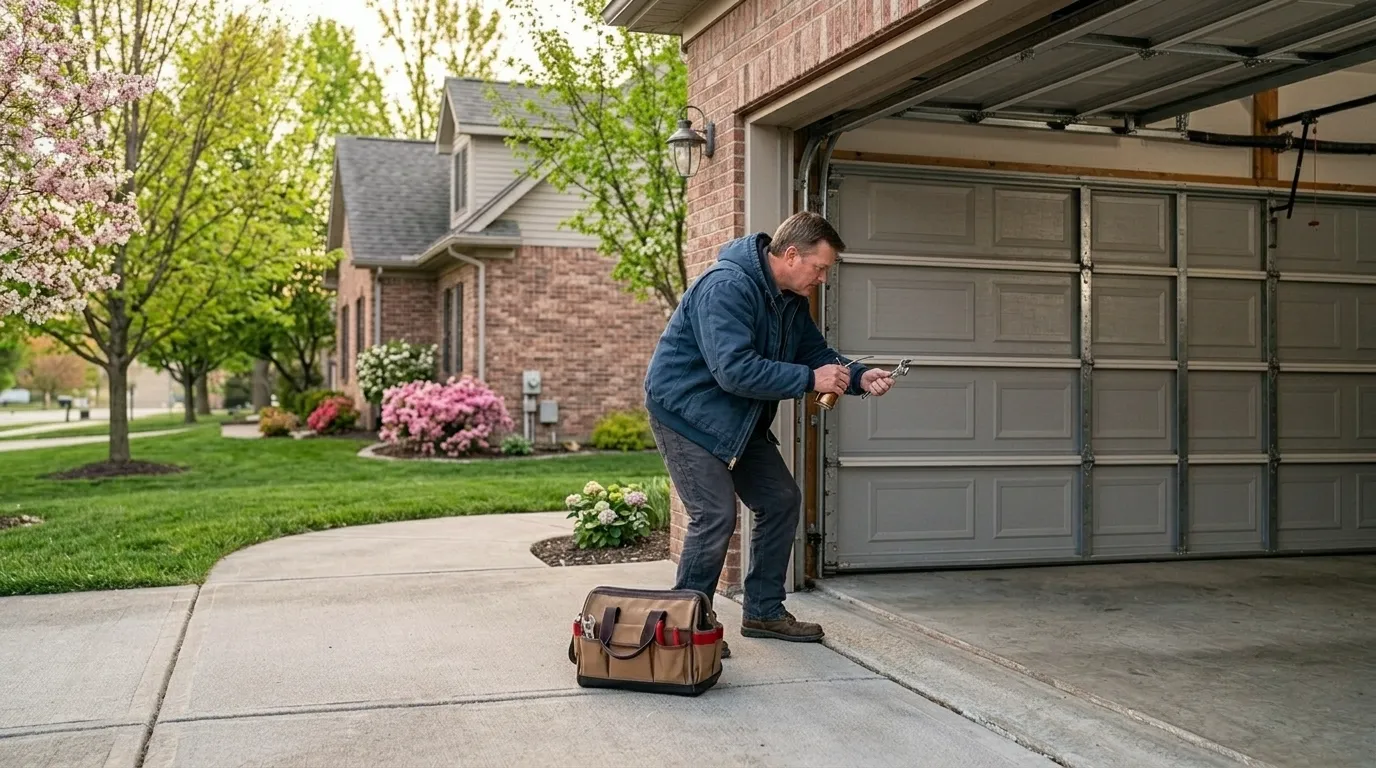
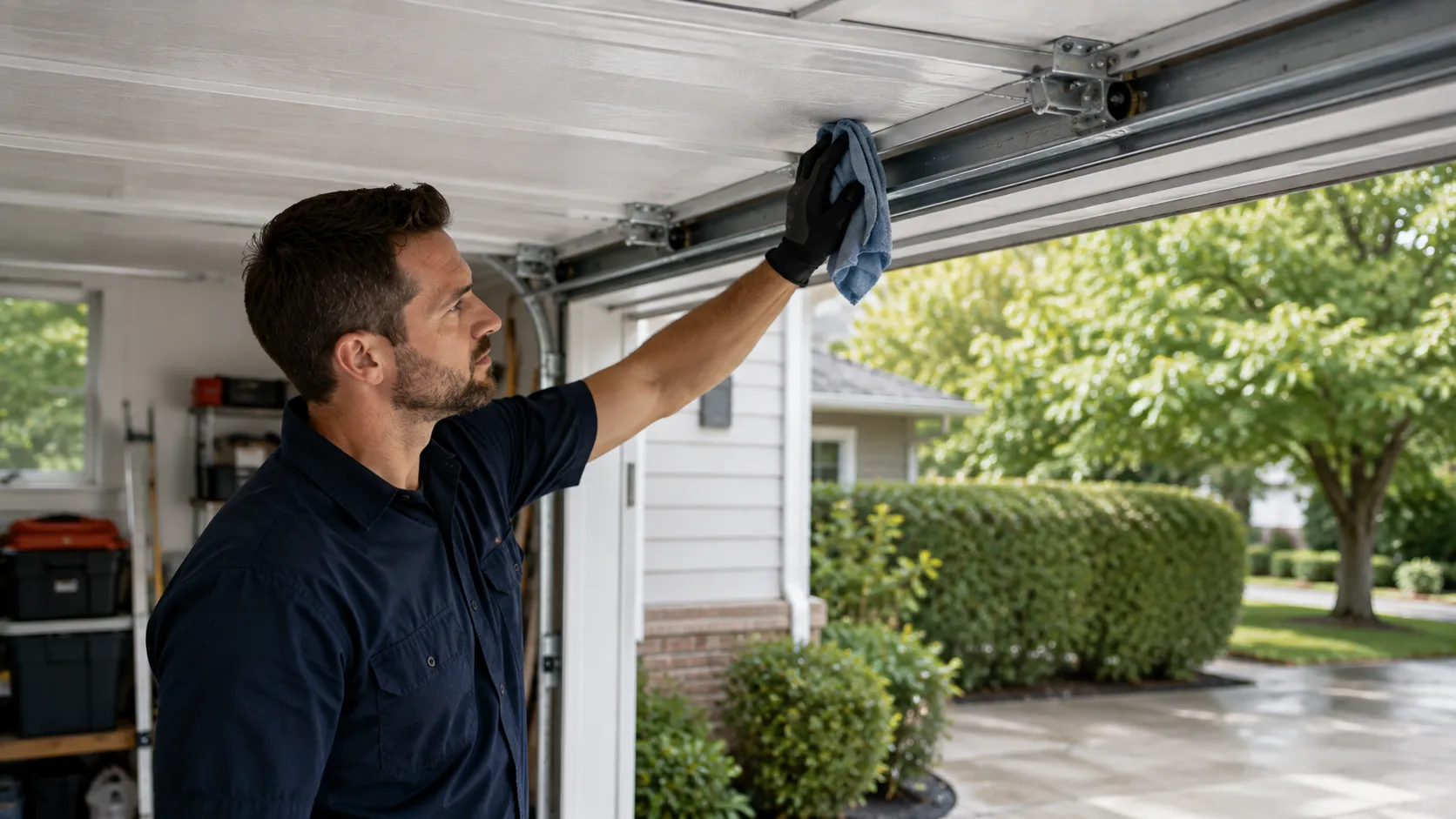
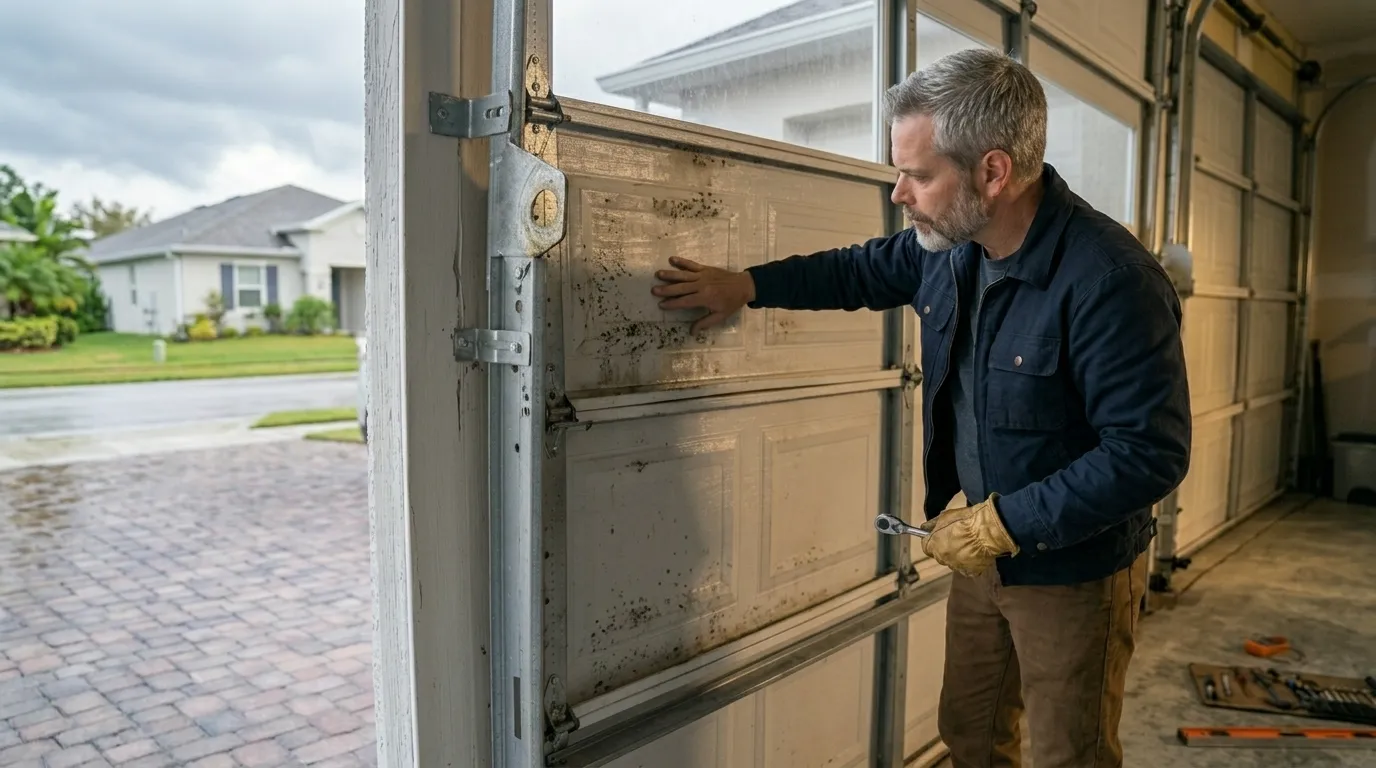
Start with the springs. Stand under the door with it closed and look at the coil above the header. Rust that flakes off when you scratch it with a key is worse than surface rust you can wipe clean. Next, grab the bottom bracket on either side and pull outward - more than an inch of play means the track is bent or the rollers are shot. Check the panels for rust-through at the bottom two feet, since that's where standing water and yard sprinklers do the most damage over 20-plus years.
If the springs are original from a house built in the 1980s, they've likely cycled well past their rated life already. That alone doesn't mean replace the whole door - a spring swap on an otherwise sound door from this era is usually a straightforward repair, not a reason to start over.
What the Weather Here Does to It
Texas City sits in a mild temperate climate band, which cuts both ways for an older door. You don't get the hard freeze-thaw cycles that crack winter-grade torsion coils and warp wood jambs in northern states, so the springs and torsion hardware on a door built in the 1980s or 90s often still cycle fine mechanically, even after decades of use. What gives out first here isn't usually the coil - it's the finish, the rollers, and the bottom seal.
Without the freeze cycles, a lot of homeowners assume an older door has more life left than it actually does, because the failure mode is quieter. Steel panels don't crack from cold; they thin from years of humidity sitting against the paint, and rollers wear from steady use rather than seizing up in cold weather. That means the visual cues you'd look for in a colder climate - cracked wood, frozen tracks - don't apply here. You're checking for rust bloom, roller wear, and hardware that's loosened from steady cycling, not storm damage from a single event.
What You Pay
There's no flat number that fits every door, and anyone who quotes one over the phone without seeing the door is guessing. What actually drives the cost on a door from this era is parts availability - a 1980s or 90s door often used spring sizes and track hardware that current manufacturers still stock, since the housing boom that built this area was recent enough that parts haven't gone fully obsolete. That keeps repair a real option instead of a scavenger hunt.
The area's median household income sits at $80,037, and across the 41,325 households here, 26,165 are owner-occupied houses - the kind of housing stock where a spring or roller repair is a normal maintenance call, not a major project. Replacement only makes financial sense once you're stacking multiple repairs on the same door: a new opener, new springs, and a warped panel all in the same visit usually costs more than a new door installed once. One repair alone almost never justifies replacing a door that's otherwise sound.
The Problem
The honest issue with doors from the 1965-2004 building era is that the door itself often outlives its hardware by a wide margin. The steel skin on a well-maintained door from the 1980s can still look decent, while the springs, rollers, and cables underneath are well past a safe service life. That mismatch is what causes most of the emergency calls - a door that looked fine snapping a cable or spring with no warning.
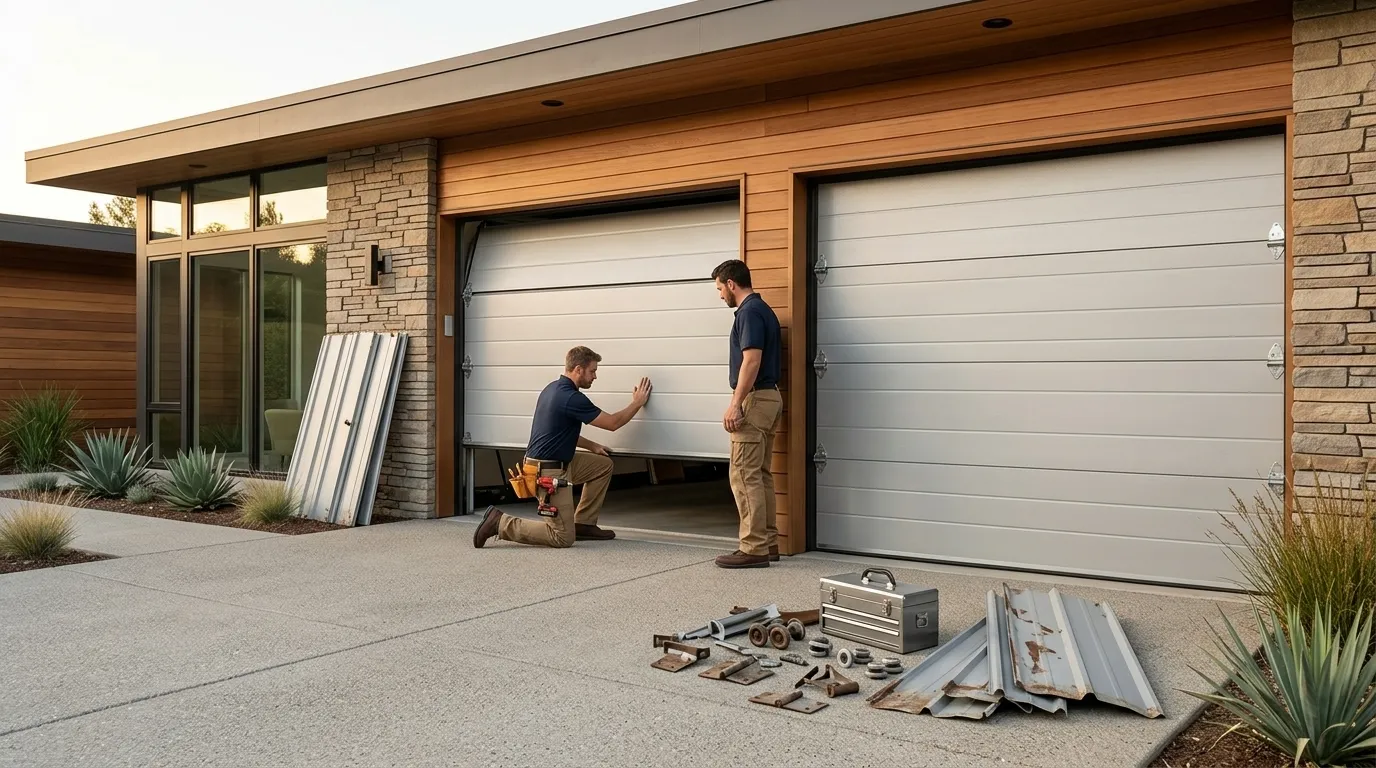
We don't replace a sound door just because it's old. If the panels are solid and the track is straight, a spring and roller job brings a 30-year-old door back to normal operation for a fraction of a full replacement. Where we draw the line: if the bottom panel has rusted through, or the door is an odd size that no longer matches stock track hardware, repair stops making sense and we'll say so instead of patching something that'll fail again in six months.
How it works
From “it’s stuck” to “it’s fixed”
1
Tell us what’s wrong
Describe the symptom - won’t open, loud bang, opener runs but the door won’t move.
2
On-site diagnosis
A technician tests the door under power and by hand and finds what actually failed.
3
Clear, up-front plan
You get the fix that’s needed and what drives the cost - before any work starts.
4
Repaired & tested
The repair is done, the door is set true and tested, and the work area left clean.
Next step
Serving Texas City, TX - tell us what your door’s doing and we’ll take it from there.
My house was built in the 90s - is my garage door original?
It's possible. Housing across this area went up mostly between 1965 and 2004, with the median around 1990, so a lot of doors are either original or a first replacement from that same era. Check the spring coil and panel bottoms for rust and wear before assuming it needs full replacement.
Does the humidity here wear out garage doors faster?
The mild temperate climate here means you skip the freeze-thaw damage that cracks hardware up north, but steel panels still thin from years of moisture against the paint, especially at the bottom two feet. That's usually cosmetic and structural at the panel level, not a reason to replace the whole door.
How do I know if repair is cheaper than replacing the whole door?
One issue - a bad spring, a worn roller - is almost always a repair, not a replacement. It only tips toward replacement when several things fail at once on the same door: opener, springs, and a rusted panel together usually cost more to fix piecemeal than to replace once.
Are parts still available for a door from the 1980s or 90s?
Often, yes. This area's housing stock is recent enough that common spring sizes and track hardware from that era are still standard stock, which keeps repair realistic instead of a search for discontinued parts.