Why It Happens Here
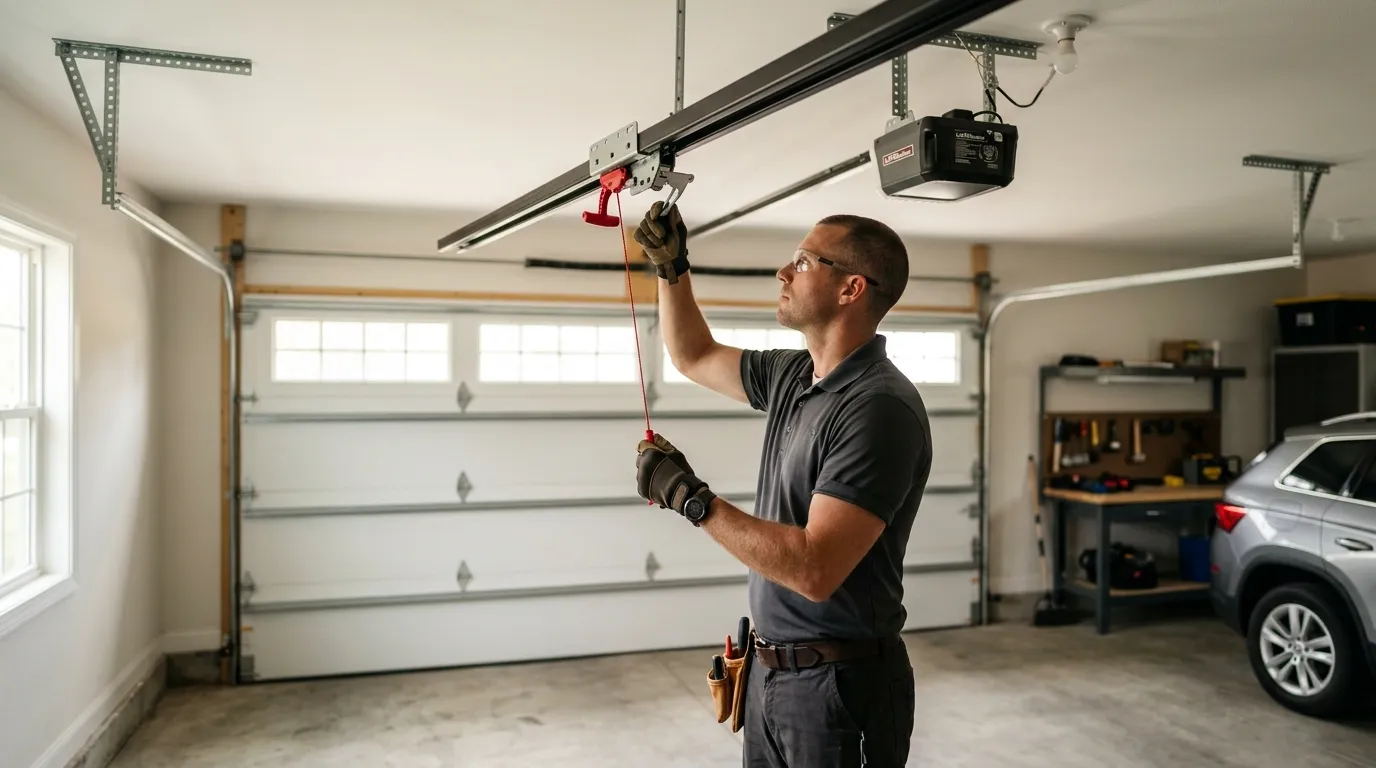
San Leon's median build year sits around 1996, a decade or so newer than a lot of what the wider Texas City service area carries, where the spread runs 1965 to 2004. That later build year matters for openers specifically: houses from the mid-90s came with the first generation of openers built to the safety standards manufacturers were phasing in at the time, and a lot of those original units are still bolted to the header today, nearly thirty years on. The motors on those units weren't built for the belt-drive load a heavier insulated door puts on them, so when a homeowner upgrades the door but keeps the old opener, the opener burns out faster than it should. The Gulf Coast's mild temperate climate here means we're not fighting the freeze-thaw cycles that crack housings and gears further north, but humidity still gets into open-frame circuit boards on units this old, and that's usually what fails first, not the motor.
Getting It Booked In
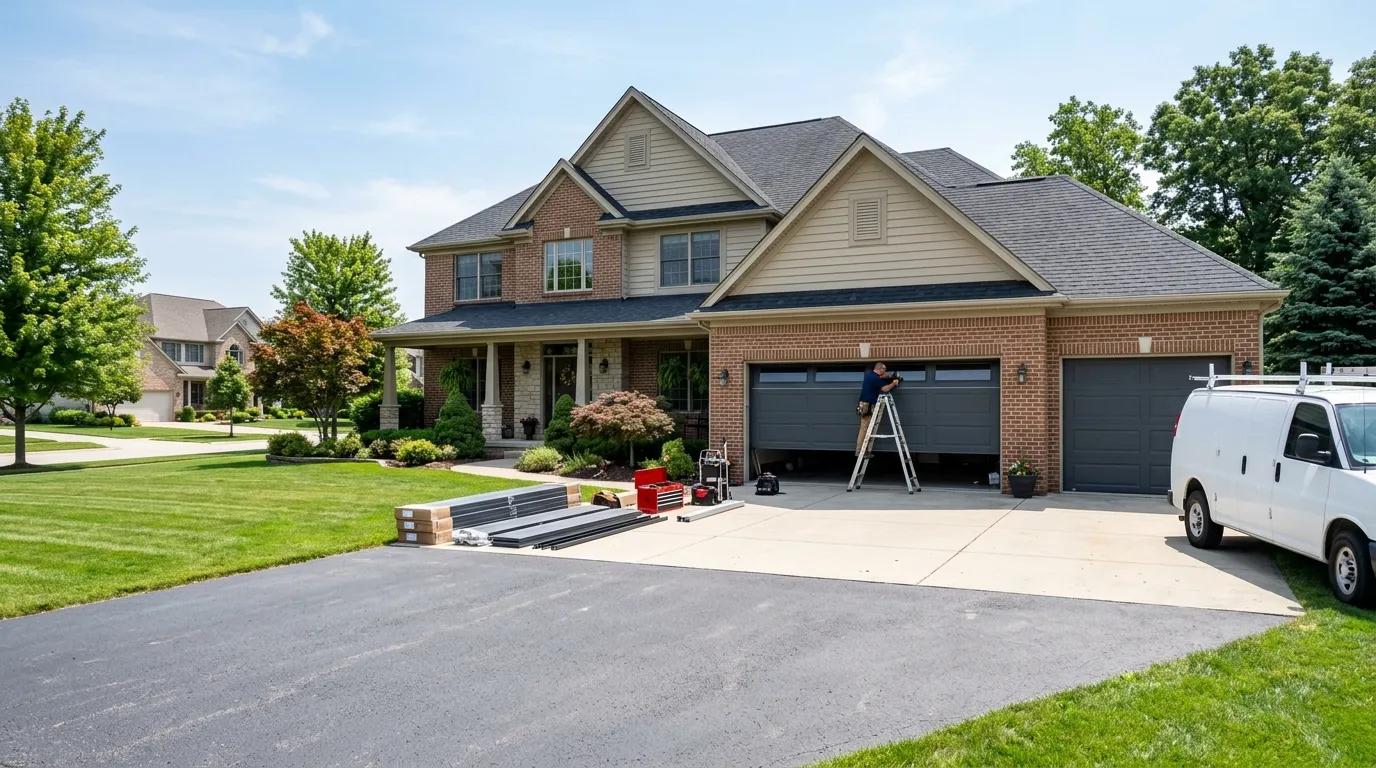
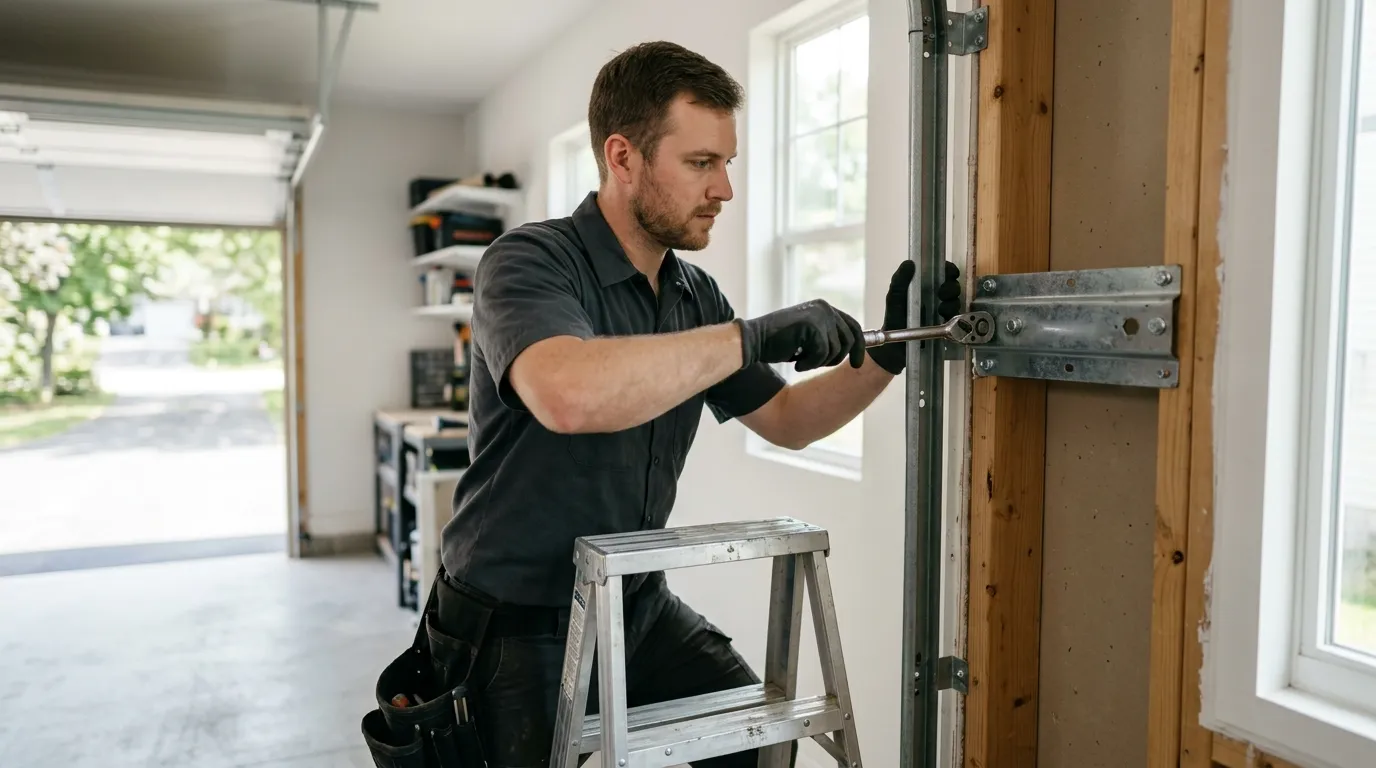
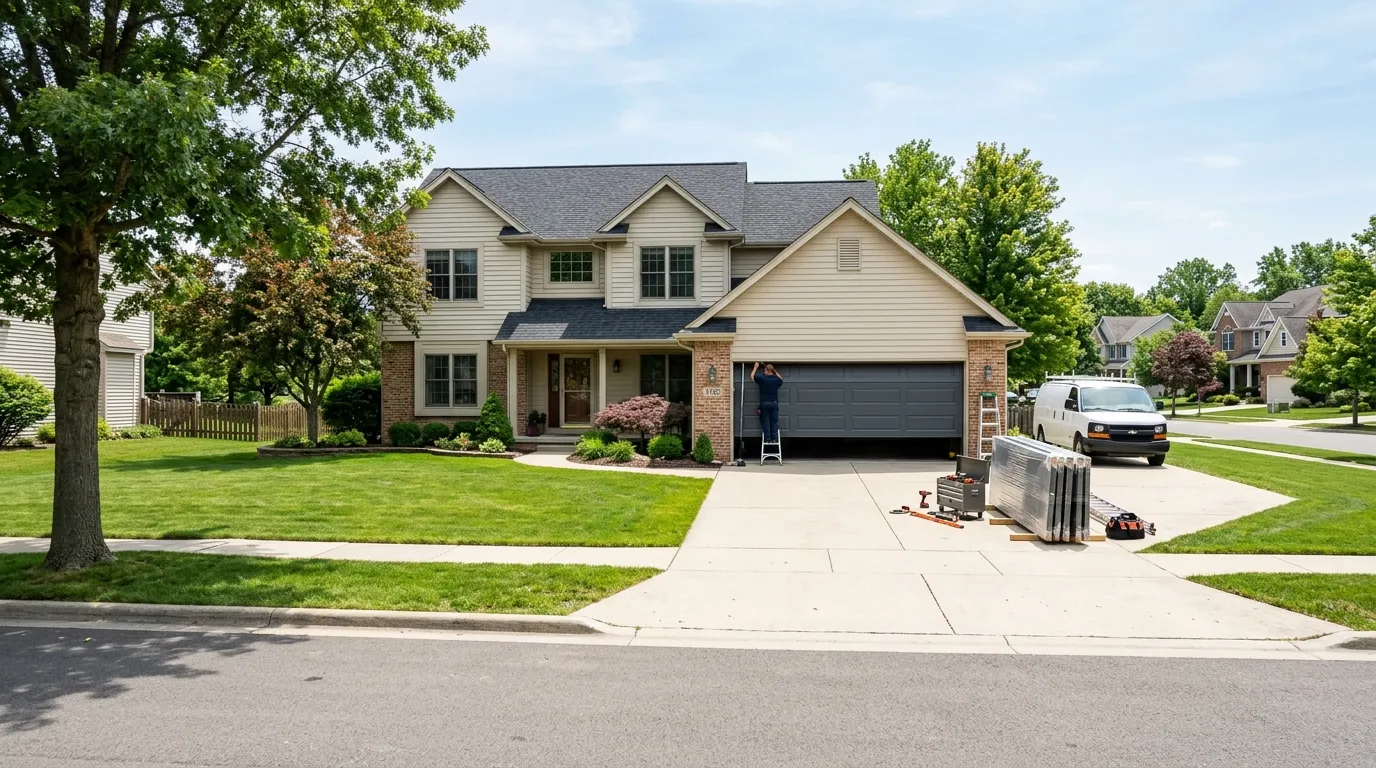
We run out of Texas City, about five miles from San Leon, so there's no local branch to call - you're booking a truck that comes to you. Tell us the door's size and whether you've got a belt, chain, or screw-drive unit now, and whether it's got a wall keypad or just a remote. That's usually enough for us to bring the right rail length and hardware kit the first trip out, instead of a second visit to match parts. If your opener is original to a house built in that mid-90s window, mention that too - it usually means the header bracket needs replacing along with the motor unit, and we'll bring that hardware rather than assume the existing bracket is safe to reuse.
What You Are Seeing
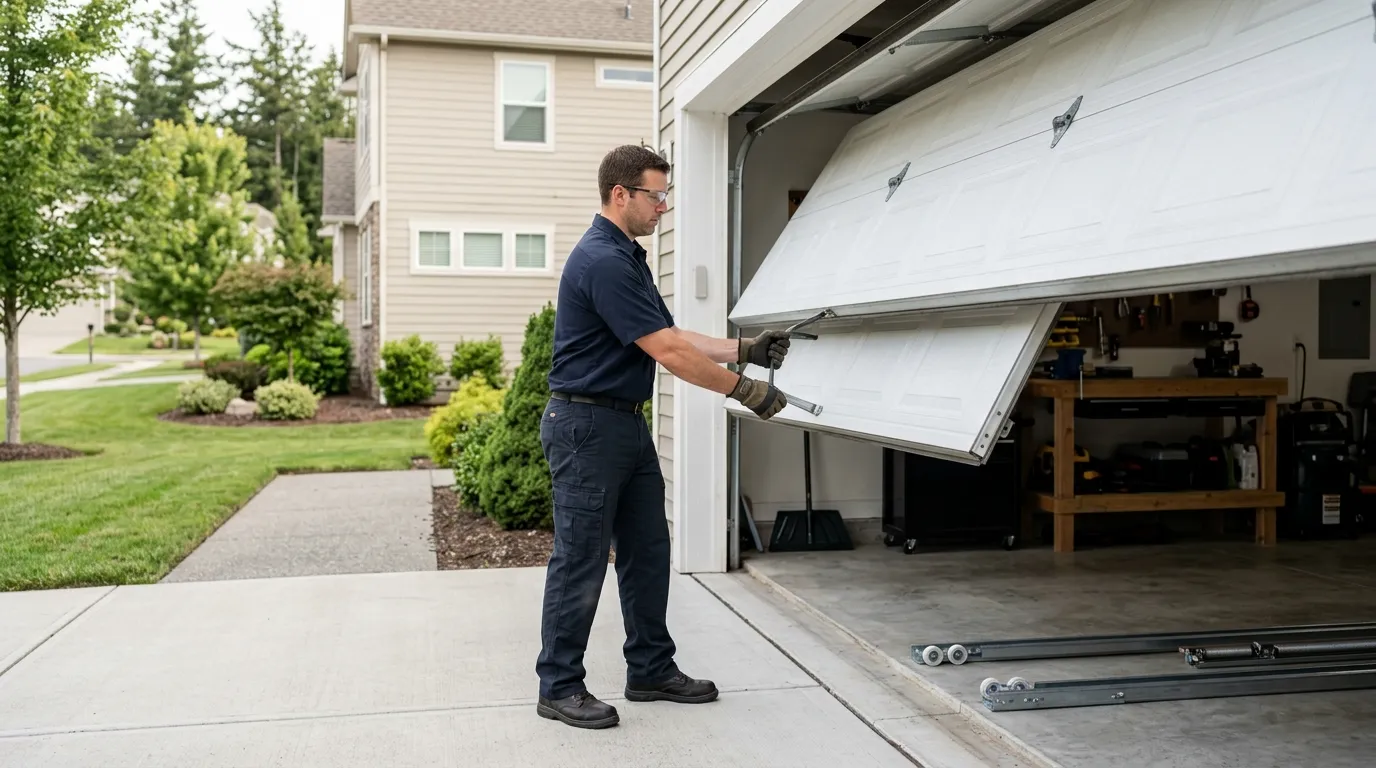
On a house from this era, the opener symptoms tend to run the same short list: the unit hums but the door doesn't move (capacitor or gear wear, common once a chain-drive unit passes twenty years), the remote works from ten feet away but not from the driveway (weakening antenna board, a known failure point on units this old), or the door reverses halfway up for no reason (worn limit switches, not the safety sensors people usually blame first). None of these mean the door itself is bad - the springs and track on a lot of these houses are still original hardware in decent shape. It's the motor unit and its control board that are past the point where parts are worth chasing. If yours is still the box that came with the house, that's the piece we'd look at replacing outright rather than repairing.