What You Are Seeing
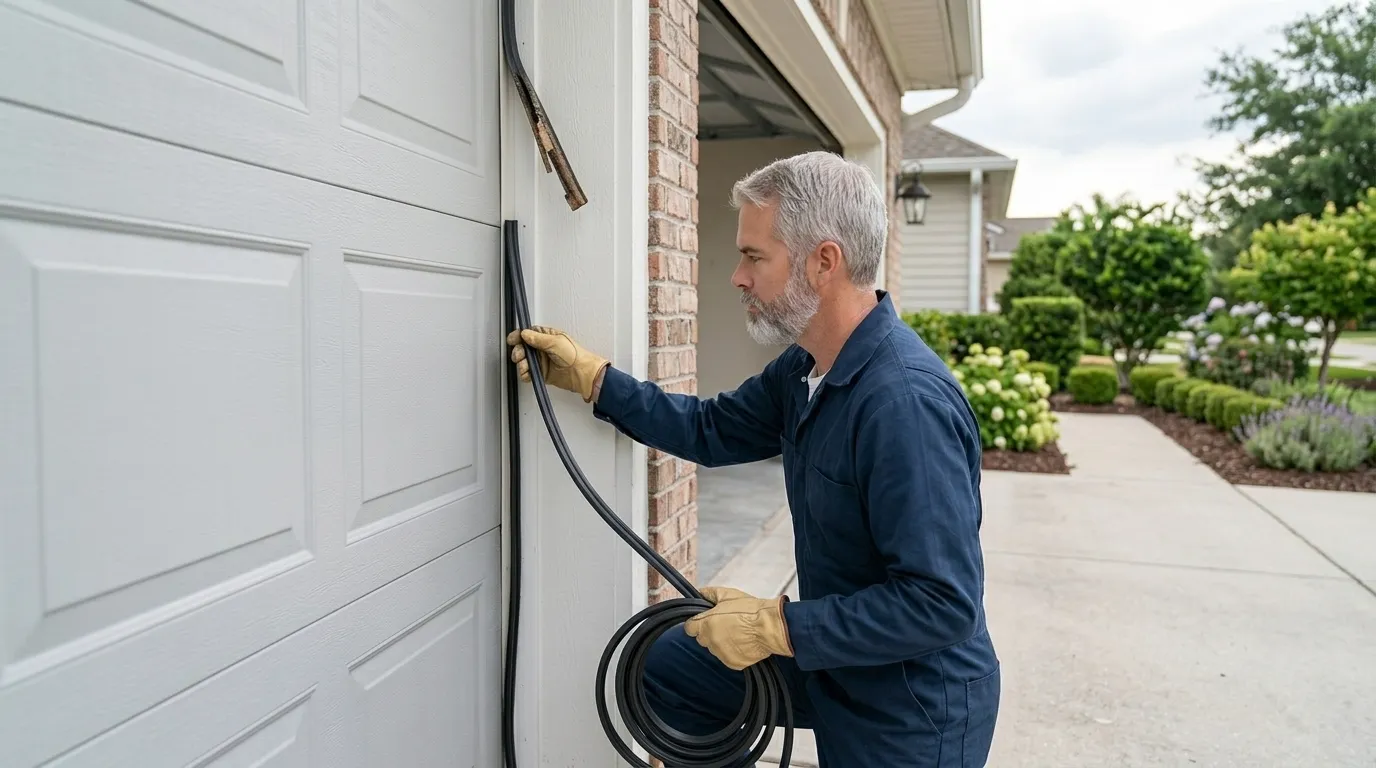
The usual complaint is noise: a grinding or screeching sound as the door opens or closes, worse in the morning before anything's warmed up. Some owners notice the door jerking or hesitating partway through its travel, catching on something in the track that isn't actually there - it's the roller itself, worn down to a flat spot instead of a round one.
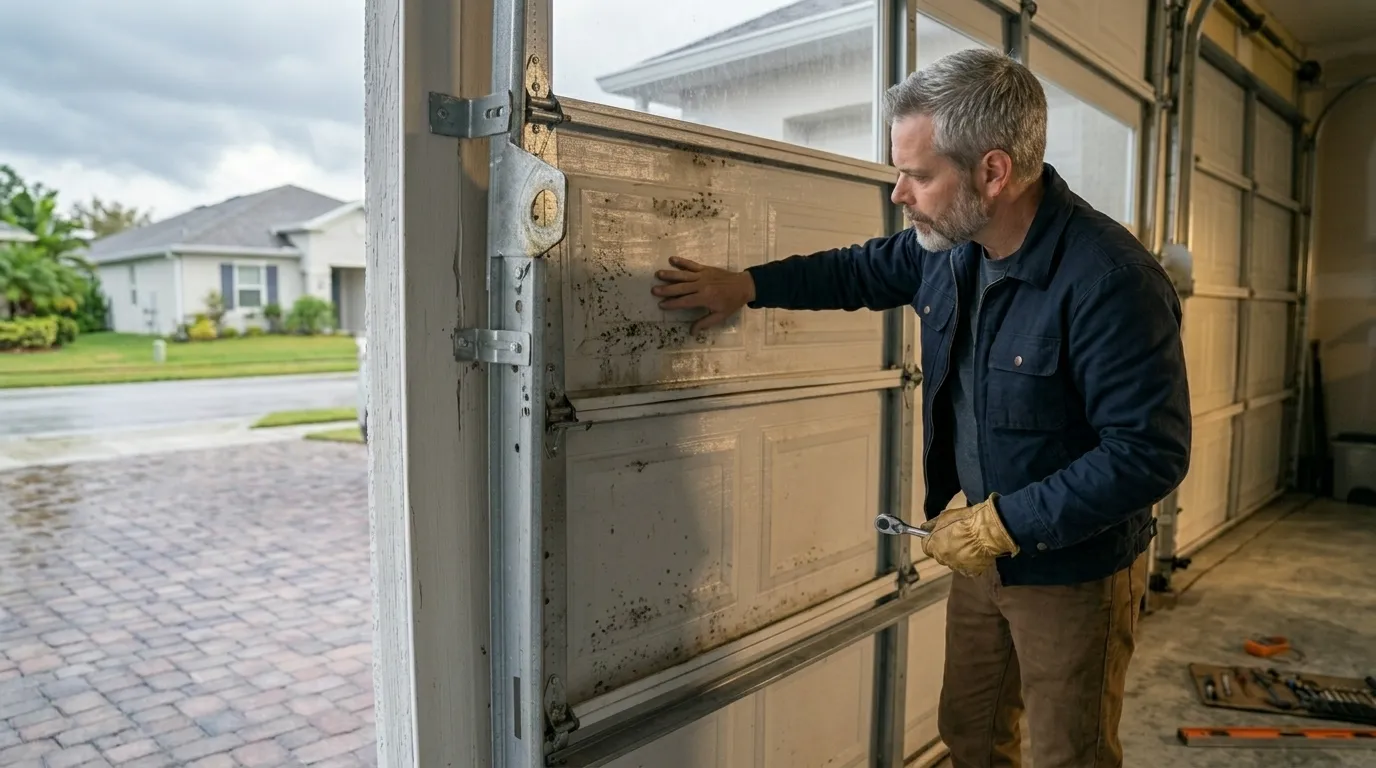
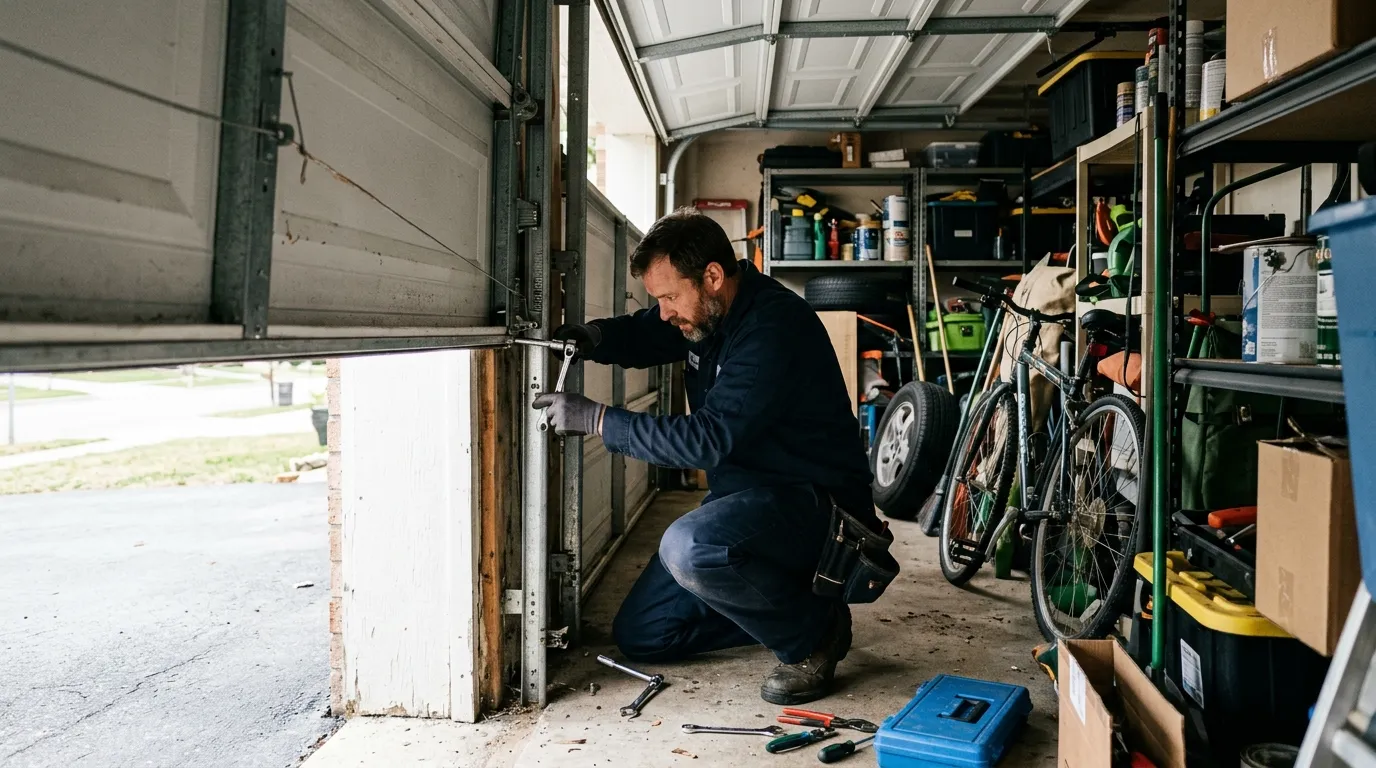
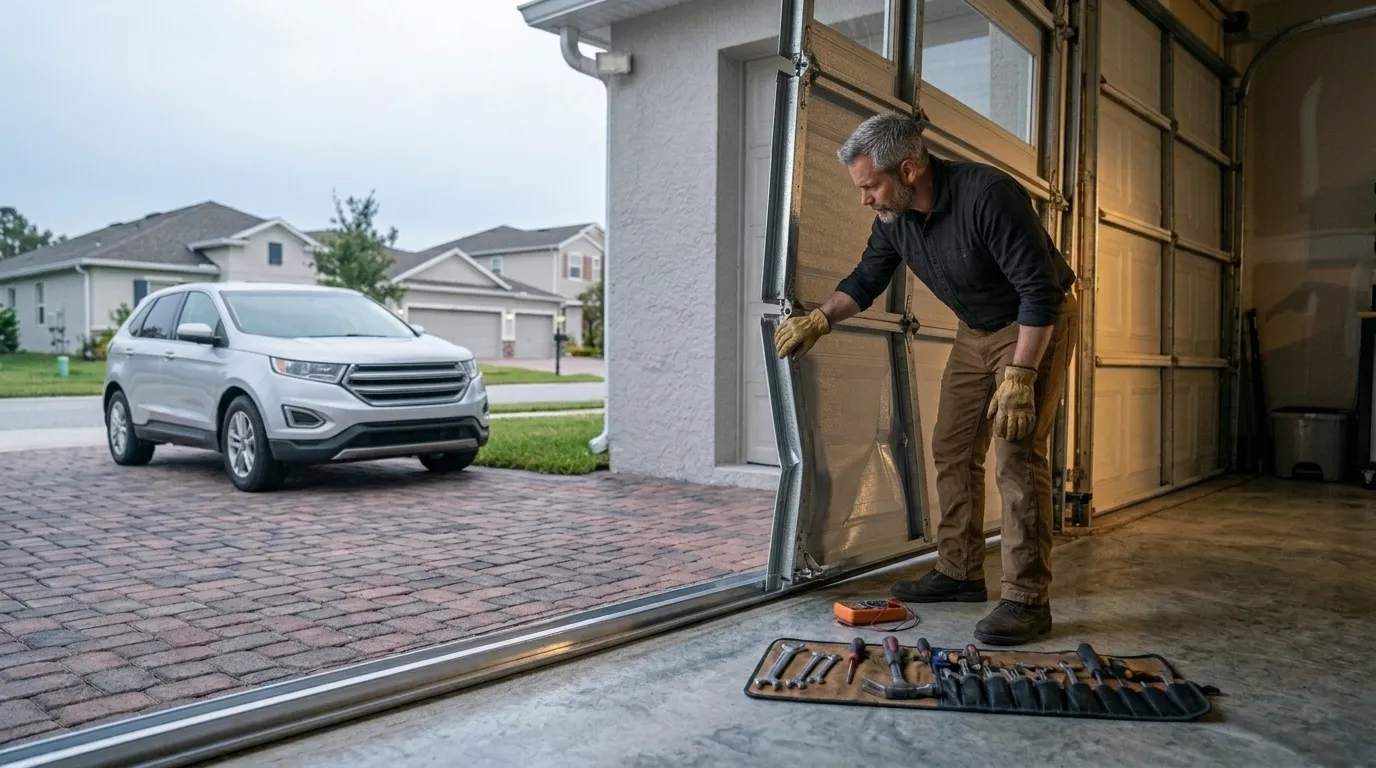
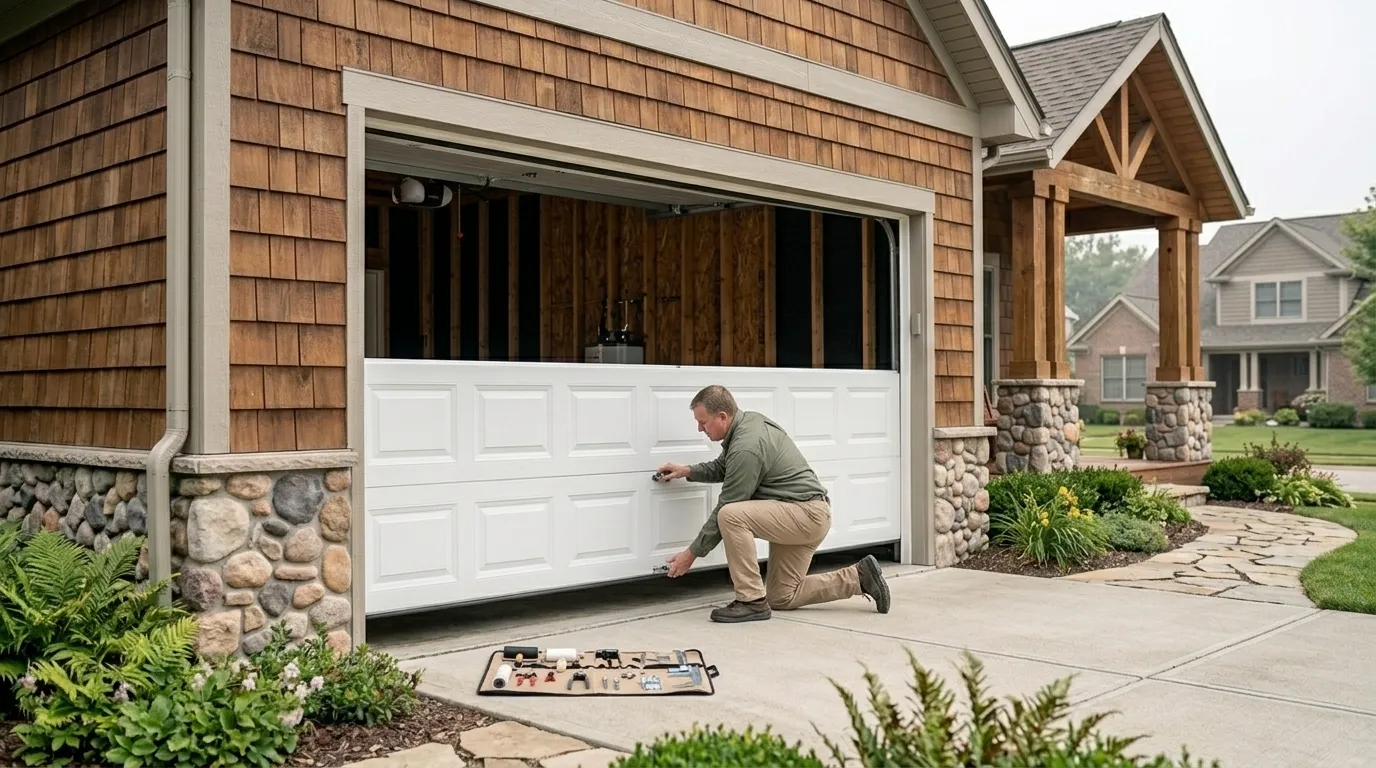
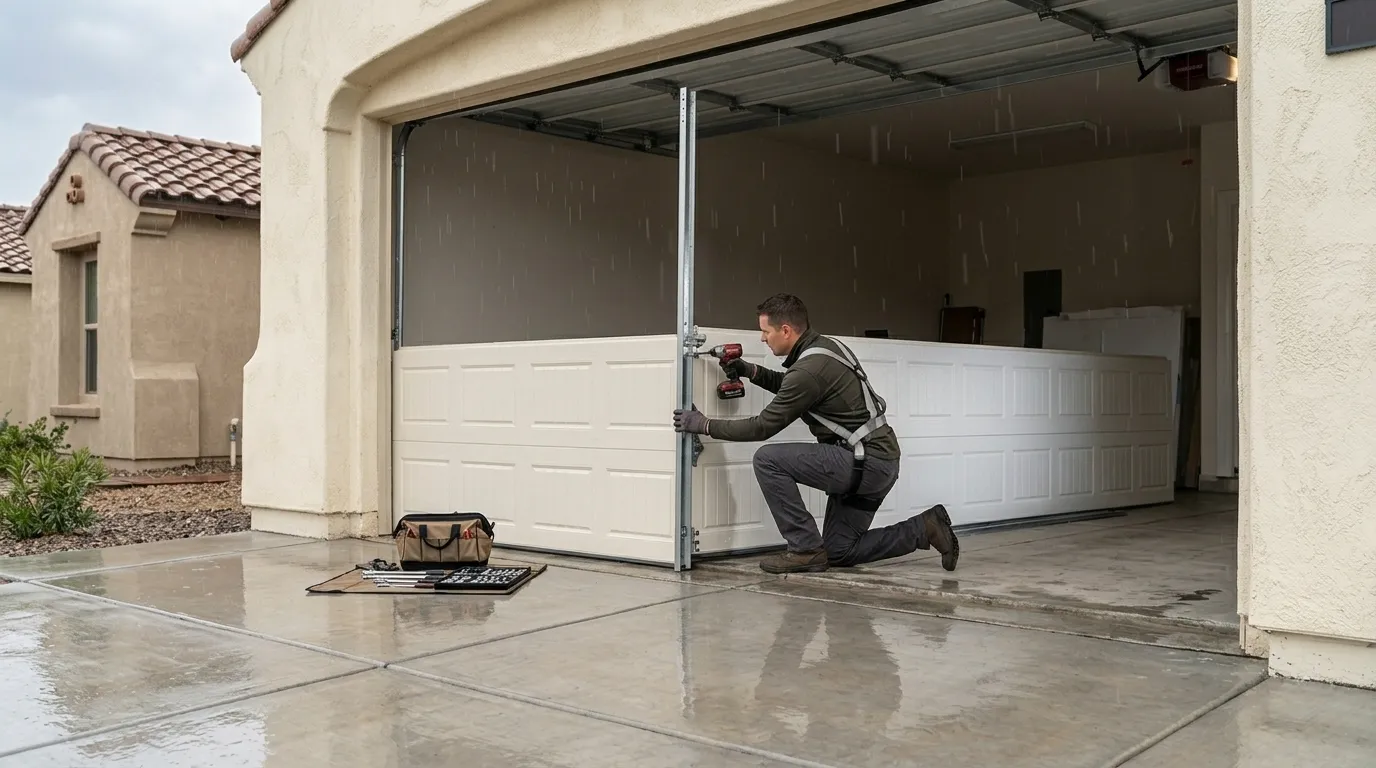
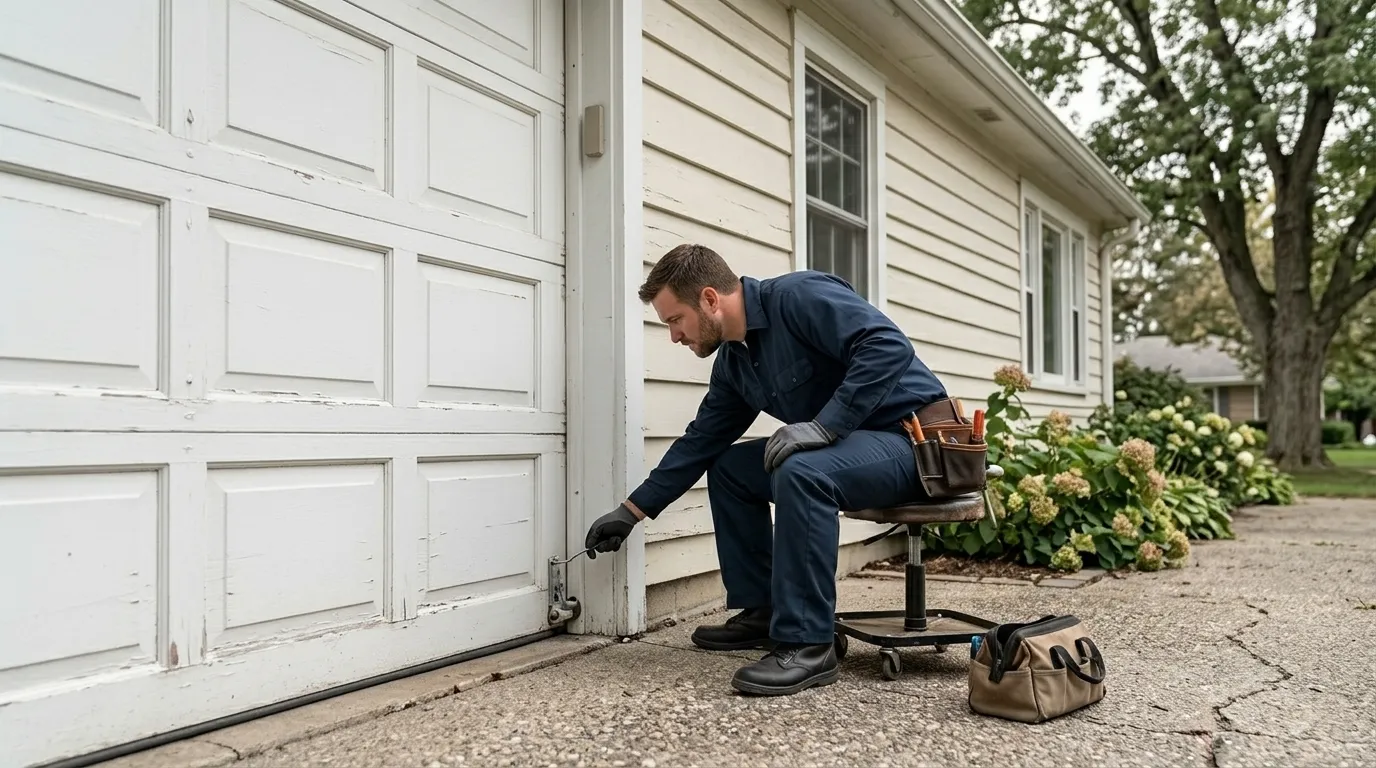
On steel rollers specifically, you'll sometimes see rust streaking on the track where the roller rides, or a roller that's visibly loose in its bracket and wobbles side to side instead of running straight. A door that pops off the track on one side, especially near the bottom section, is often this same wear showing up as a mechanical failure instead of just noise. None of this is an opener problem, even though it sounds like one - the opener is doing exactly what it's told, working harder against resistance that shouldn't be there.
Why It Happens Here
Most homes in this service area went up between 1965 and 2004, with the typical build year landing around 1990, and across the thirteen communities we cover the housing stock skews heavily toward 1980s and 90s construction. Doors installed in that window were built with steel rollers as the standard, not the sealed nylon rollers that became common later. Steel rollers on steel track wear differently than nylon: they don't crack, they rust and flatten, and once the bearing dries out the noise shows up fast.
The climate band here is mild temperate, which cuts both ways. You don't get the hard freeze-thaw cycling that splits plastic rollers in colder parts of the country, so a lot of these original rollers have outlasted what they would elsewhere. But the steady heat keeps grease thinning out and migrating off the bearing faster than in a drier, cooler climate, and that speeds up rust rather than preventing it. A roller that would still be quiet after ten years somewhere colder is often grinding here well before that.