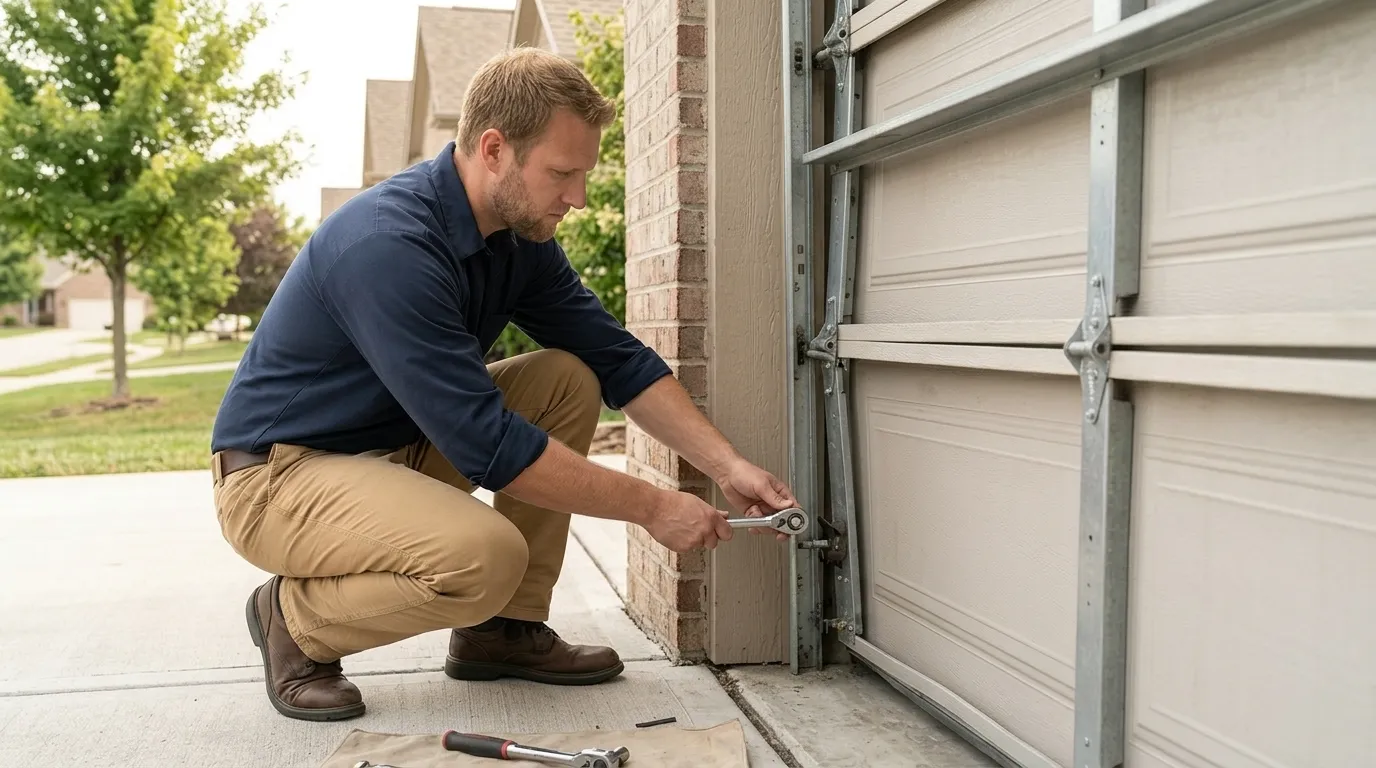
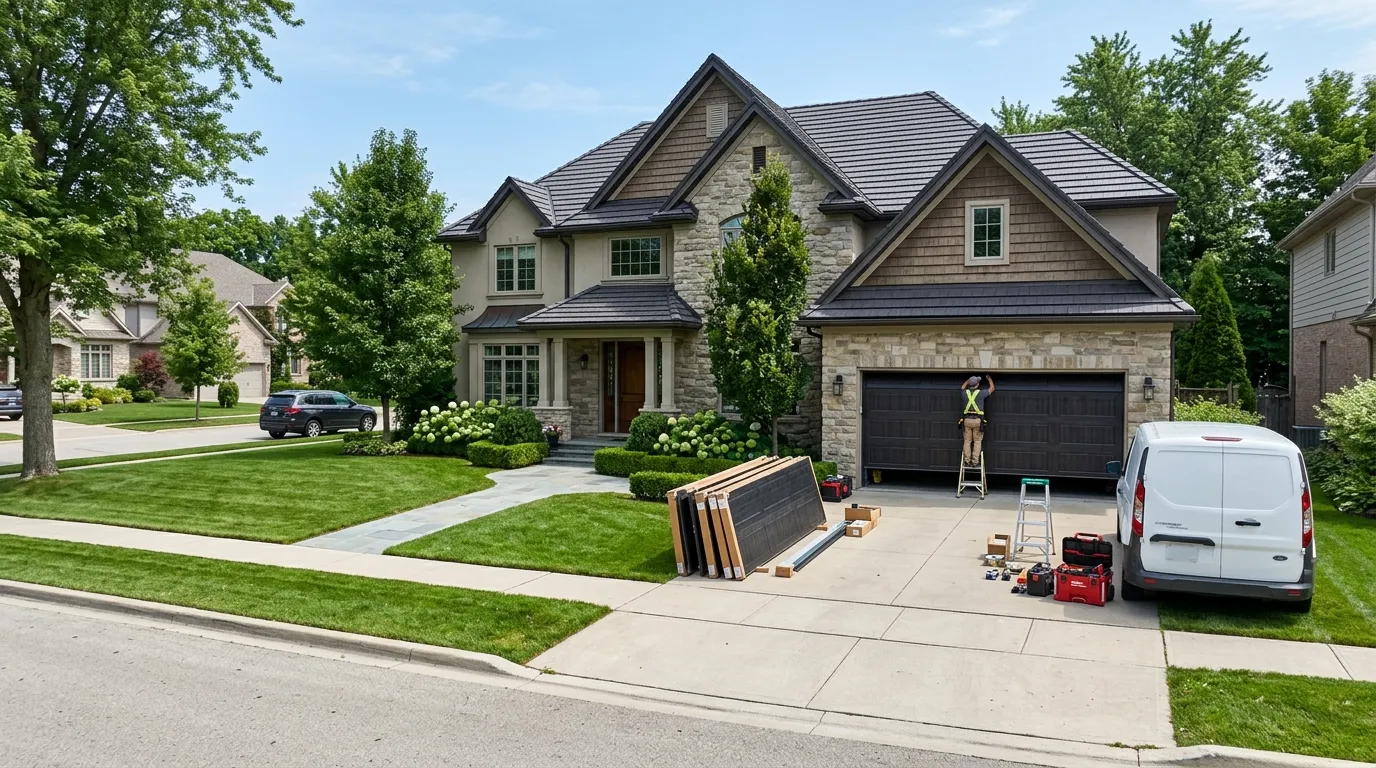
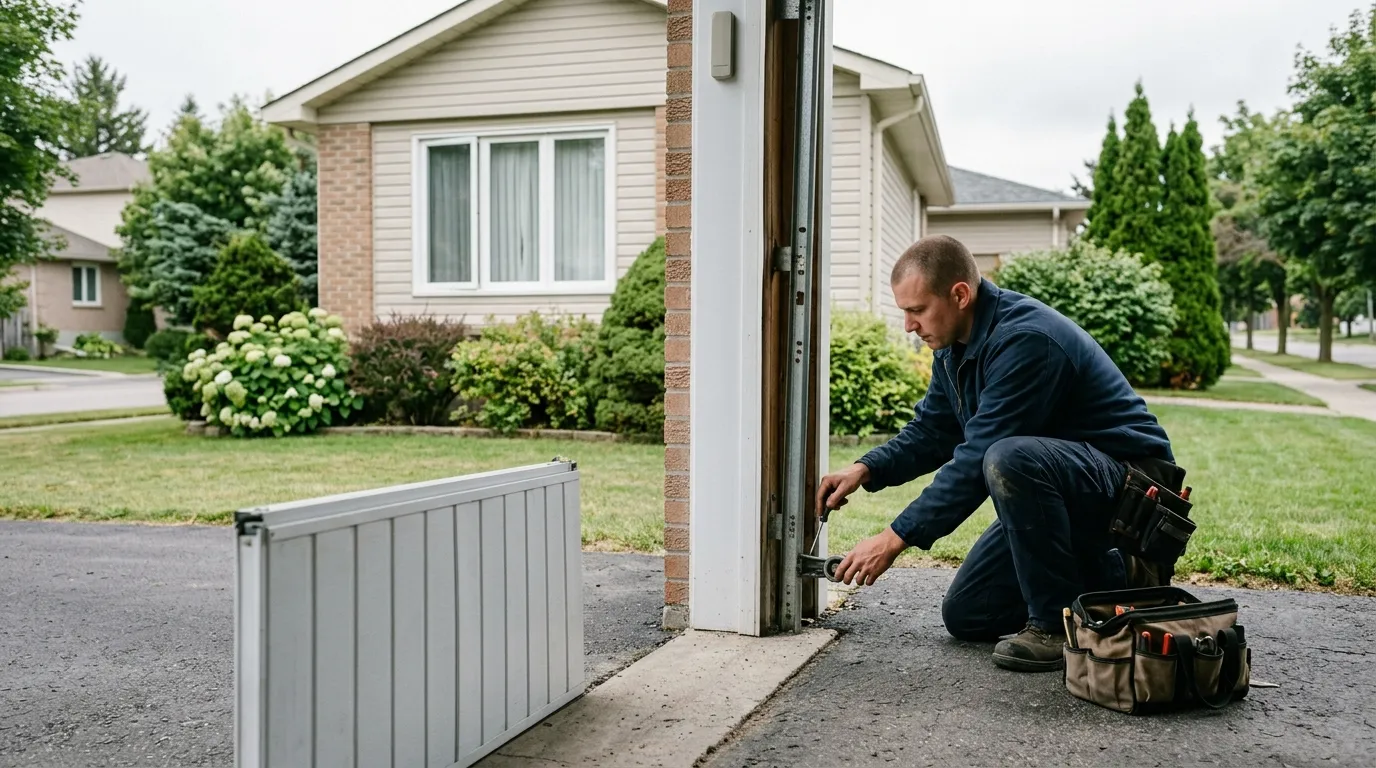
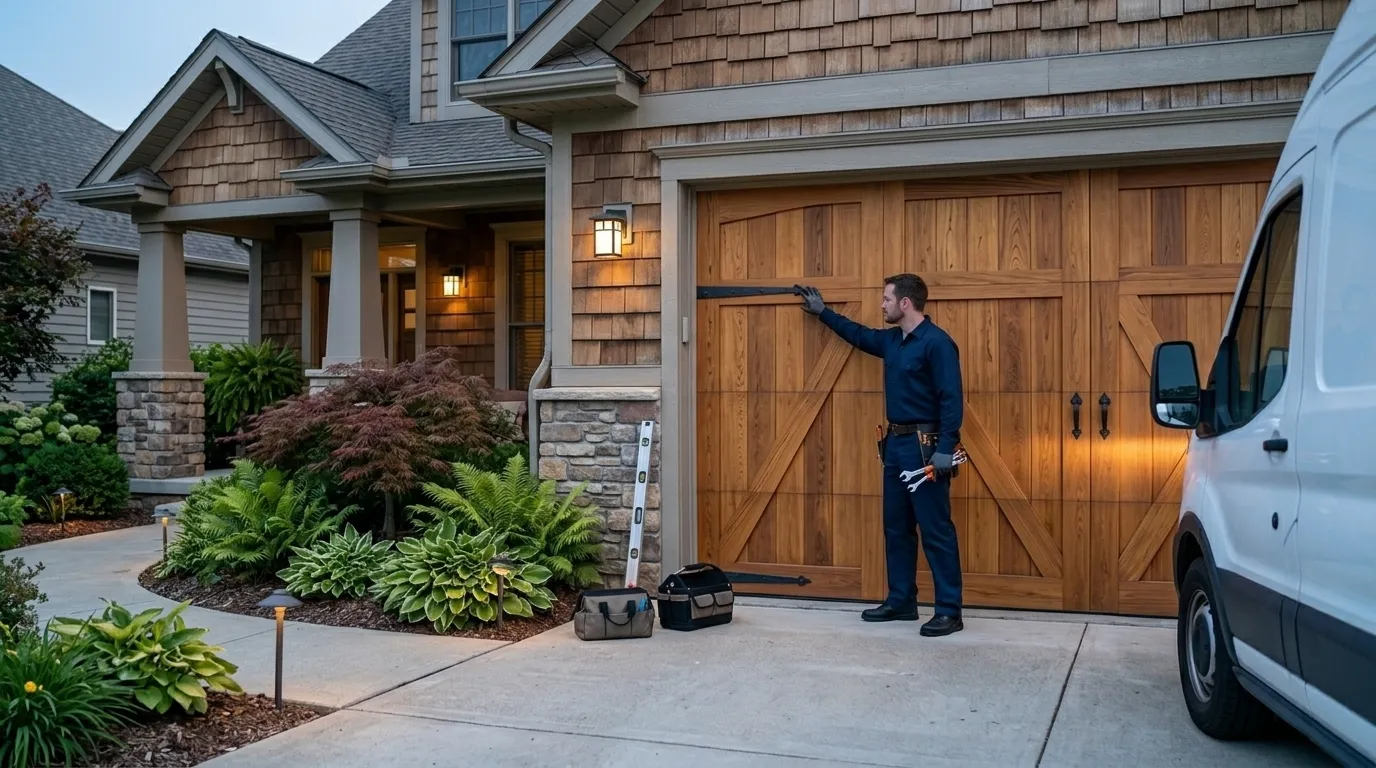
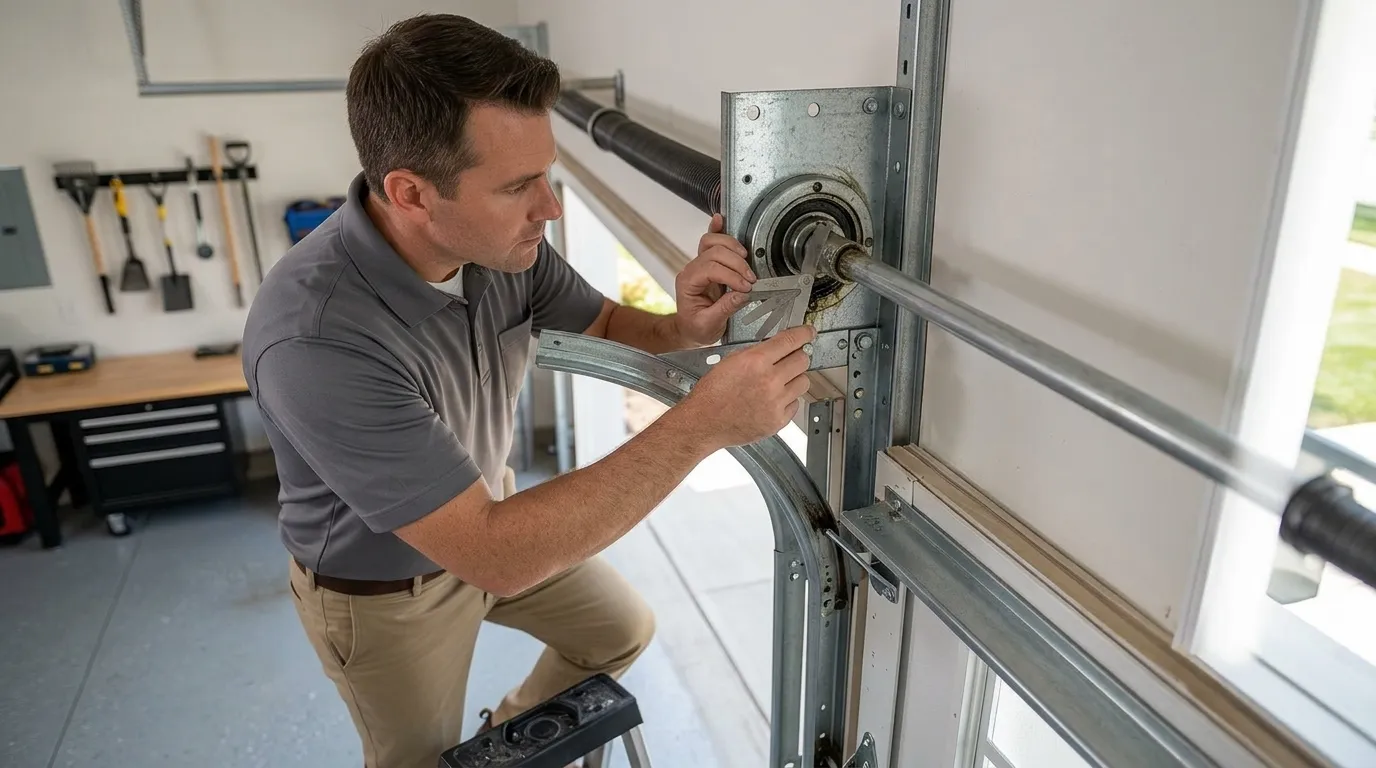
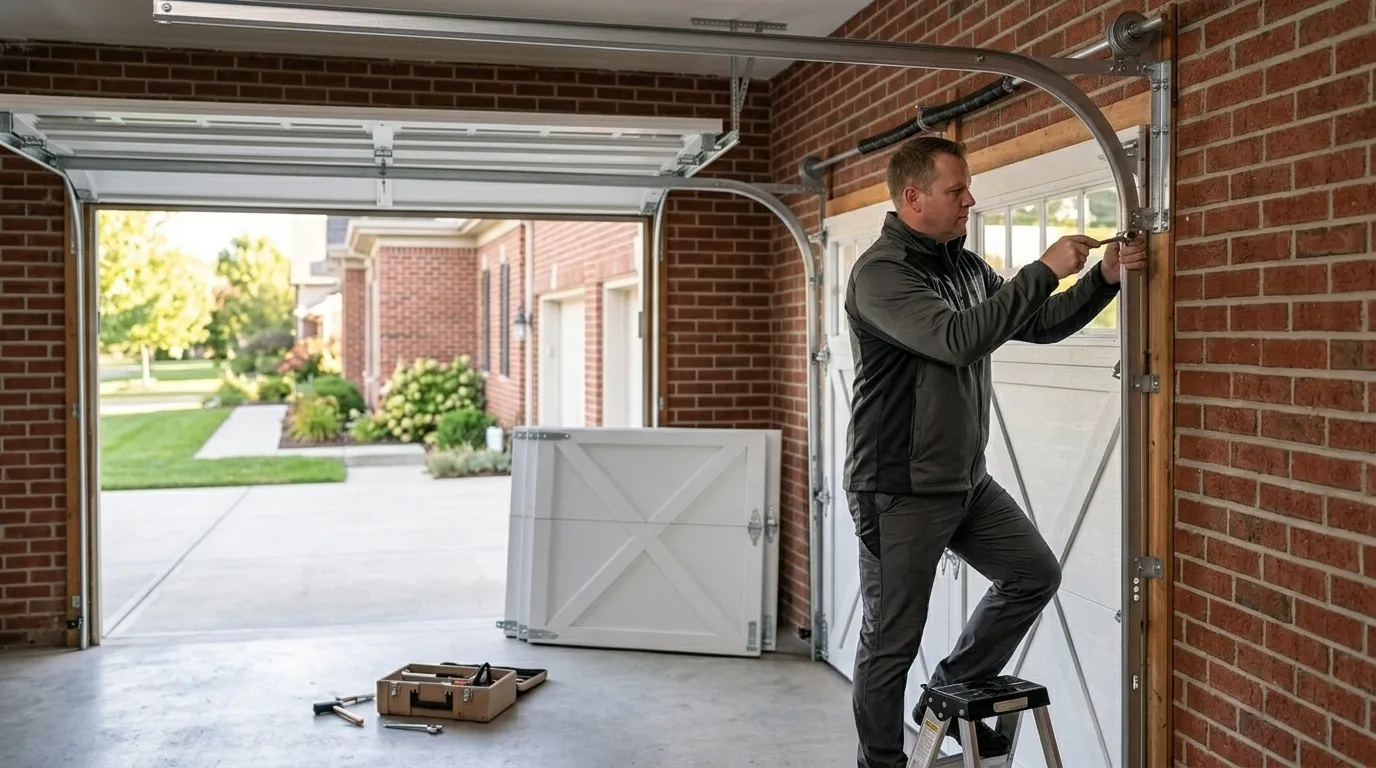
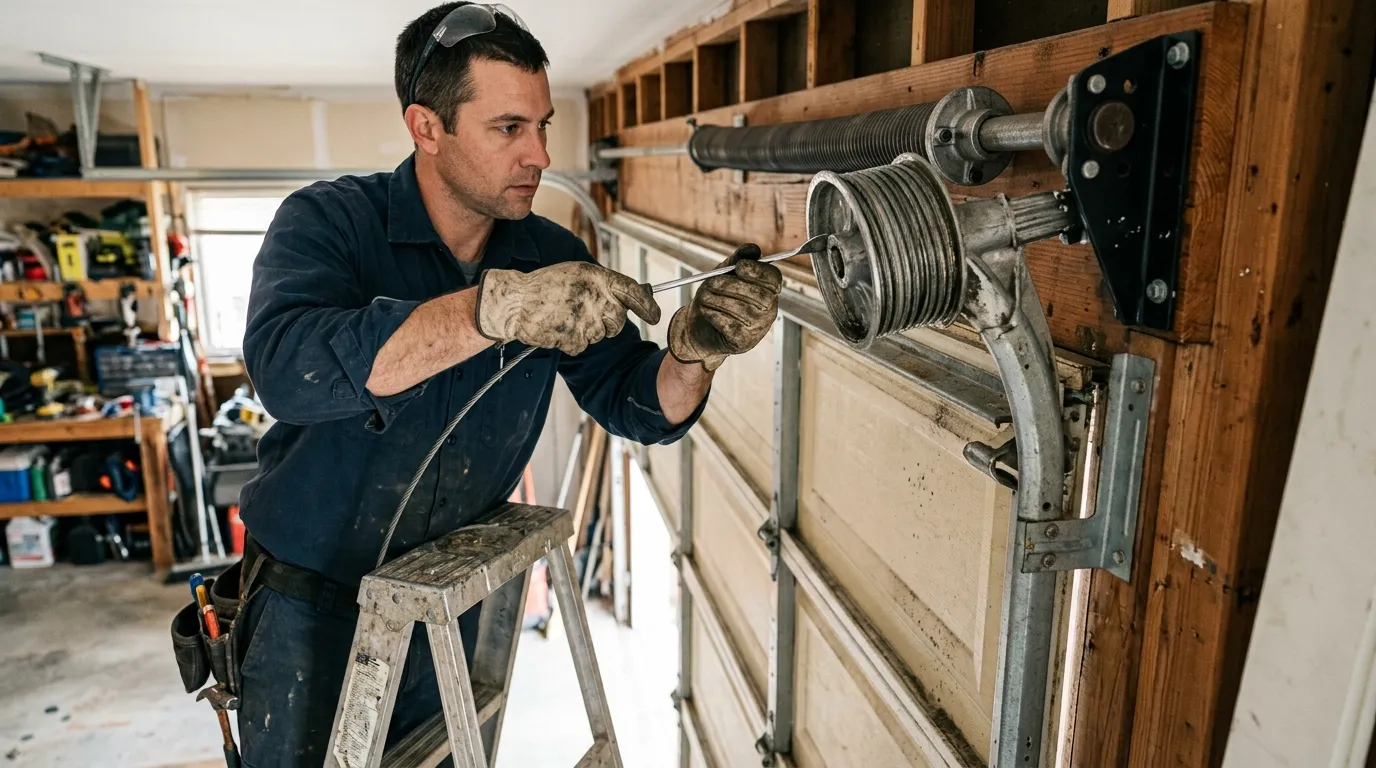
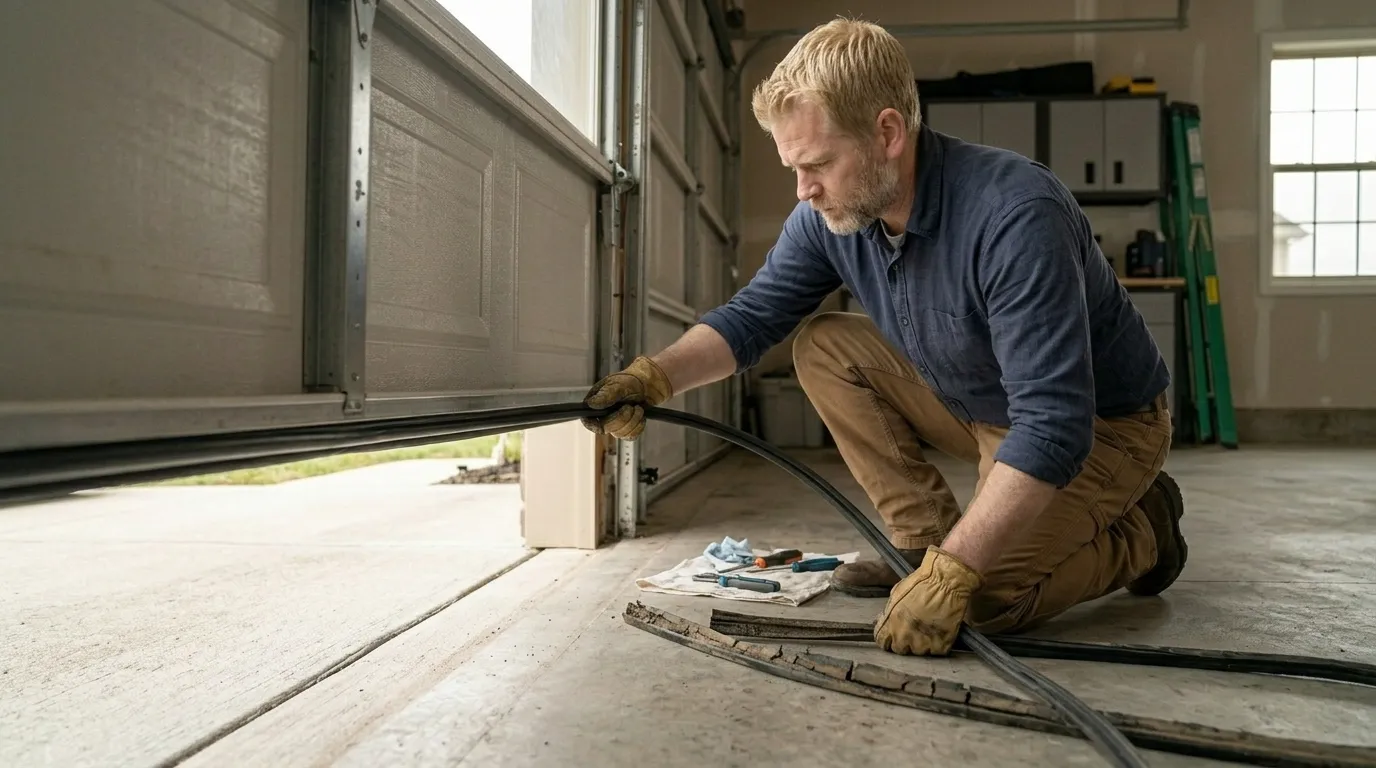
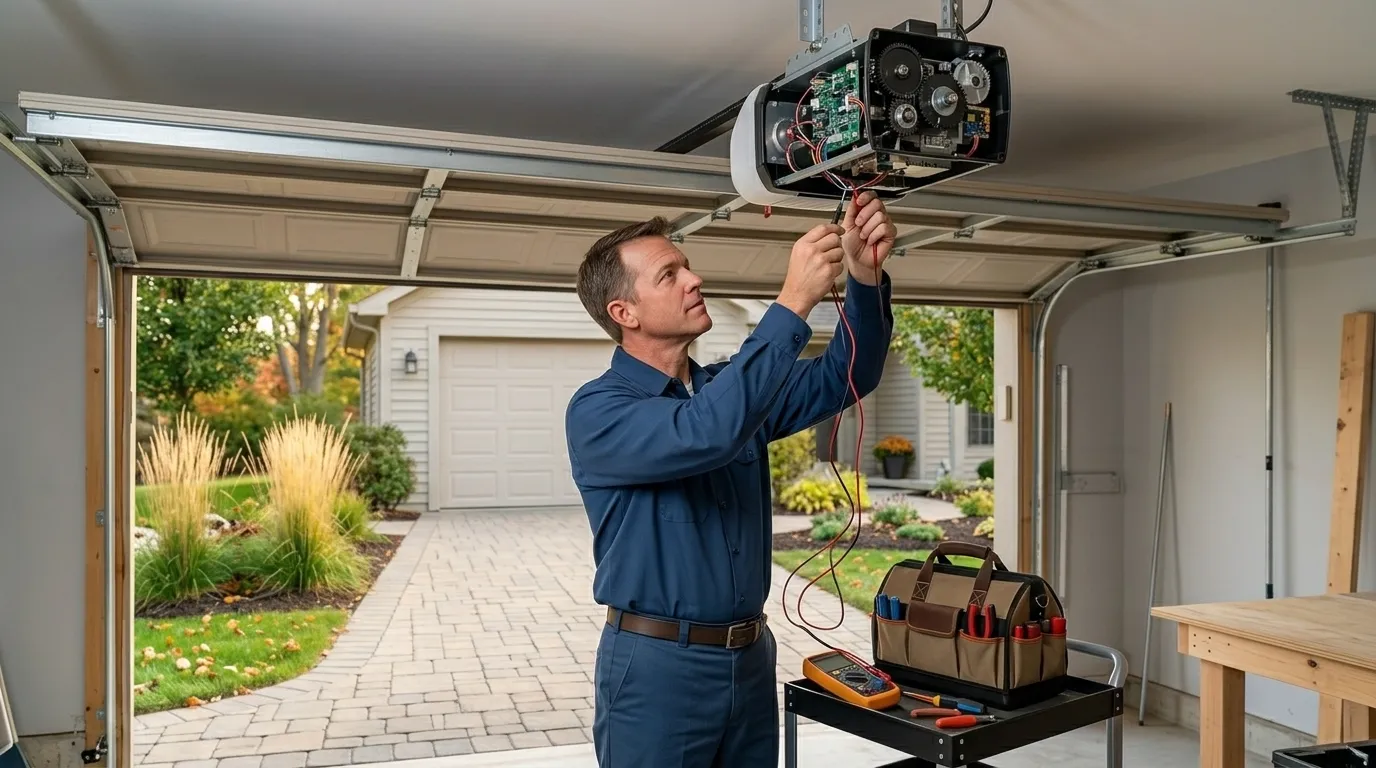
Opener repair starts with figuring out whether the problem is the motor unit itself, the drive (chain, belt, or screw), the wall control, or the safety sensors near the floor. On a lot of the openers we see out here, it's the logic board or the capacitor that's failed first - those parts age out well before the motor housing does. We test the circuit board, check the drive gear for stripped teeth (a common failure on chain-drive units that have run for decades), and check travel limits and force settings, which drift over time and cause an opener to reverse or stall partway. If the motor itself has gone, we replace the head unit and reuse the existing track and door hardware where it's still sound - no reason to pay for rail and hardware that's fine. We don't replace an opener that just needs a $20 sensor or a force adjustment; that's a ten-minute fix, not a new unit sale.
We carry openers and board-level parts on the truck for the drive types most common in this service area, so most jobs close in one visit. If a unit is a discontinued model with a board nobody makes anymore, we'll tell you that up front instead of chasing a part that won't show up.
What You Are Seeing
The door won't move at all, or it moves partway and reverses on its own. The remote works from close range but not from the driveway. The motor hums but the door doesn't budge - usually a stripped gear inside the housing, not the motor windings. Lights on the unit blink a code instead of running normally. Sometimes it's simpler: the door responds to the wall button but not the remote, which points at a dead antenna or a remote that's lost its code, not a bigger failure.
A chain-drive opener that's been running since the house was built will often go out with a grinding noise a week or two before it quits - worth a call before it fails on you completely rather than after.
Why It Happens Here
Housing across this service area went up mostly between 1965 and 2004, with the median build year sitting around 1990, and across the 13 named communities we cover the bulk of that stock is 1980s and 90s construction. That matters for openers specifically: garage door openers installed with a house build have a service life measured in decades, not generations, and a huge share of the units out here are original or one-replacement-in equipment now well past the age where boards, capacitors, and drive gears start failing on their own.
The mild temperate climate here means we're not dealing with the freeze-thaw damage that wrecks openers up north, but heat cycling still takes a toll on circuit boards and plastic drive gears over 30-plus years, and that's the failure mode we see over and over: not storm damage, just age catching up with equipment installed when Reagan or Bush was in office. With 26,165 owner-occupied houses across the area and median household income around $80,037, most owners are maintaining original equipment rather than swapping it out early, which is exactly why we see so many boards and gears fail from age rather than misuse.
How Long It Takes
Most opener repairs - sensor alignment, remote reprogramming, force and limit adjustment, capacitor swap - are done in under an hour once we're on site. A full head-unit replacement, where we're swapping the motor housing but keeping the existing rail and hardware, usually runs 60 to 90 minutes. If the issue turns out to be a stripped drive gear, that's a part we typically carry, so it doesn't usually turn into a second visit.
The one thing that adds time is a discontinued board on an older unit - if the manufacturer doesn't make that logic board anymore, we'll say so and talk replacement instead of promising a part that isn't coming. We serve homeowners across this area including San Leon, La Marque, Tiki Island, Dickinson, Hitchcock, and drive time from our base is part of any estimate we give over the phone.
How it works
From “it’s stuck” to “it’s fixed”
1
Tell us what’s wrong
Describe the symptom - won’t open, loud bang, opener runs but the door won’t move.
2
On-site diagnosis
A technician tests the door under power and by hand and finds what actually failed.
3
Clear, up-front plan
You get the fix that’s needed and what drives the cost - before any work starts.
4
Repaired & tested
The repair is done, the door is set true and tested, and the work area left clean.
Next step
Serving Texas City, TX - tell us what your door’s doing and we’ll take it from there.
Why did my garage door opener just stop working with no warning?
Usually it's not sudden - it's a board or capacitor that's been degrading for months and finally gave out. Given how much of the housing stock in this area dates to the 1980s and 90s, a lot of the openers failing right now are original equipment reaching the end of a normal service life, not something that broke overnight.
Can you fix my opener or do I need a new one?
Depends on what failed. Sensors, wiring, remotes, and force settings are simple repairs. A stripped drive gear or dead motor on a unit that old often makes more sense to replace outright rather than chase parts for a discontinued board - we'll tell you which situation you're in before we start any work.
Do you work outside Texas City itself?
Yes, we cover the surrounding area including San Leon, La Marque, Dickinson, Hitchcock, and the other nearby communities we serve. Drive time factors into scheduling, so mention your town when you call.
Is opener noise normal or a sign of failure?
A little hum is normal. Grinding, popping, or a motor that runs without the door moving is not - that's usually a drive gear or chain issue and worth a call before it fails completely, especially on an opener original to the house.