Why It Happens Here
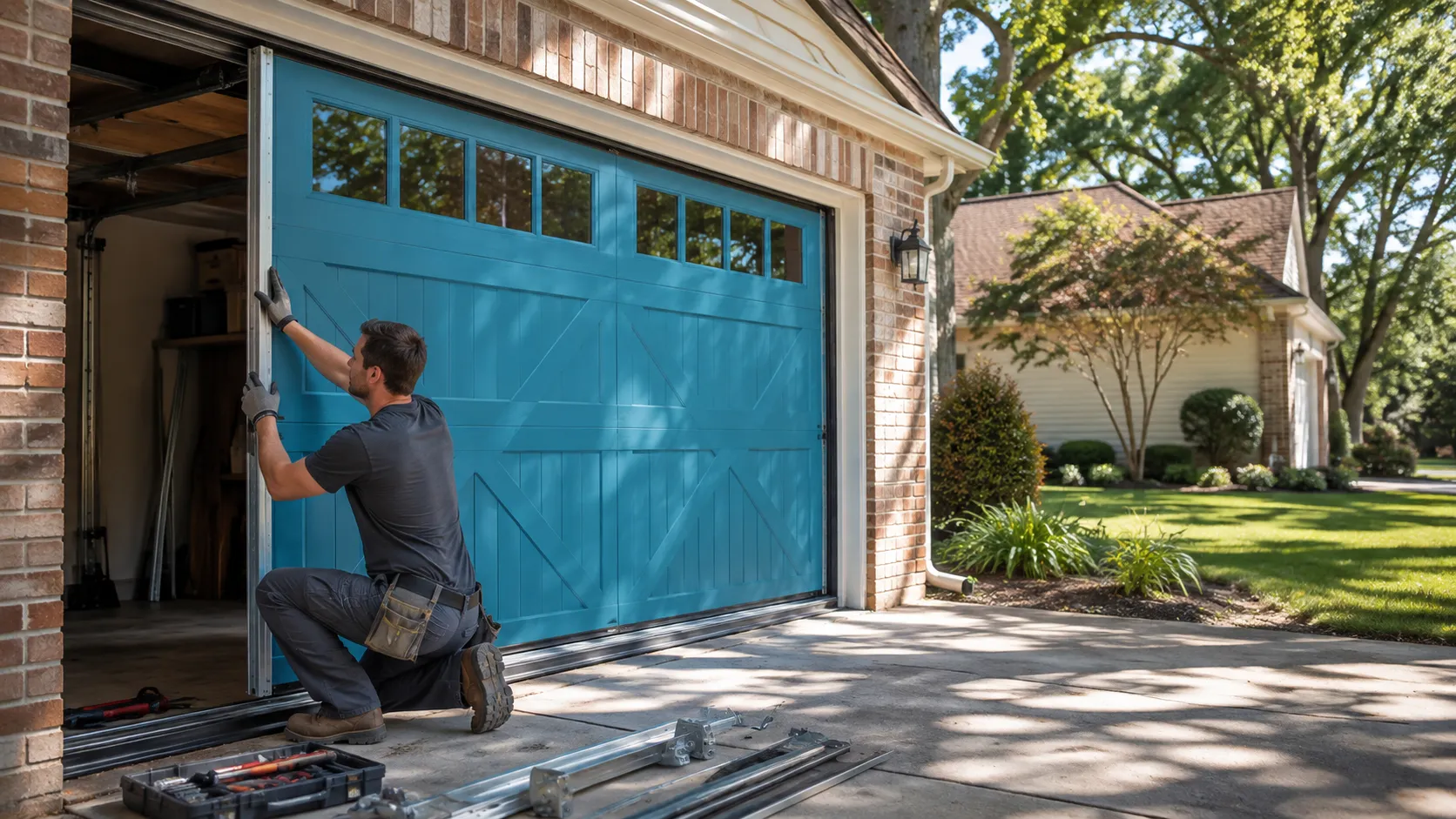
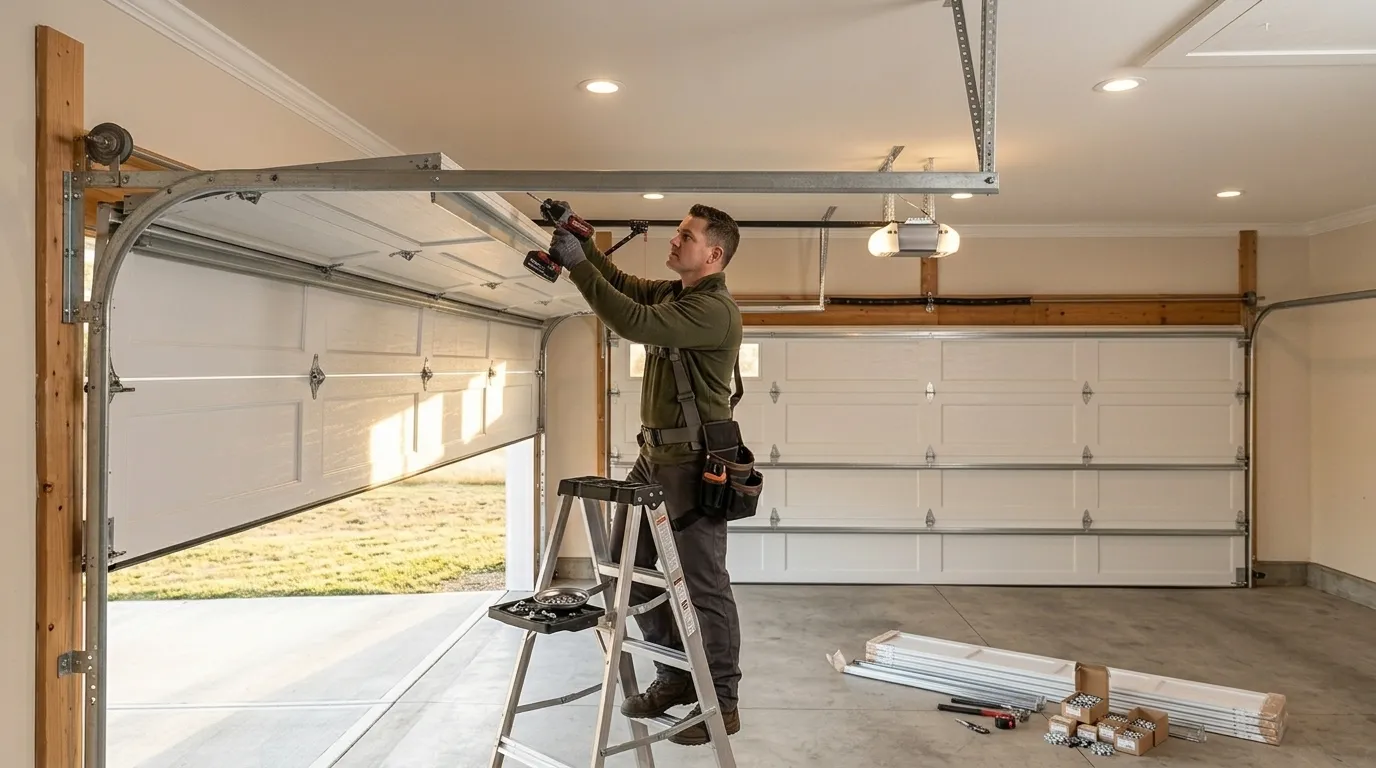
San Leon's housing carries a median build year of 1996, so the doors going off track here are mostly late-model steel sectional units, not the older wood or one-piece doors you'd find in an area with an earlier median year. That means the common failure isn't age-rot in the panel, it's the track and roller hardware: a bent rail from a car bumper clipping it, a roller that's worn its bearing out, or a bottom bracket pulled loose when a cable let go.
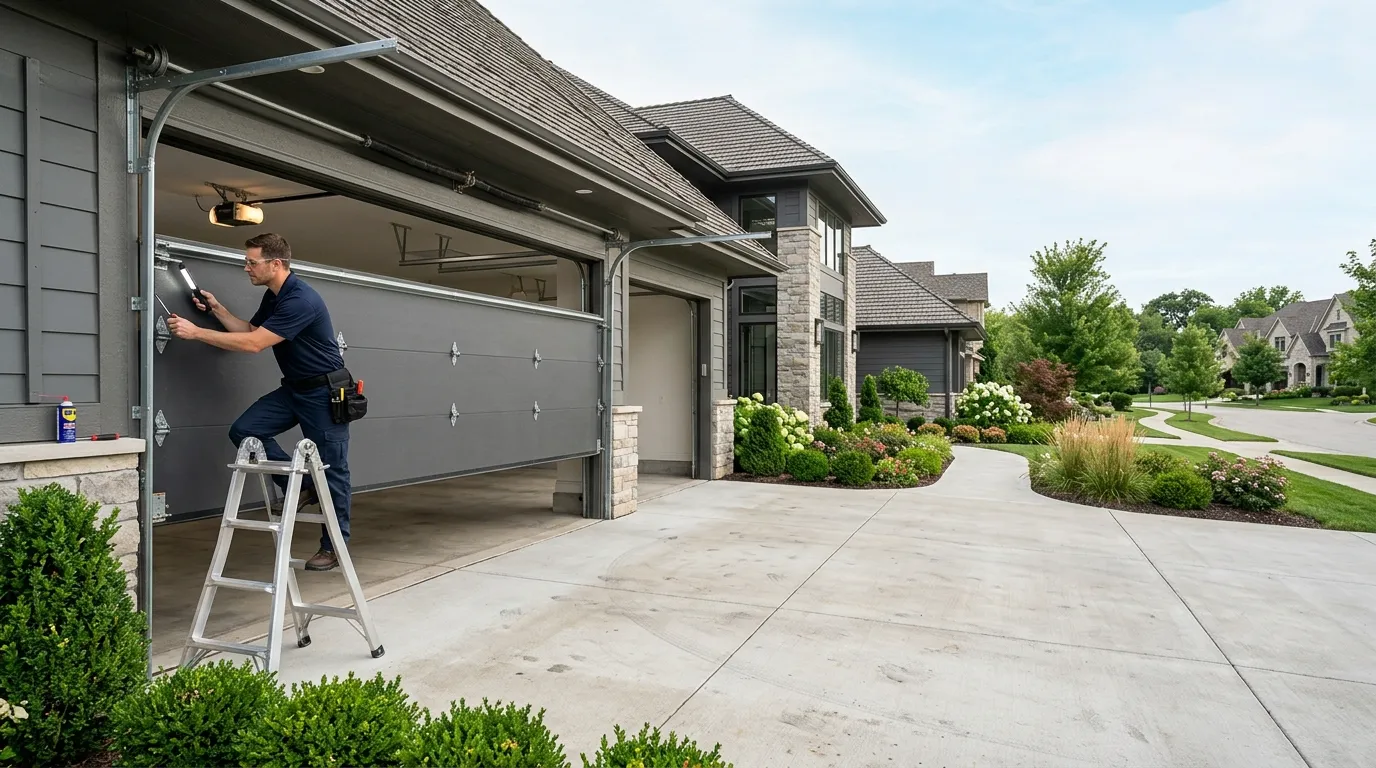
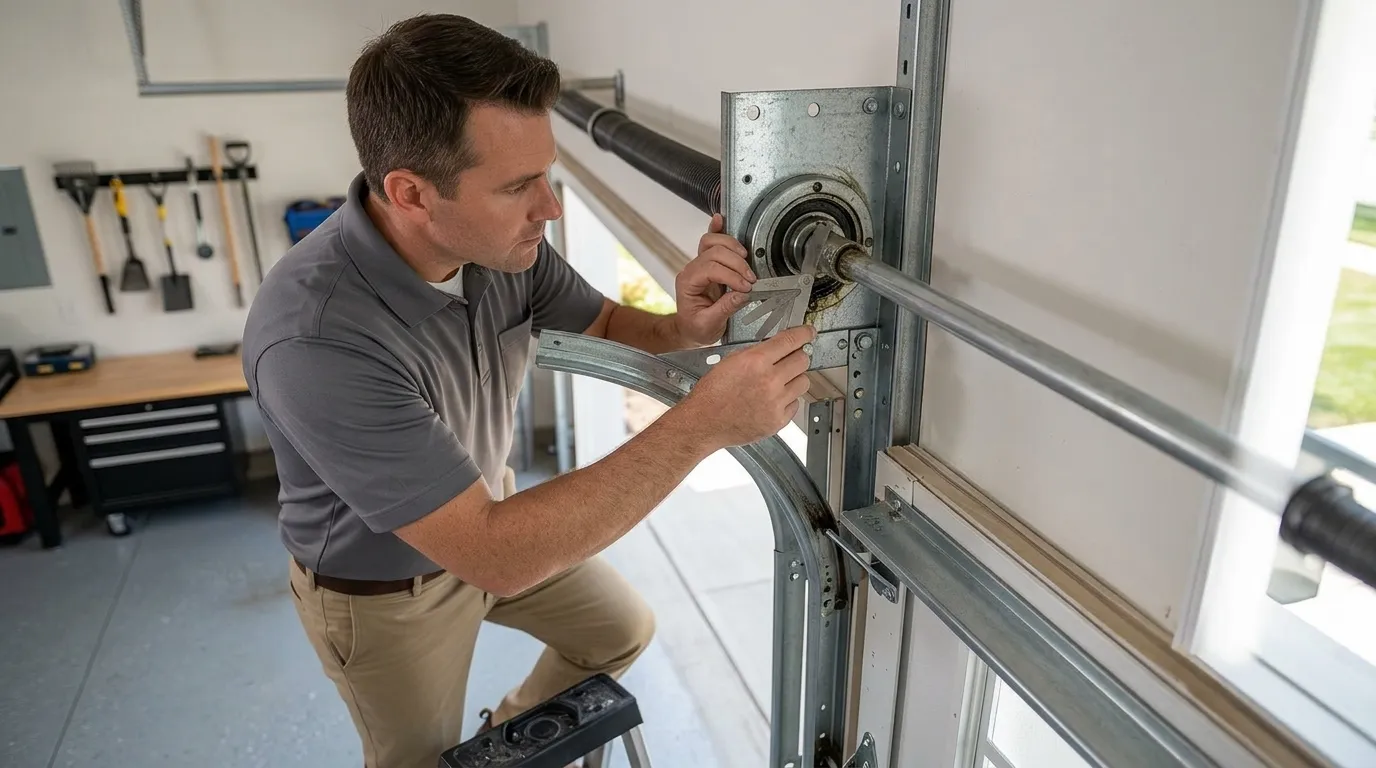
San Leon falls in the same mild temperate climate band as the rest of the area, so we're not chasing frost-heave foundation shifts or ice-locked tracks the way a company further north would be. What we do see is ordinary mechanical wear on hardware that's now roughly three decades old on the earliest of these builds - springs and rollers with a service life that's simply run out.
Getting It Booked In
San Leon sits about 5 miles from our Texas City base, which keeps it close for scheduling - a job here doesn't get queued behind work happening on the far side of the service area. There's no branch office or drop point in San Leon itself; every truck runs from Texas City, so when you call, you're booking a visit, not a walk-in counter.
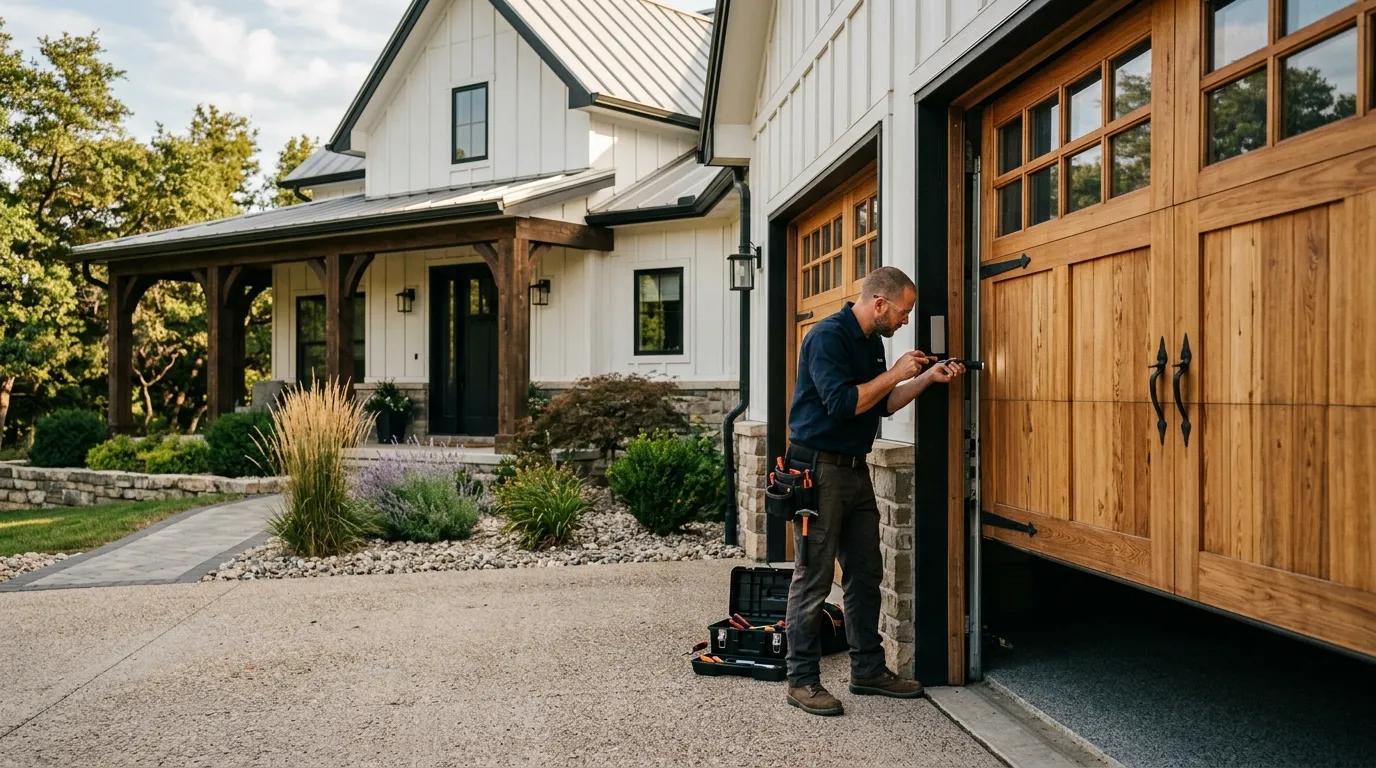
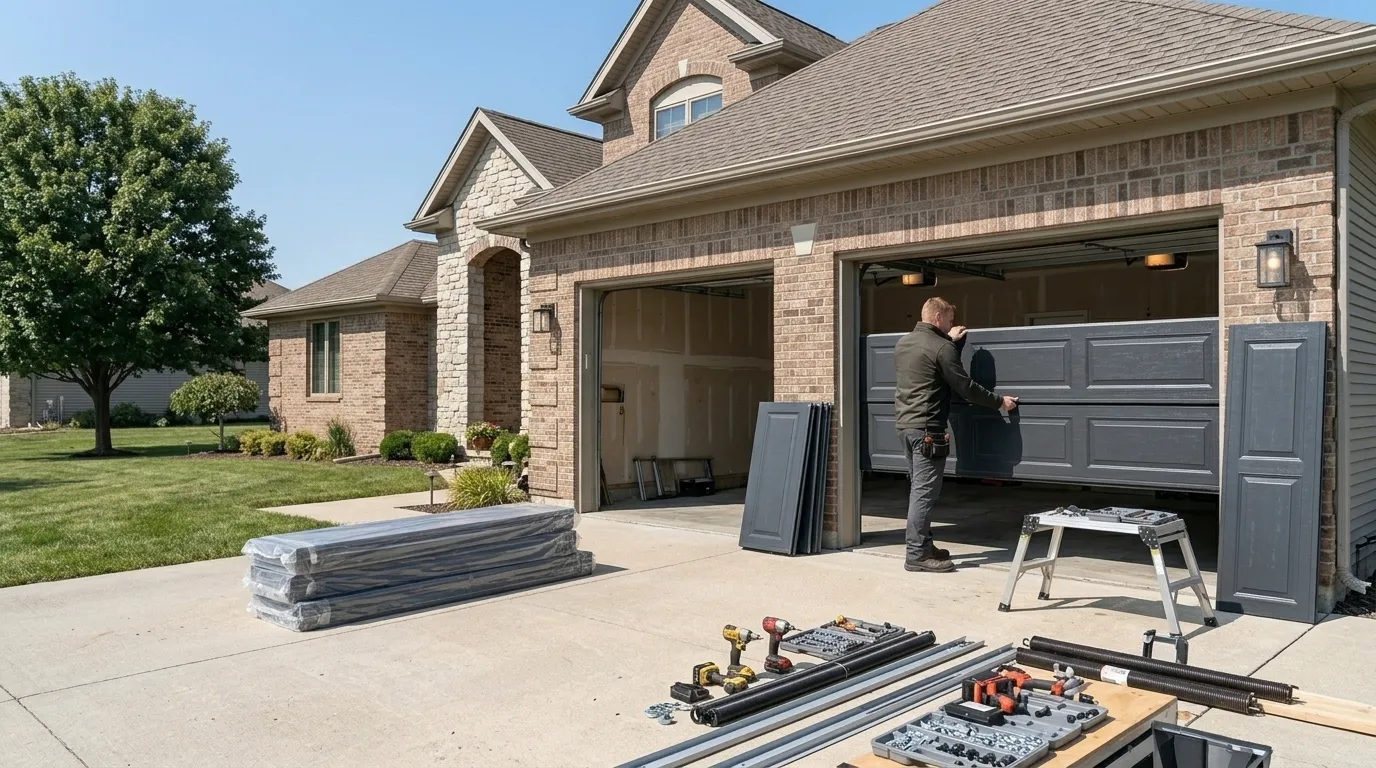
Tell us what the door is doing - hanging crooked, stuck partway, a roller visibly off the rail - and we'll bring the right hardware for a steel sectional door rather than guessing on site. Because most San Leon doors share that late-80s-to-90s builder-grade hardware, we usually know what we're walking into before we arrive.
What You Are Seeing
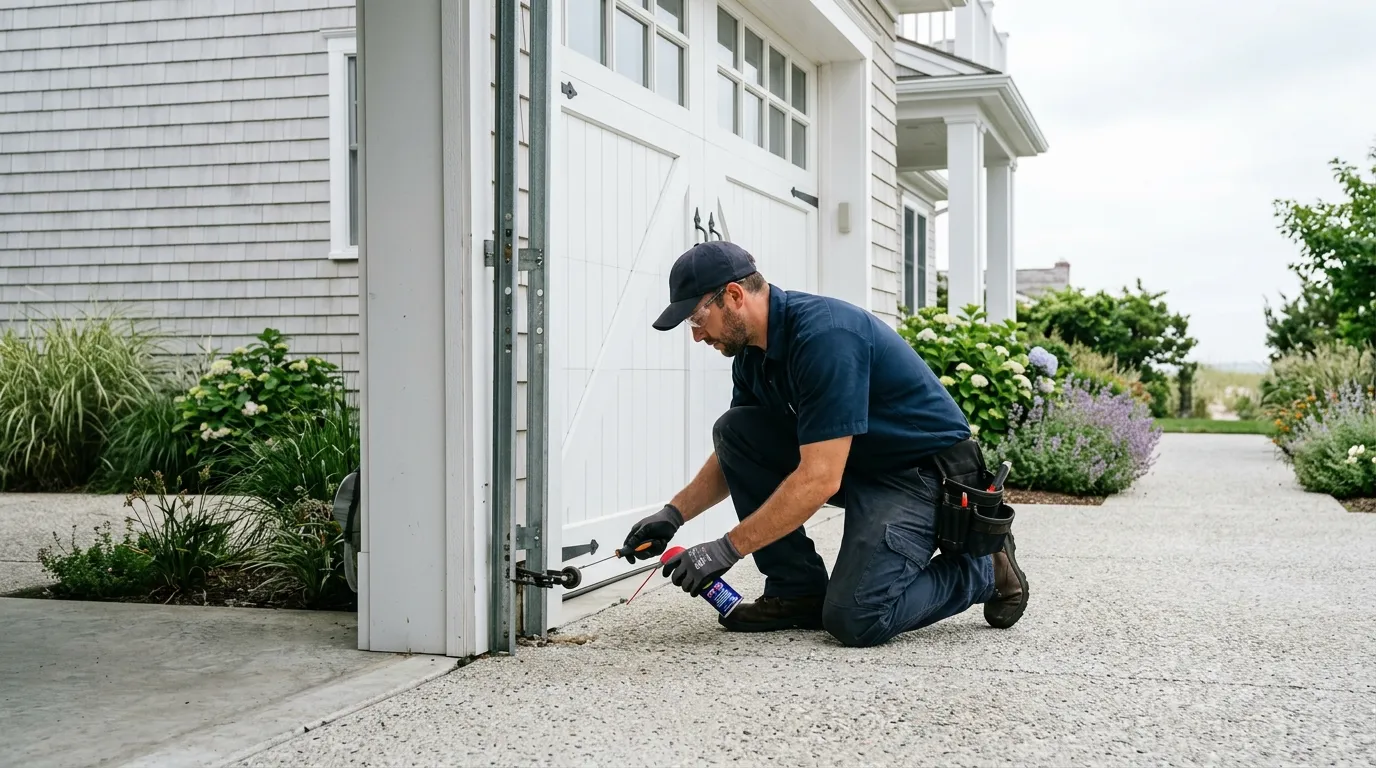
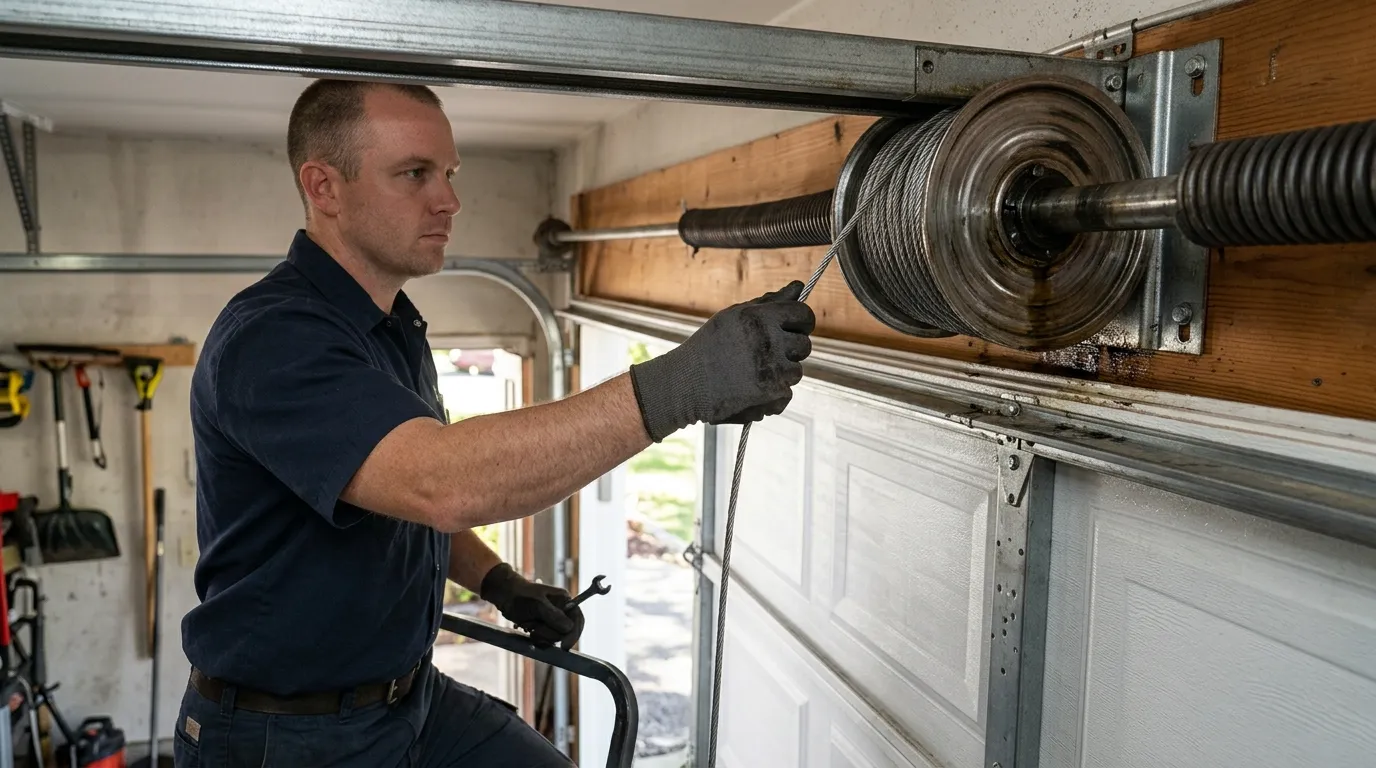
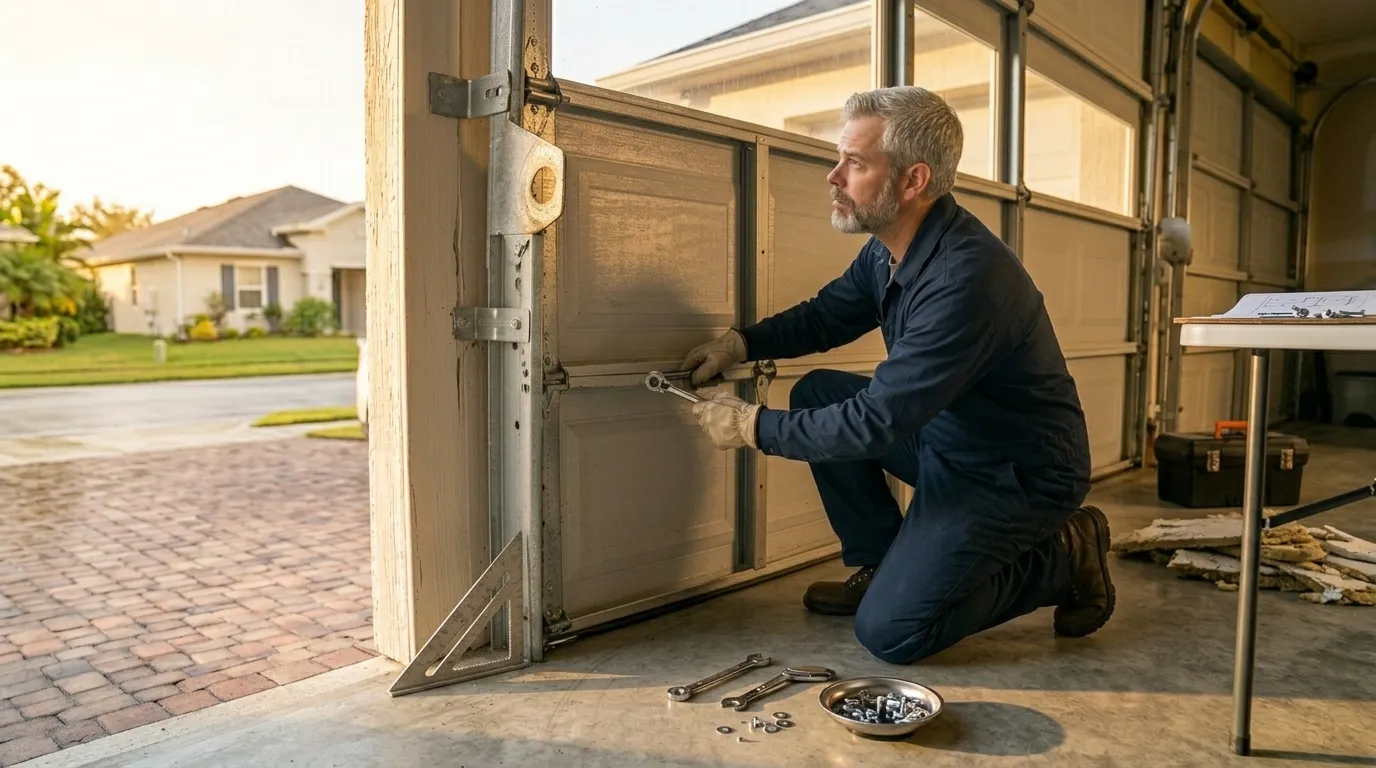
The usual signs: a visible gap between the roller and the track on one side, the door running crooked as it opens or closes, a grinding or scraping sound where metal is riding against metal instead of rolling, or the door stopping partway and refusing to move either direction. Sometimes it's quieter than that - a cable dangling loose off its drum, or a bottom bracket pulled a half-inch out of alignment, easy to miss until the door binds.
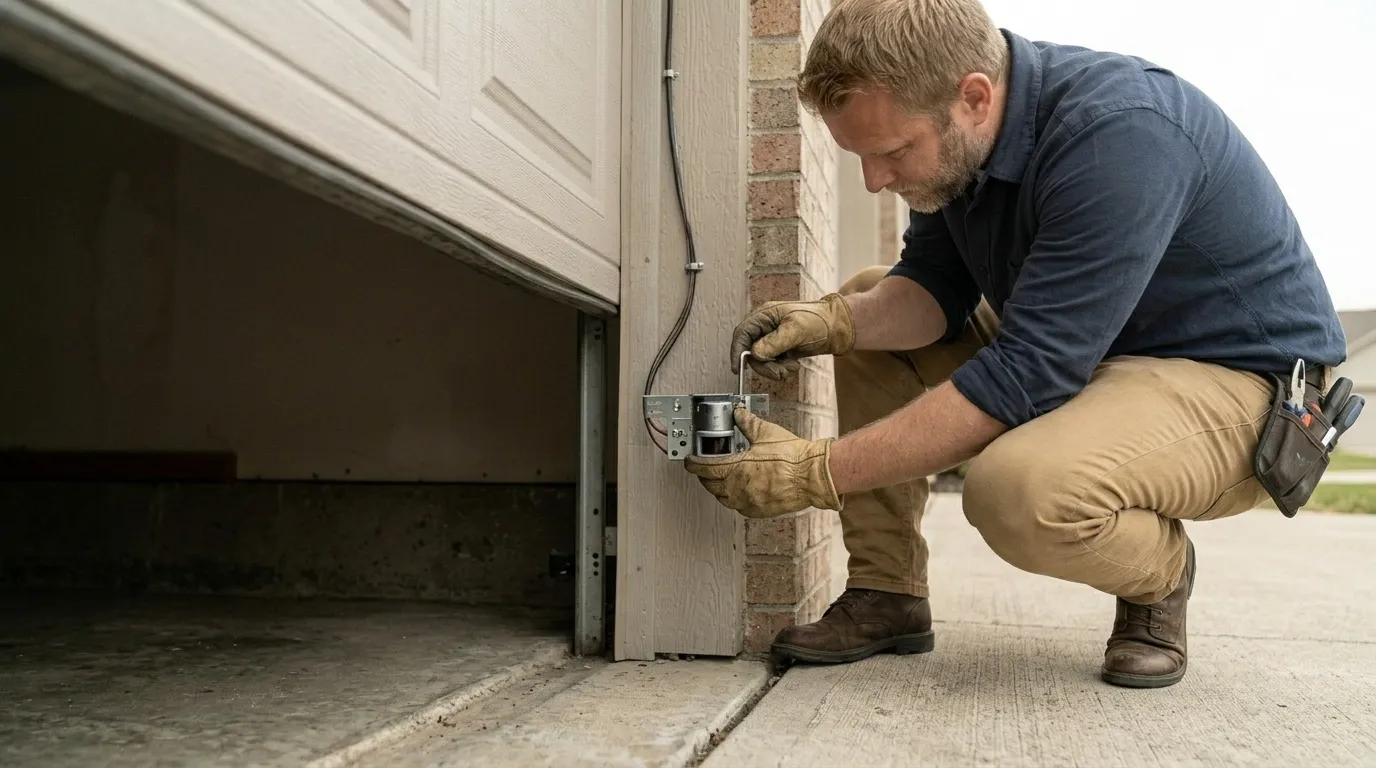
On San Leon's steel sectional stock, off-track failures usually start at one of three points: a bent section of rail, a roller that's worn through its nylon sleeve down to bare metal, or a bracket bolt that's worked itself loose over years of daily cycles. None of those get better on their own, and running the opener against a jammed door tends to strip the gear inside it, turning one repair into two.