What You Are Seeing
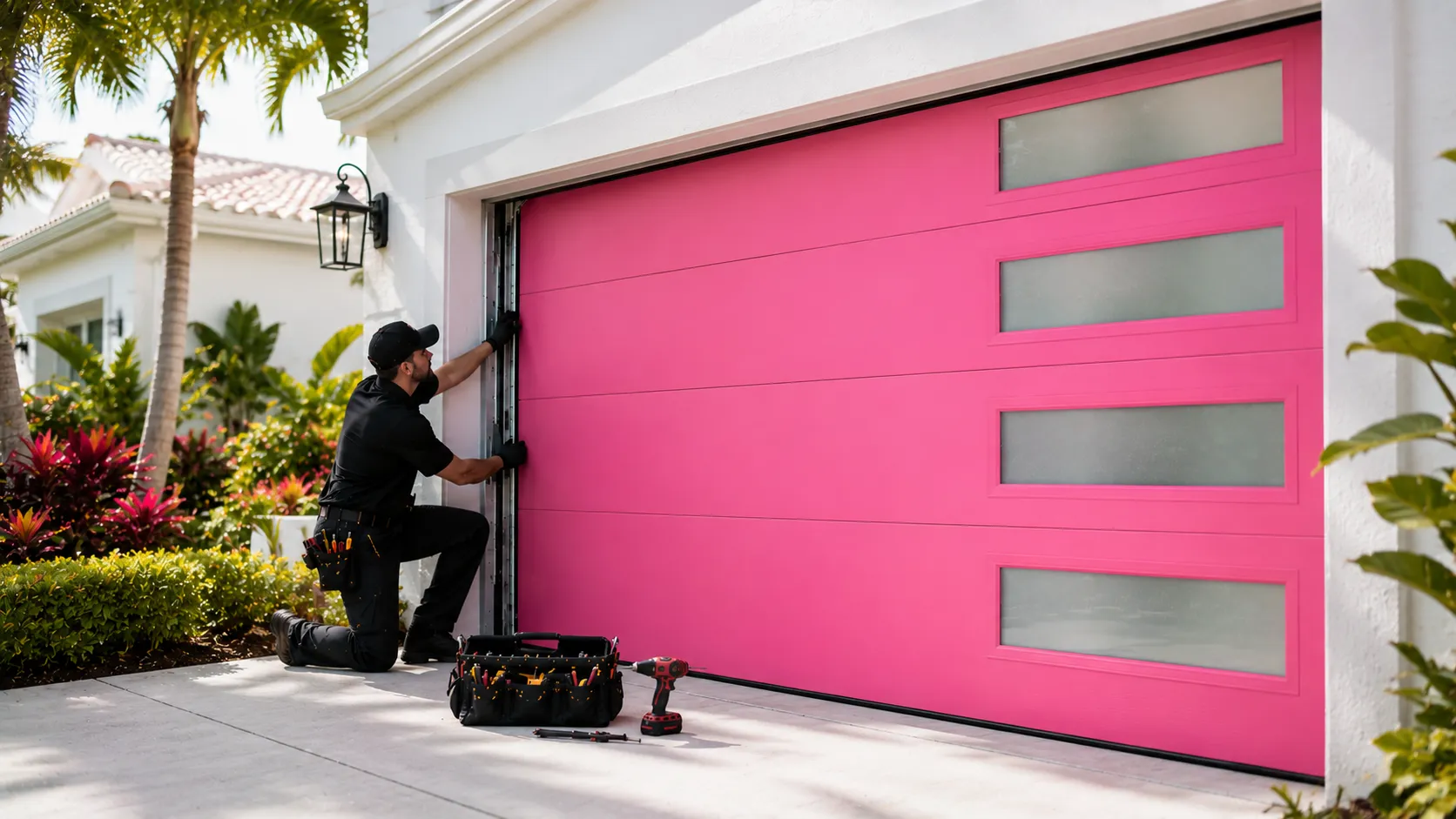
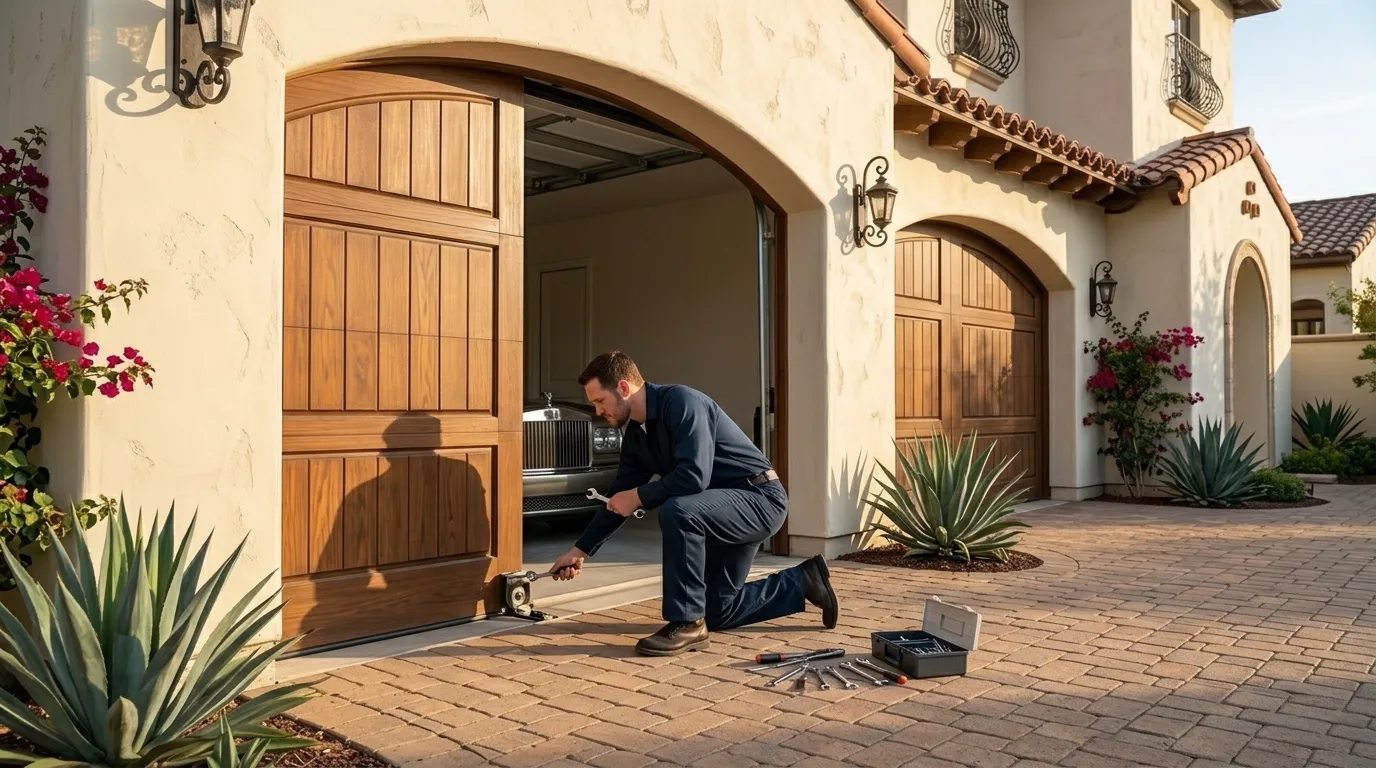
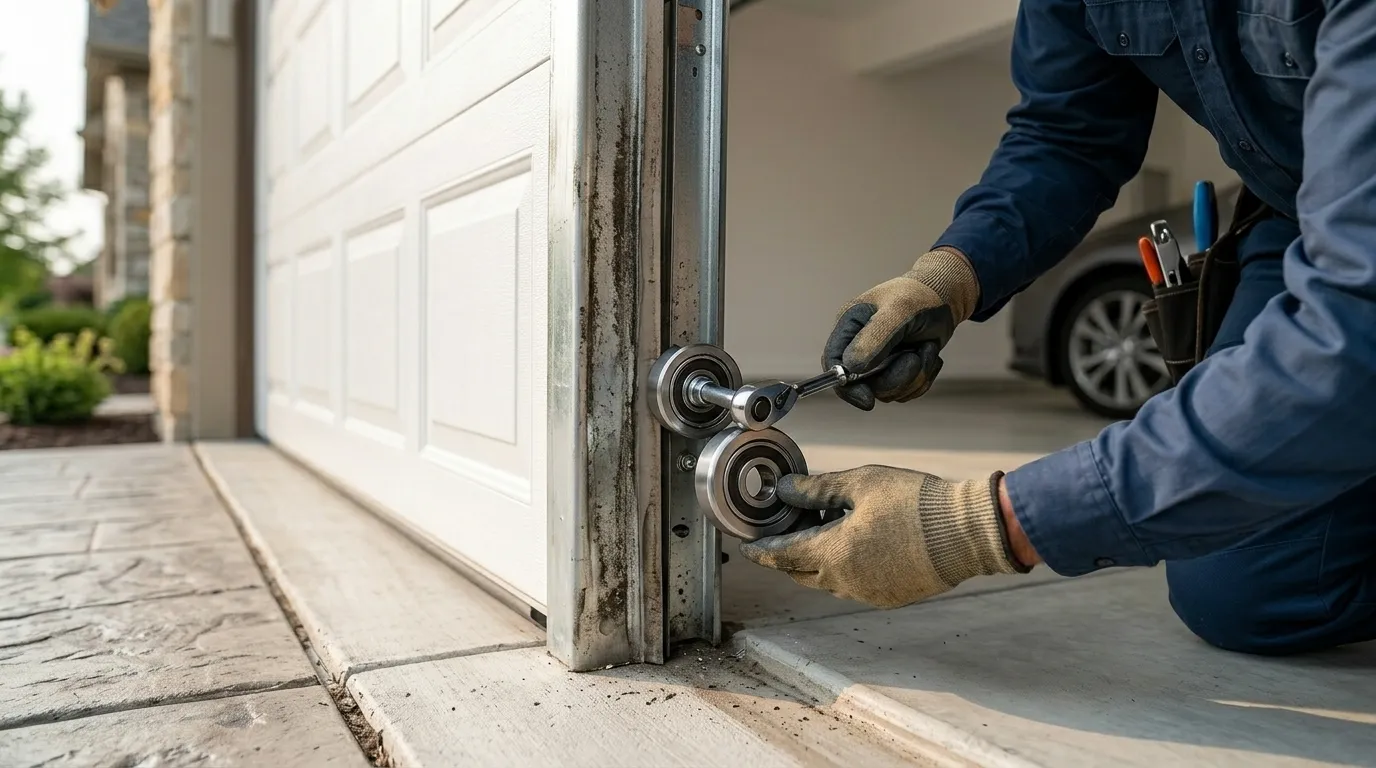
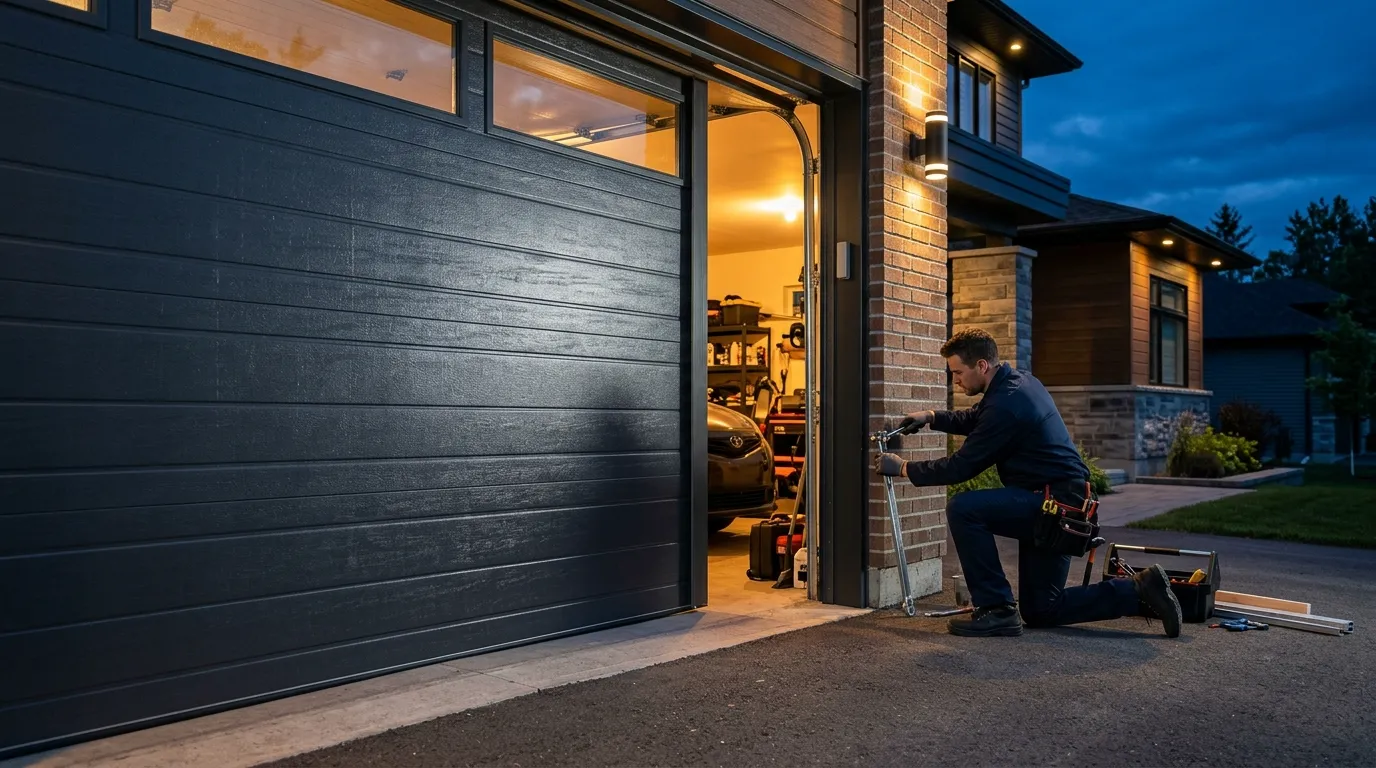
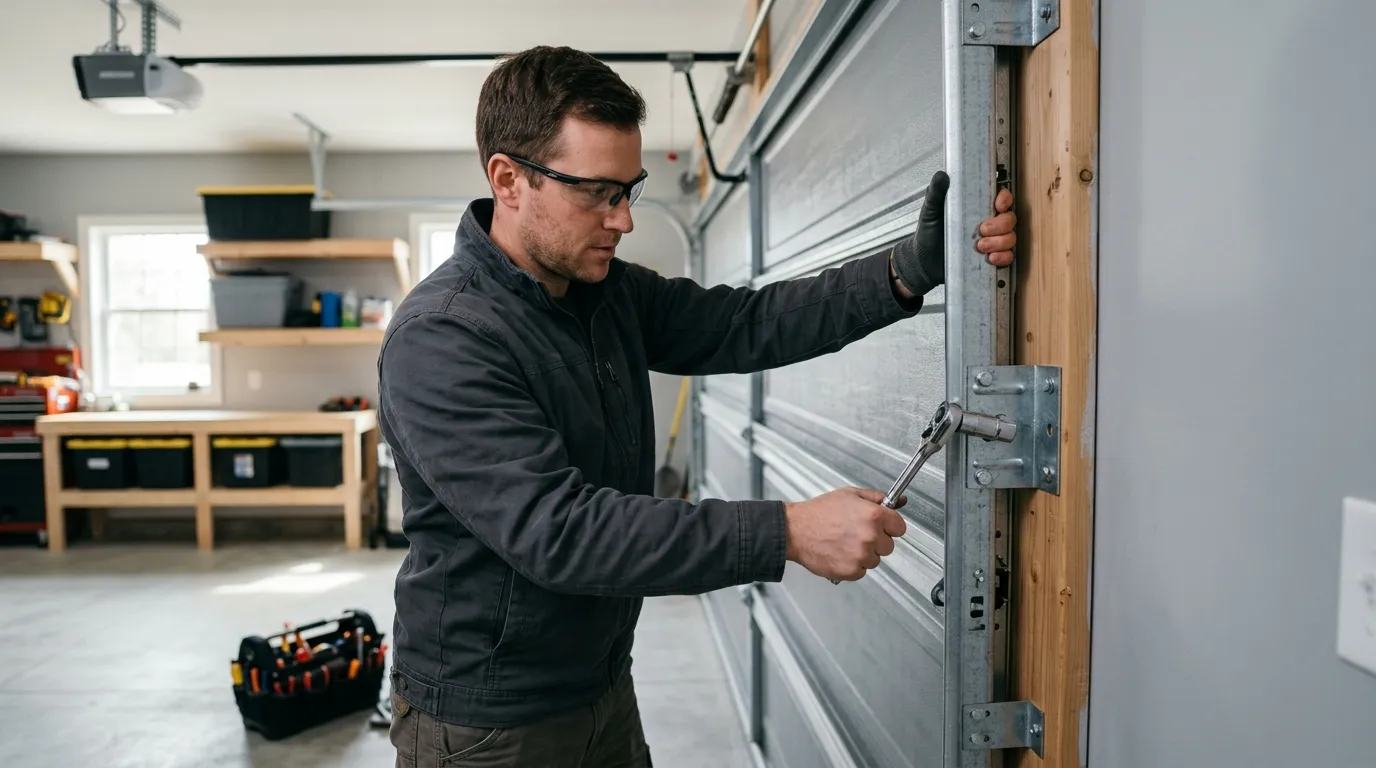
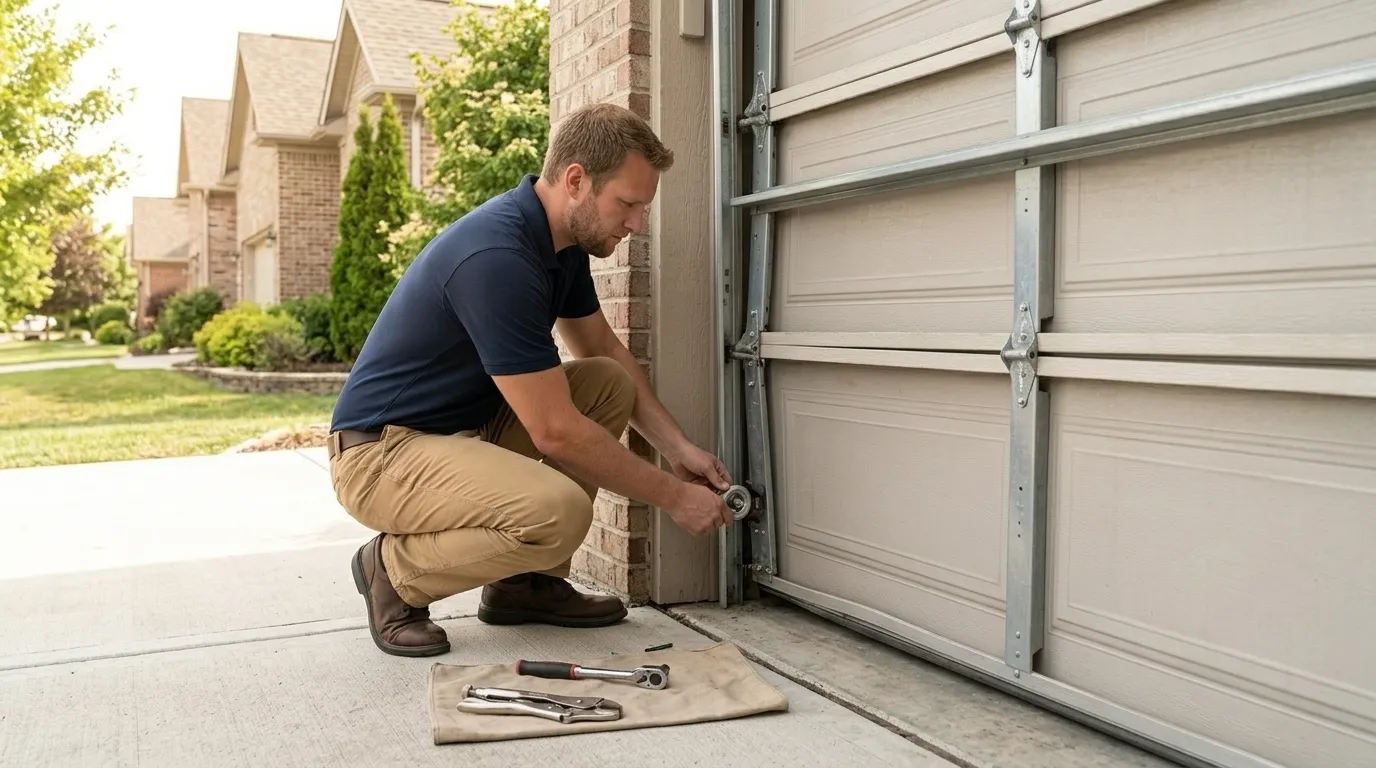
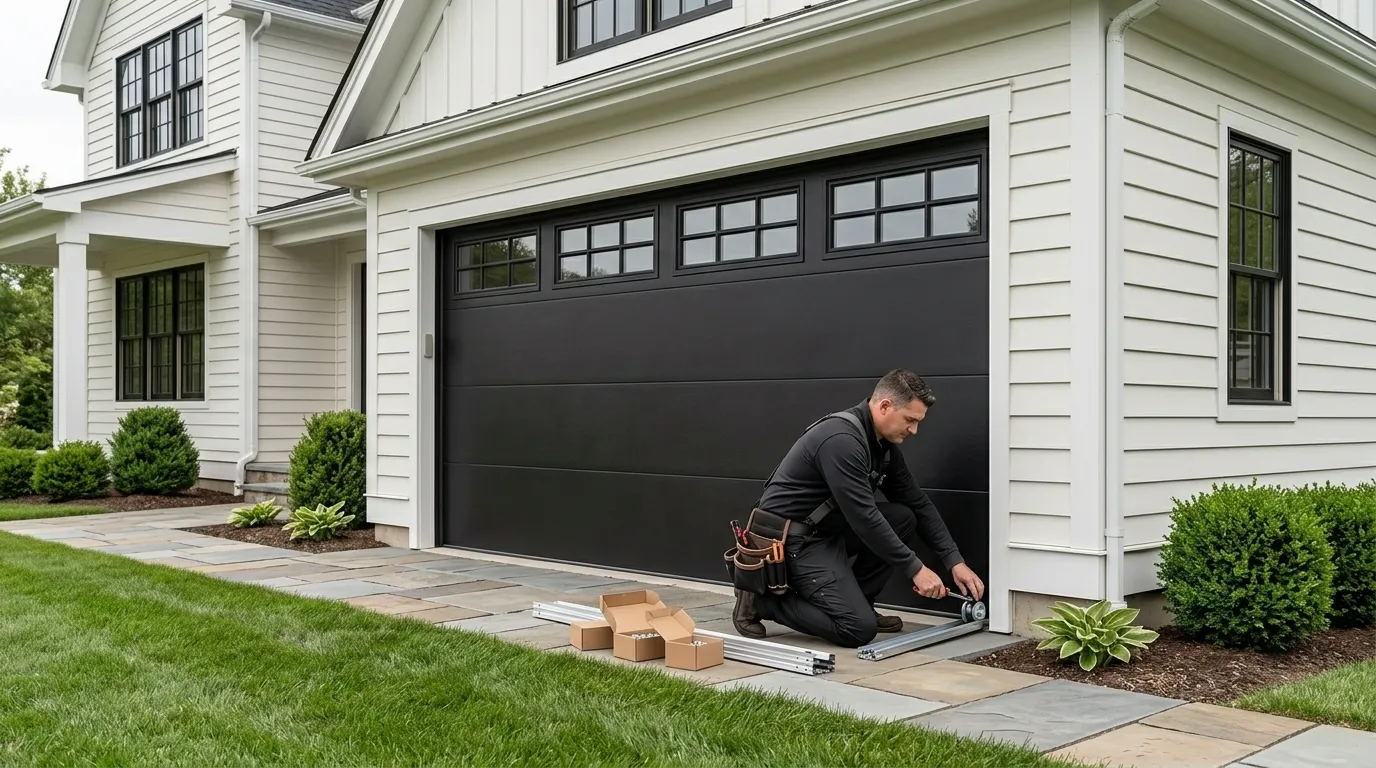
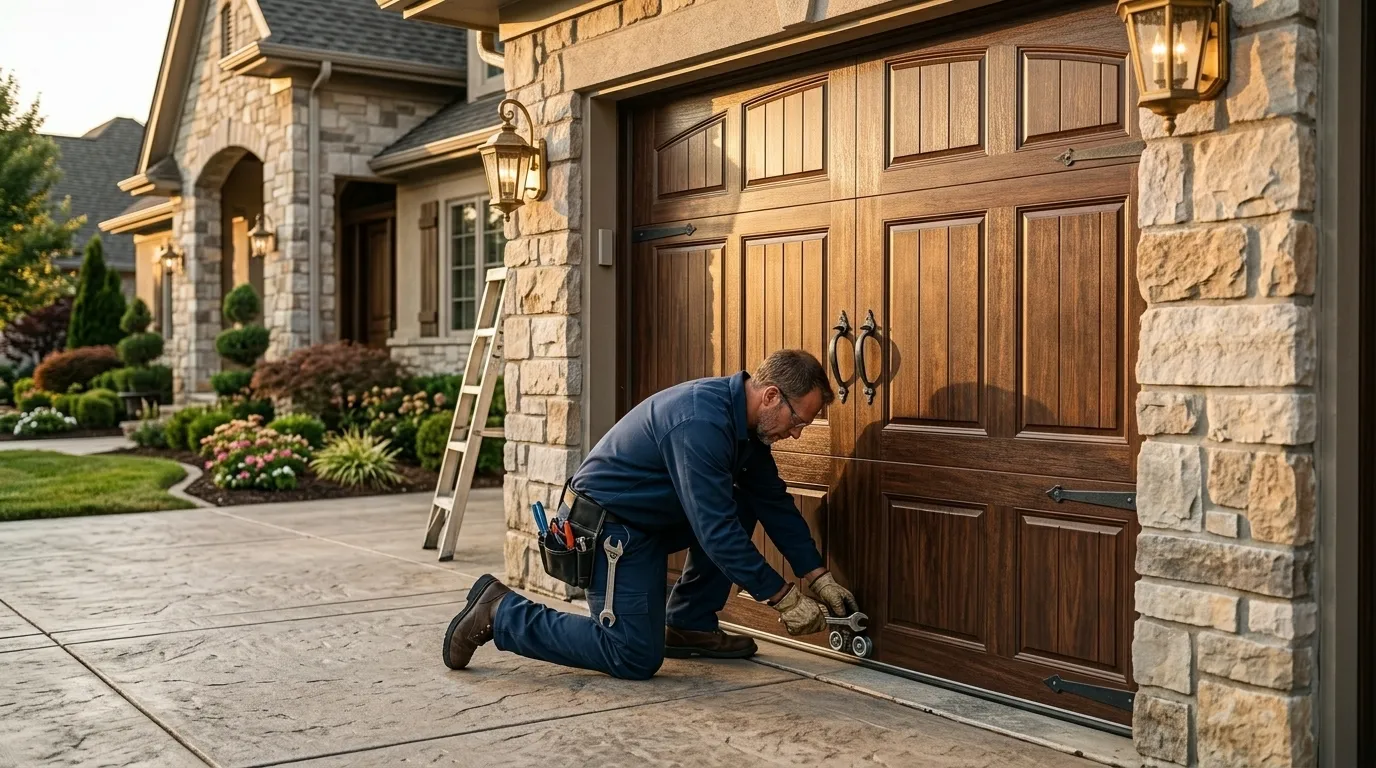
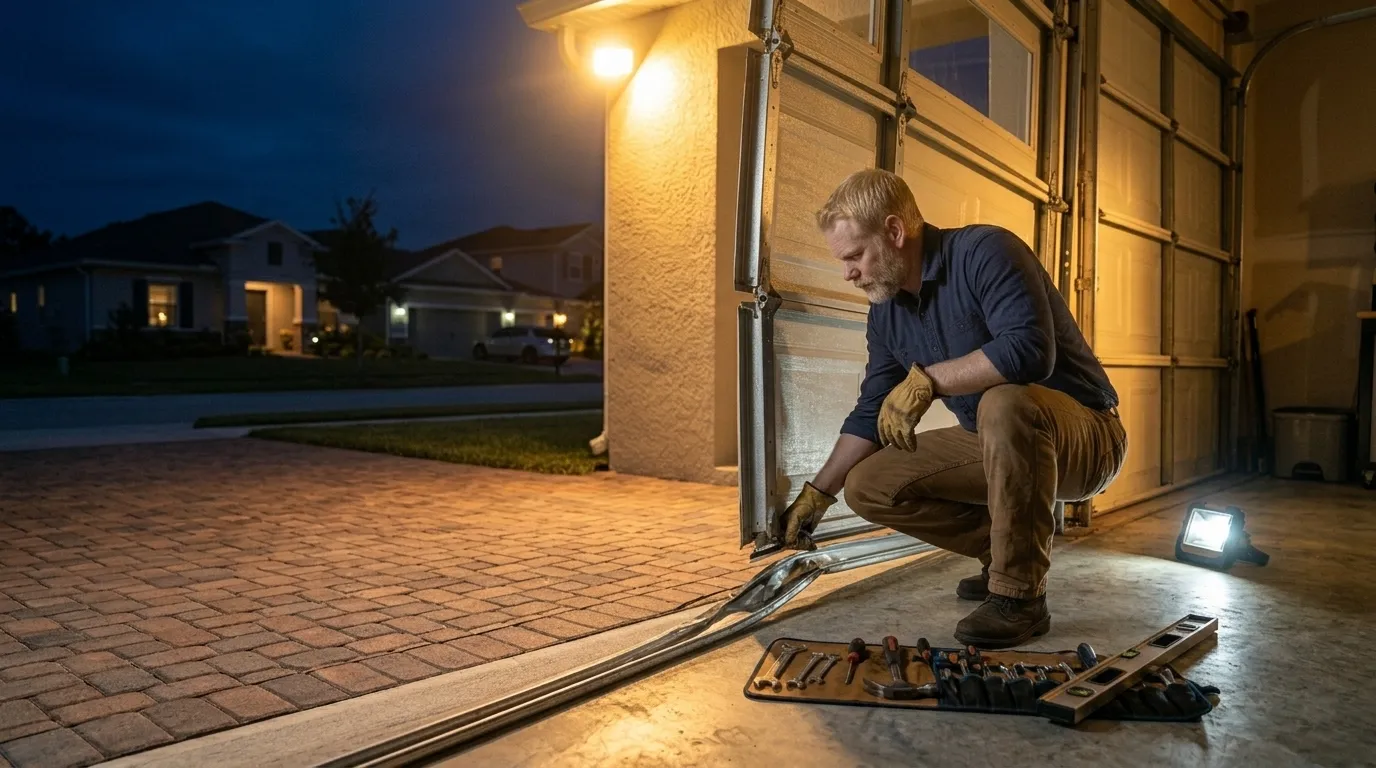
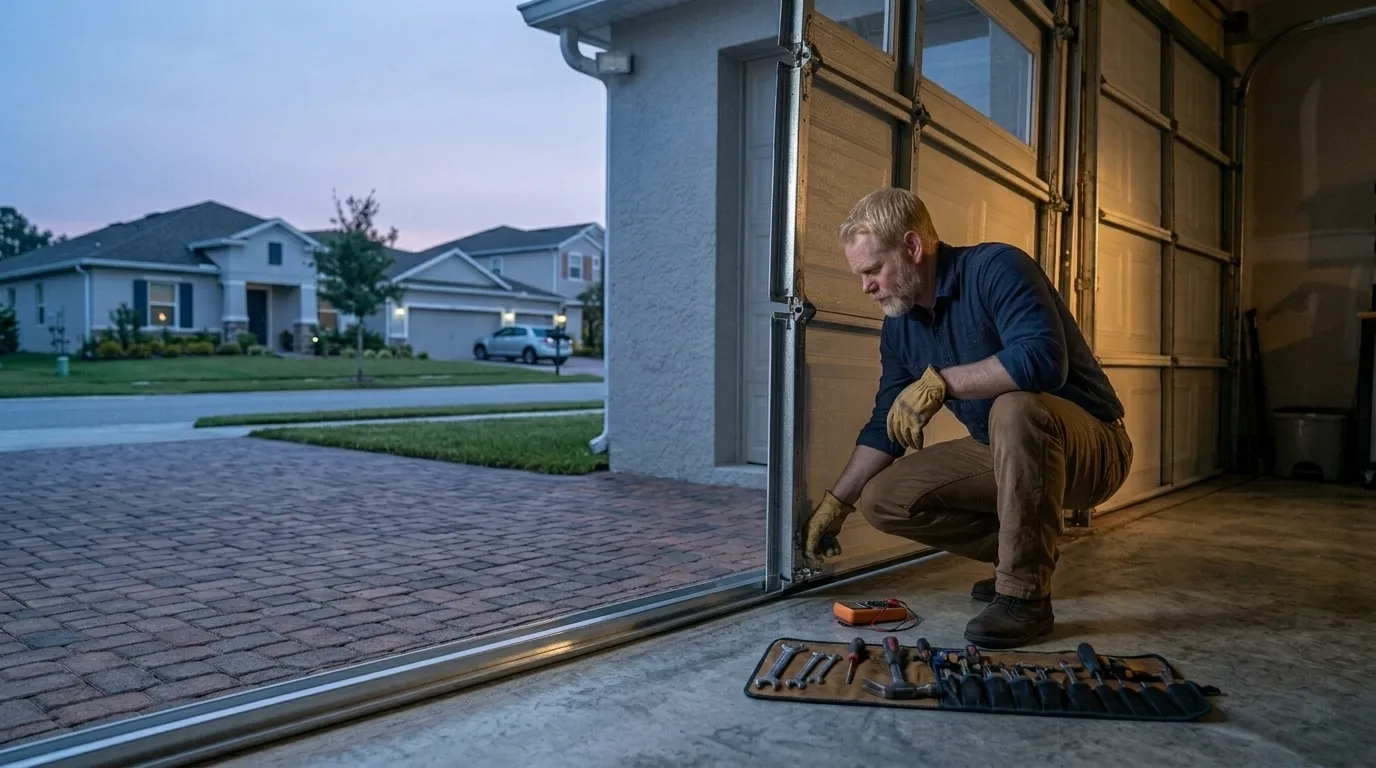
Most calls start the same way: the door stopped halfway, or one side hangs lower than the other, and there's a visible gap between the roller and the track on one edge. Sometimes it's louder - a grinding or popping sound right before the door stalls. Other times the opener just keeps straining against a door that won't move, which is its own separate problem waiting to happen if you keep hitting the button.
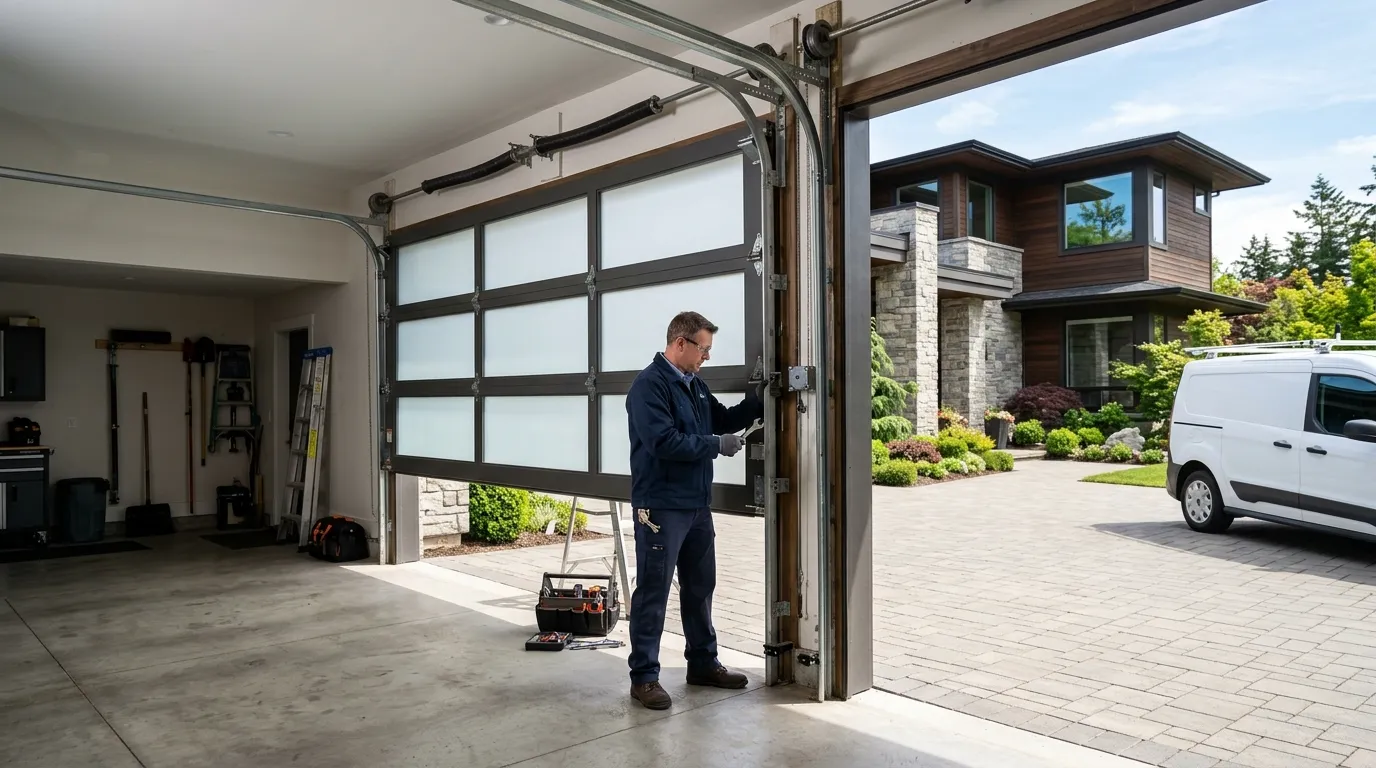
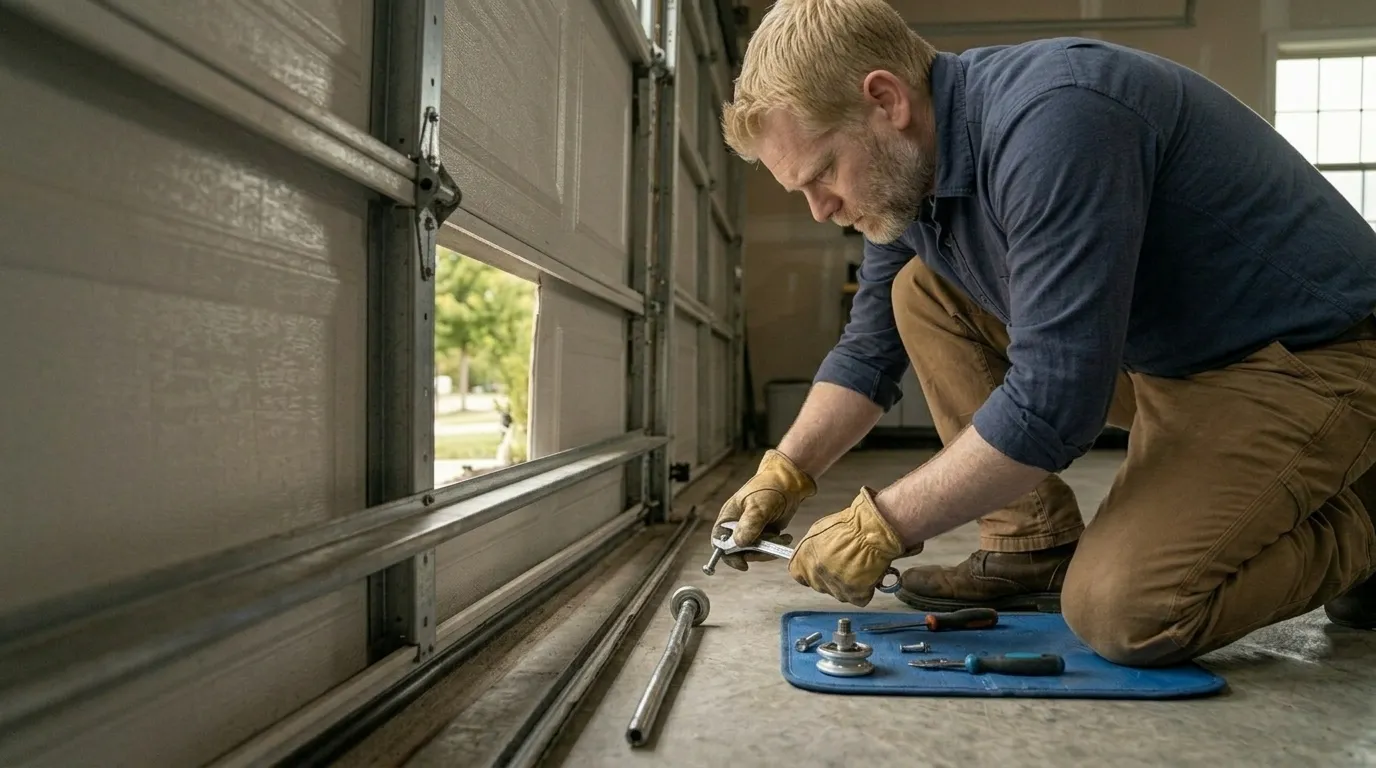
If you can see daylight between the bottom panel and the track, or the door sits at an angle instead of flat against the frame, that's an off-track door, not a spring or opener issue, though those two can look similar from a homeowner's chair. Don't force it up by hand and don't keep hitting the remote - a door hanging on one cable can drop the rest of the way, and that's a heavier and more expensive fix than the one you're looking at now.
Why It Happens Here
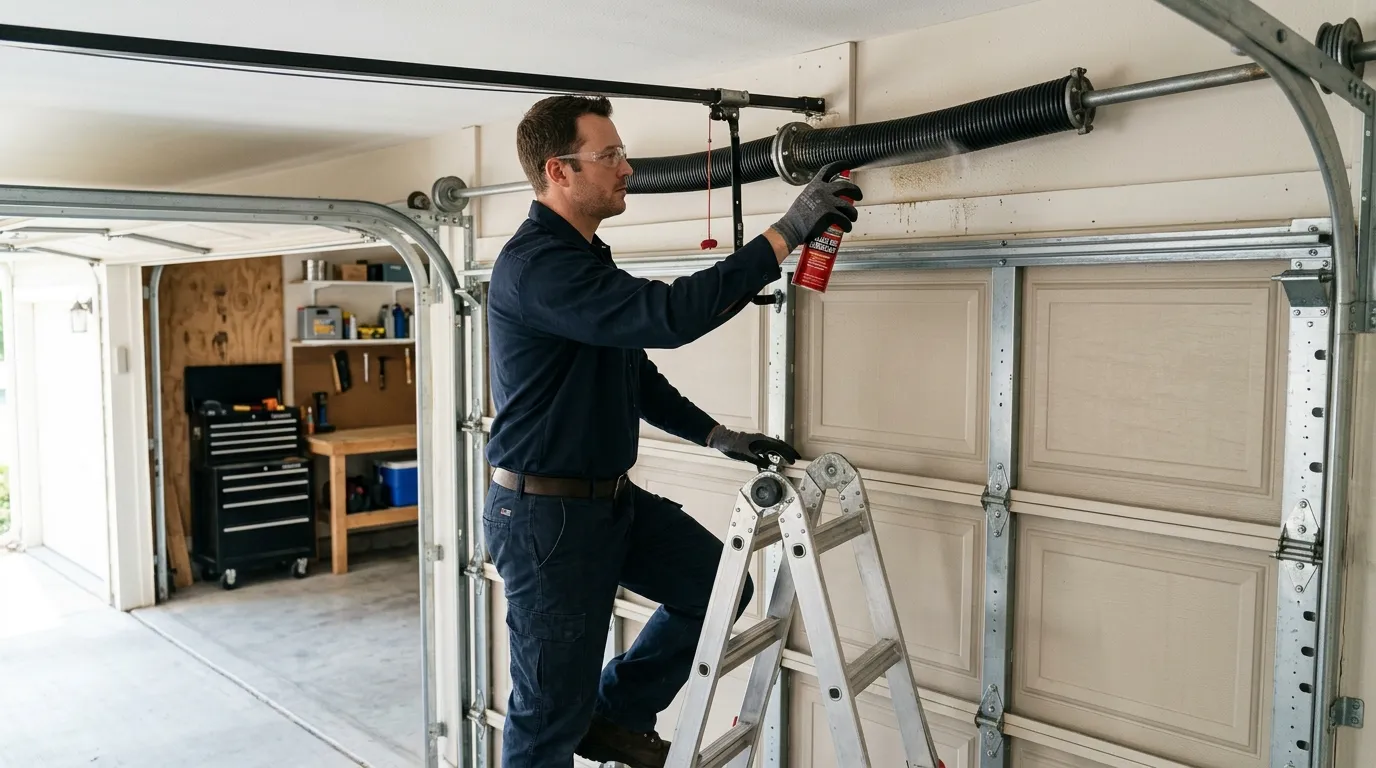
A lot of the houses we get called to across this service area - spanning roughly 13 named neighborhoods from San Leon out to - were built between 1965 and 2004, with the median landing around 1990. That means a big share of the doors and track hardware out there are original or close to it: steel track gauges and roller styles from a design era before today's nylon rollers and heavier-gauge rail became standard. Thirty-plus years of daily opens and closes wear brackets loose and stretch cable tension unevenly, and that's exactly the kind of slow give that ends in a door jumping its channel.
The climate here runs mild temperate - no hard freeze-thaw cycles to crack concrete or seize hardware overnight - so when we see off-track doors, it's rarely a sudden weather event. It's cumulative: brackets that loosened one quarter-turn at a time, rollers that wore down from thousands of cycles, or a door that was never quite balanced right to begin with. That pattern holds pretty evenly across the '80s-and-'90s-era stock we see across this area, not just in one pocket of it.