Can You Do This Yourself
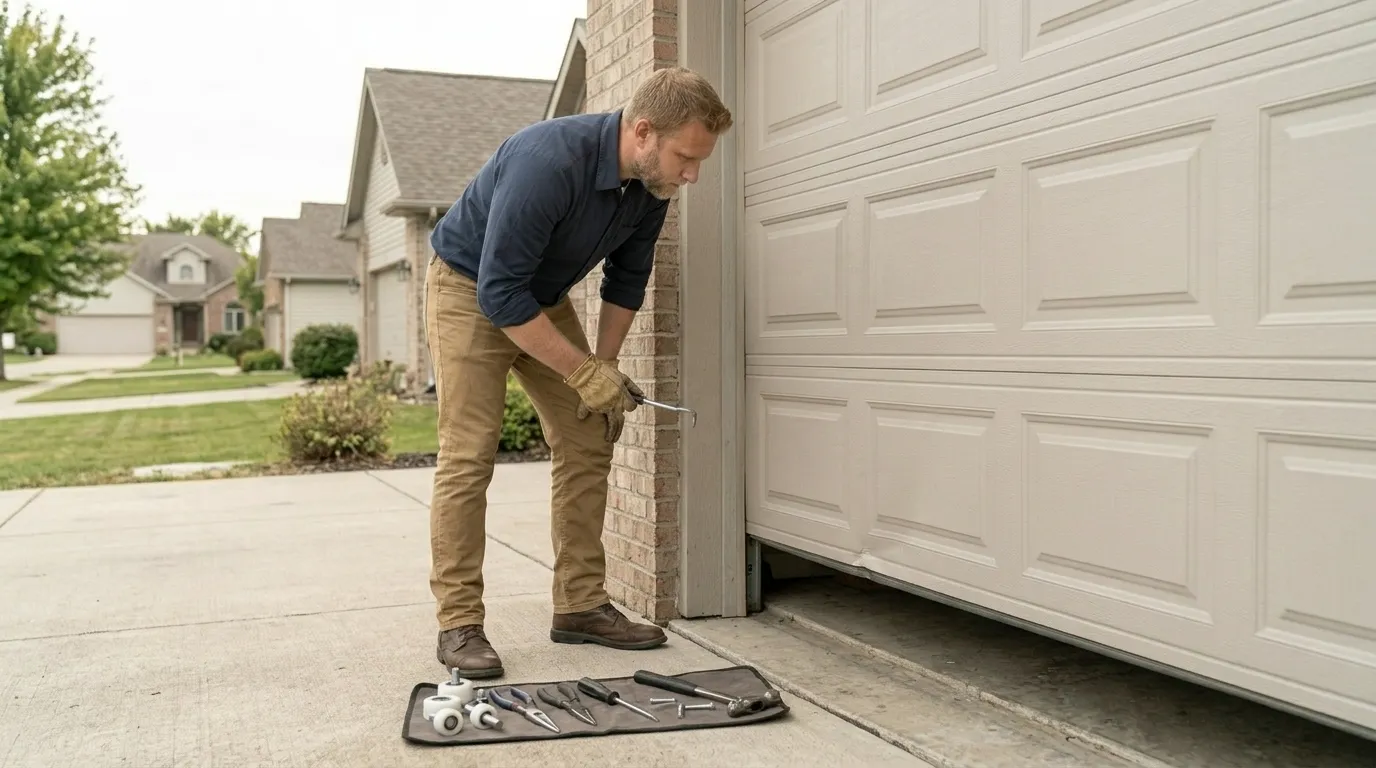
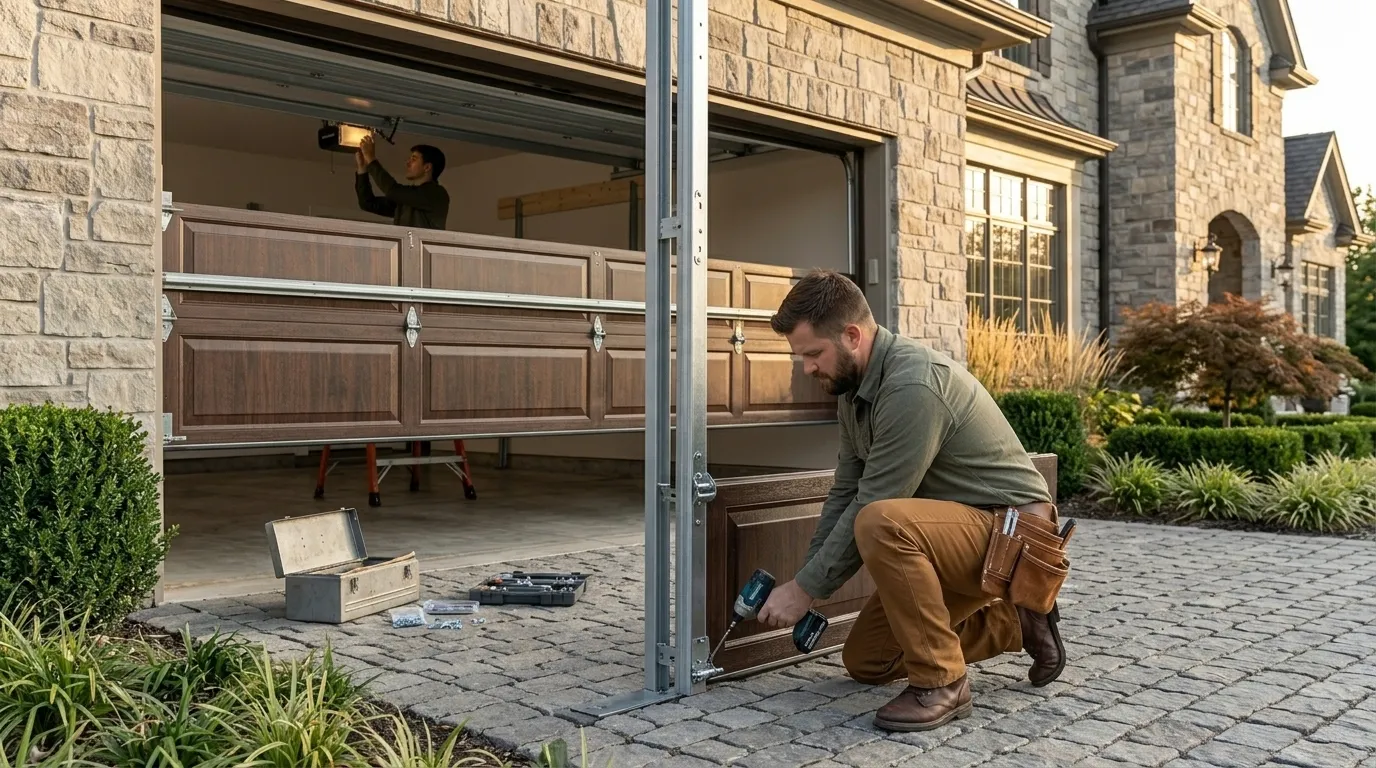
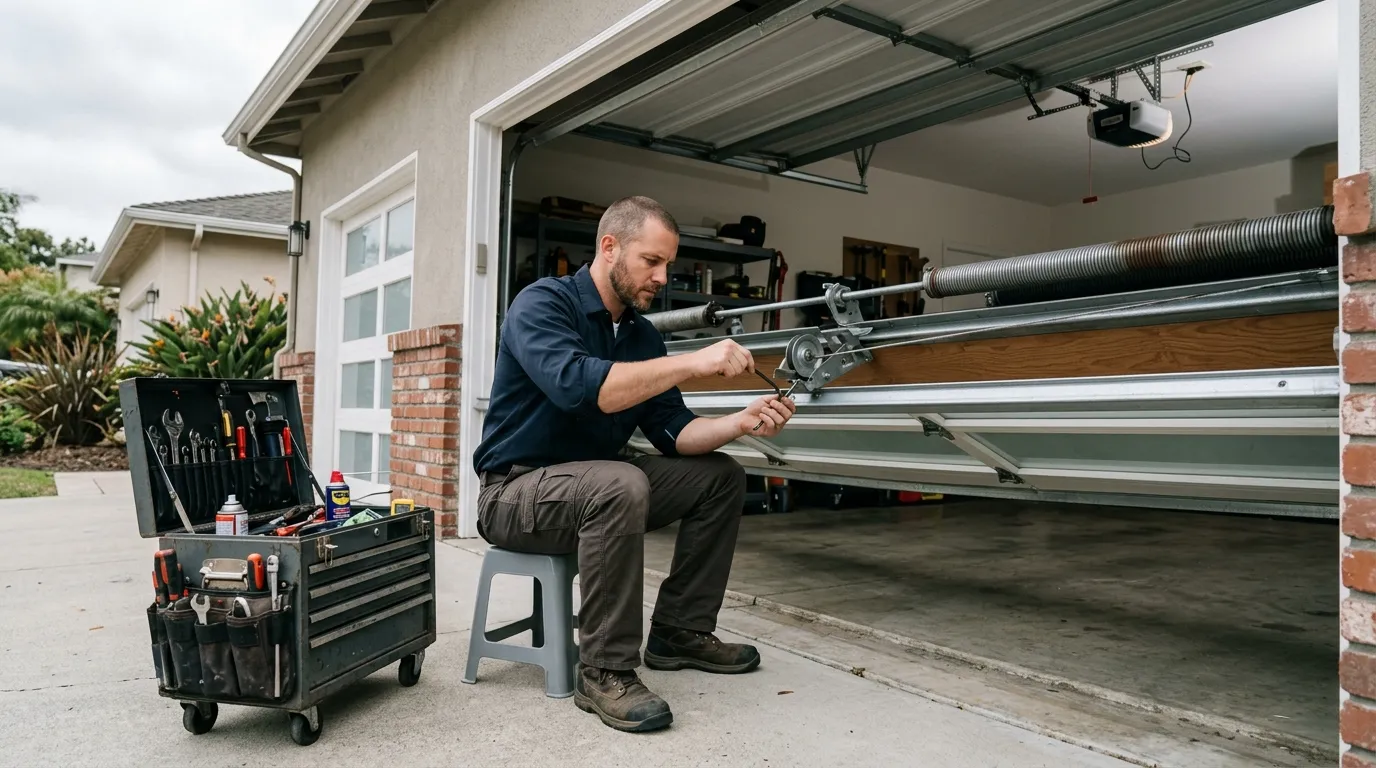
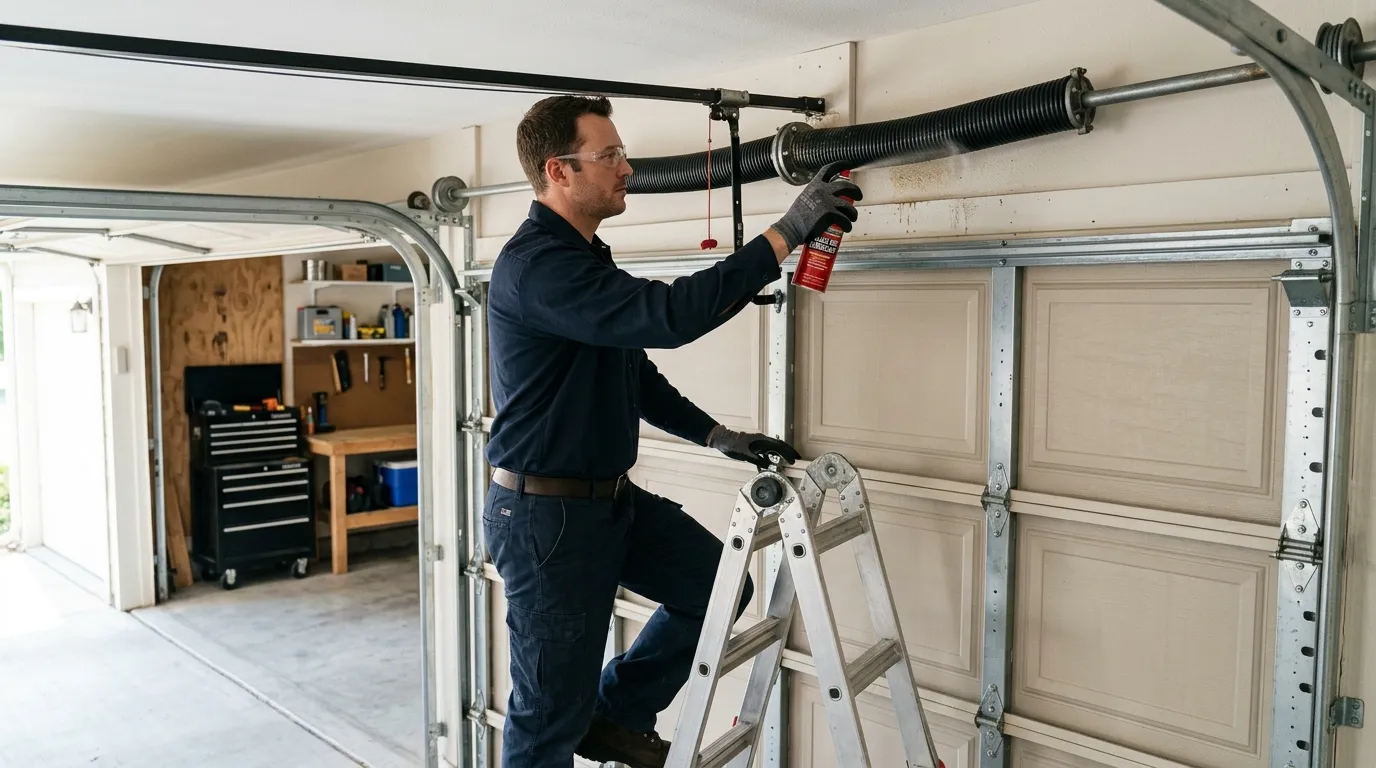
A lot of the parts on a job like this you can buy off a shelf. Setting them correctly on a door and track built for a 1978 opening is the part that goes wrong. Extension spring tension has to be balanced by hand-adjusting the pulley position, not turned with a torsion bar and winding rod, and it's easy to end up with a door that slams down on one side. Header clearance on these older openings is also tighter than what newer opener kits assume, so a modern belt-drive unit sometimes doesn't fit the same bracket holes without reworking the track angle. We're not going to tell you it can't be done - plenty of people replace their own doors. We will say the injuries we hear about on these jobs come from someone unwinding an old extension spring under load, not from anything exotic. If you're set on doing it yourself, at minimum get help releasing the old spring tension before you touch a wrench to it.
What the Fix Involves
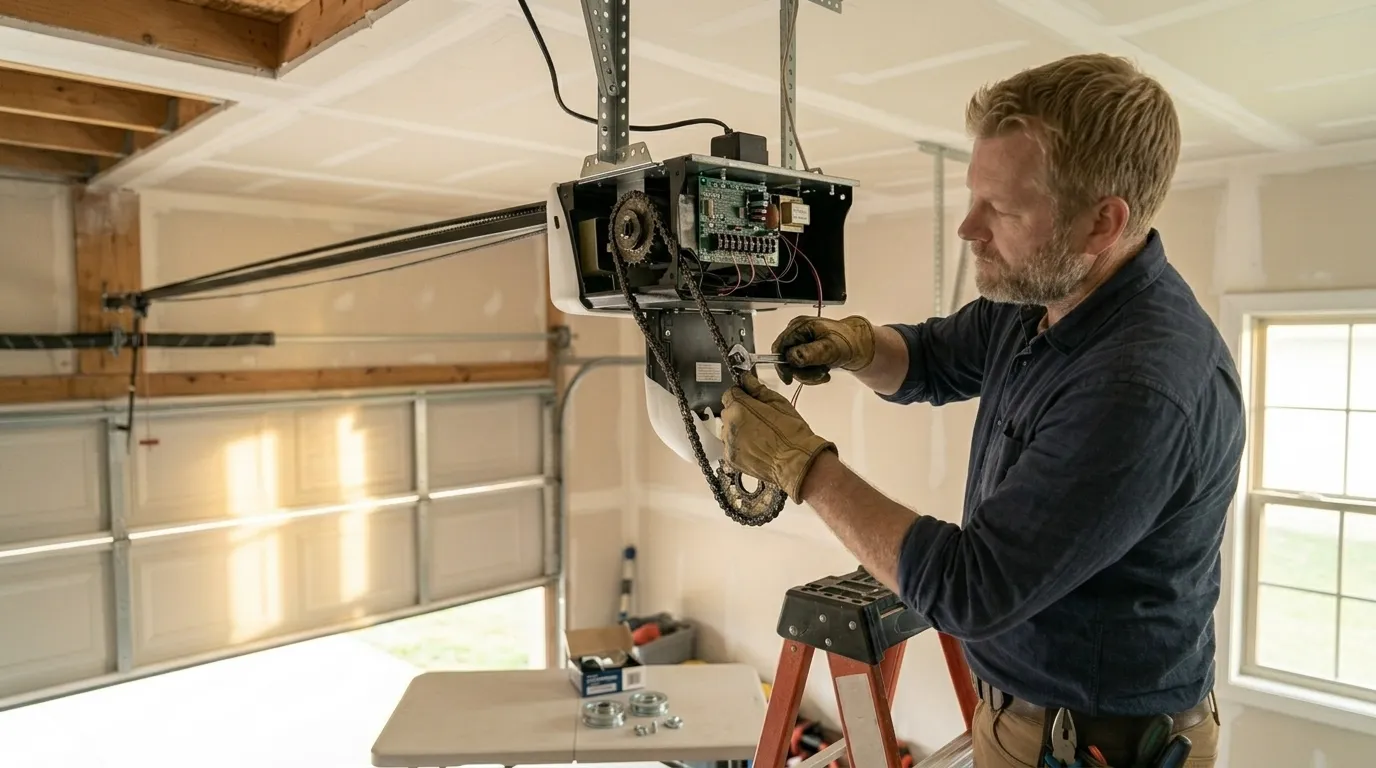
On a 1978-era La Marque door, the job is almost never just the door panel. We pull the old track, spring, and opener as a set, because the header bracket spacing on houses from that build year rarely lines up with current door widths without adjustment. The new door goes in with a torsion spring over the header instead of the old side-mounted extension springs - that alone removes the failure mode that drops these doors without warning. Given the mild coastal temperature band this area sits in, we don't push heavy foam-core doors as a must-have here the way we might in a harsher climate; a standard steel door with a basic insulated core covers what the weather actually asks of it. Cabling, rollers, and the opener's safety reversal system all get swapped as part of the same visit, since running new springs on an old cable set just moves the failure point somewhere else. What we don't do is patch a 1978 track system with mismatched new hardware and call it done - that's a callback waiting to happen.
What You Are Seeing
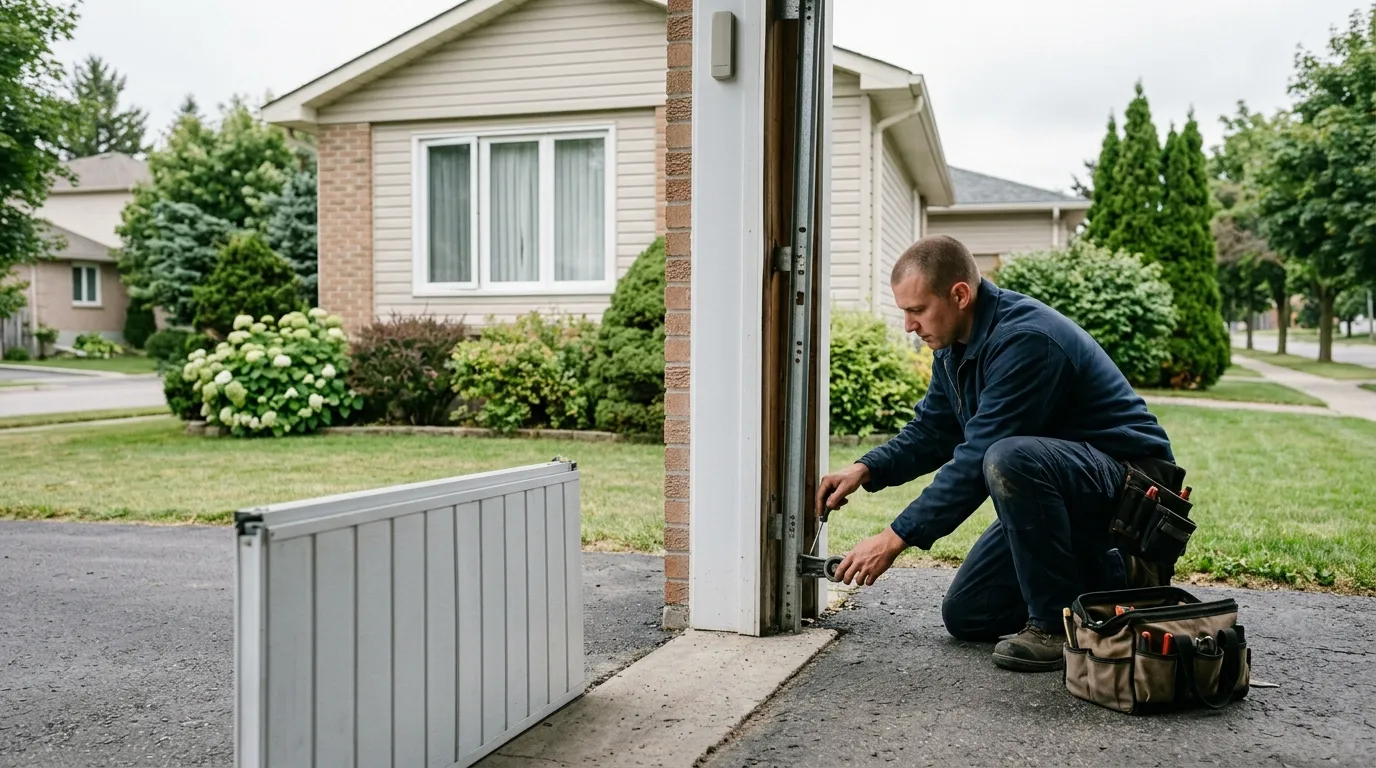
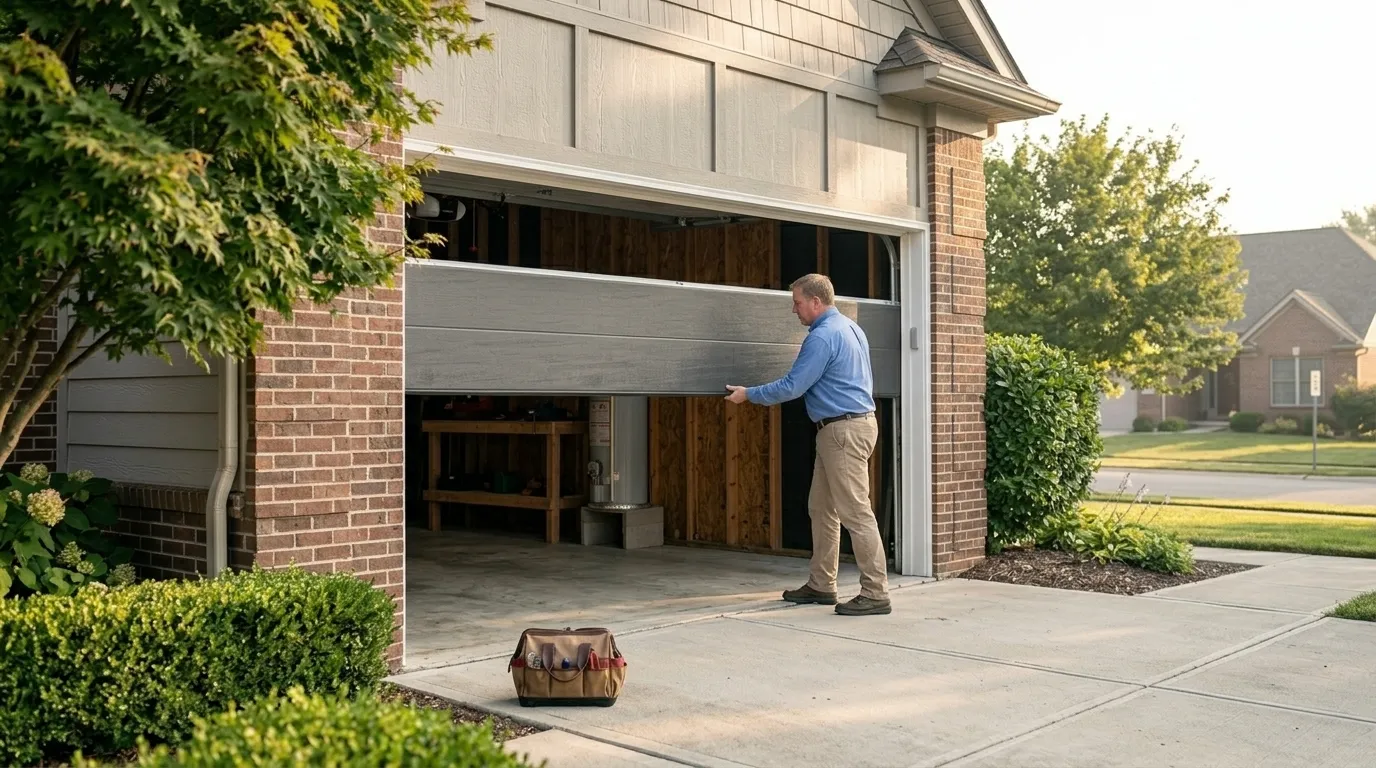
If your door is original to a 1978-built house, the signs usually show up as one of a few things: the door drops the last foot instead of lowering evenly, one side hangs lower than the other when it's open, or the opener strains and reverses partway through closing. Rust bleeding through the bottom panel seam is common on doors this age, especially where the weatherstrip has worn through. Cables fraying at the bottom roller bracket are another giveaway - that's usually paired with an extension spring that's already stretched well past its rated coil length. None of these on their own mean you need a full replacement, but on a door pushing 45 years old, once two of them show up together, patching one is rarely worth the labor compared to putting in a door built to current opener standards.
Getting It Booked In
If your La Marque door is showing the signs above, tell us the build year of the house if you know it and roughly how the door is failing - dropping fast, hanging uneven, opener straining - so we can bring the right spring and track hardware on the first trip instead of a second one. You can see more on what we cover for this area at La Marque Garage Doors, or check the full installation service we run out of Texas City at New Garage Door Installation in Texas City.