Can You Do This Yourself
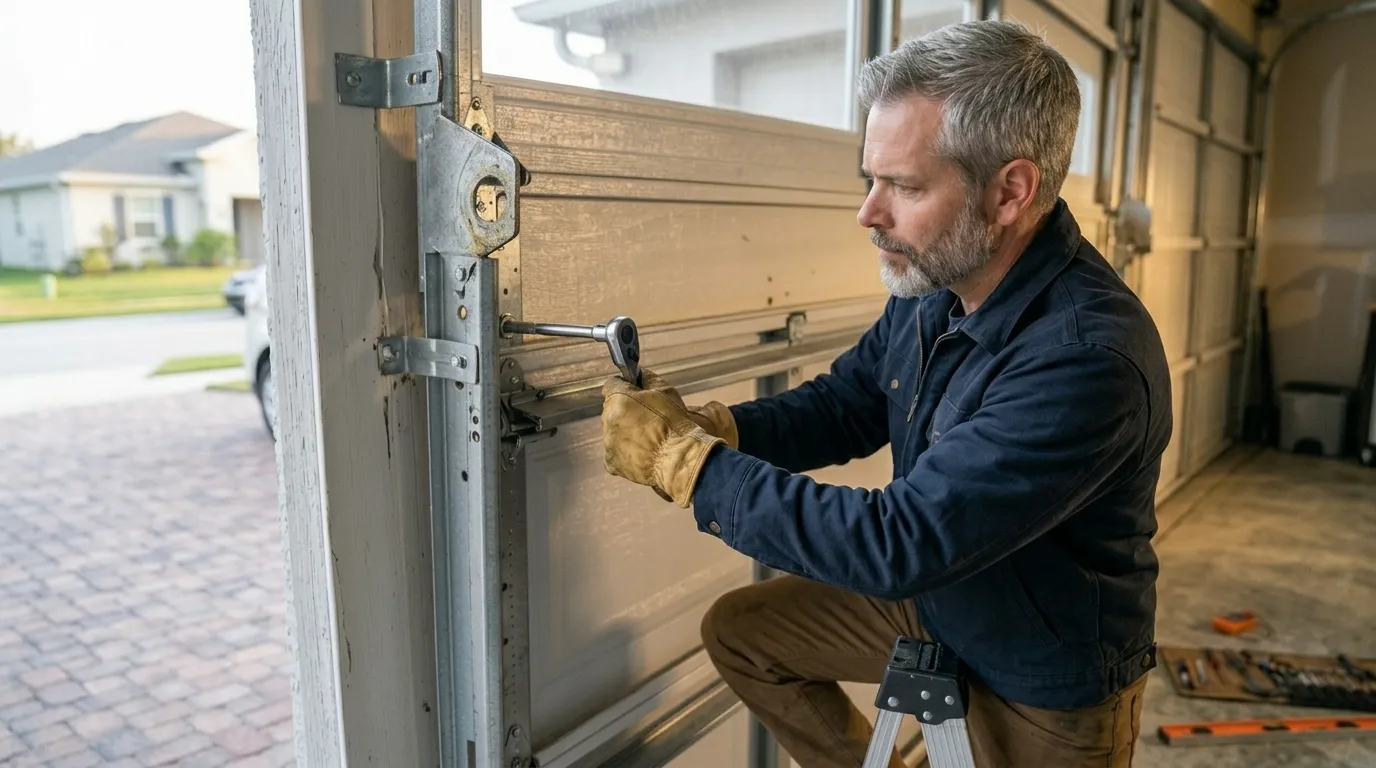
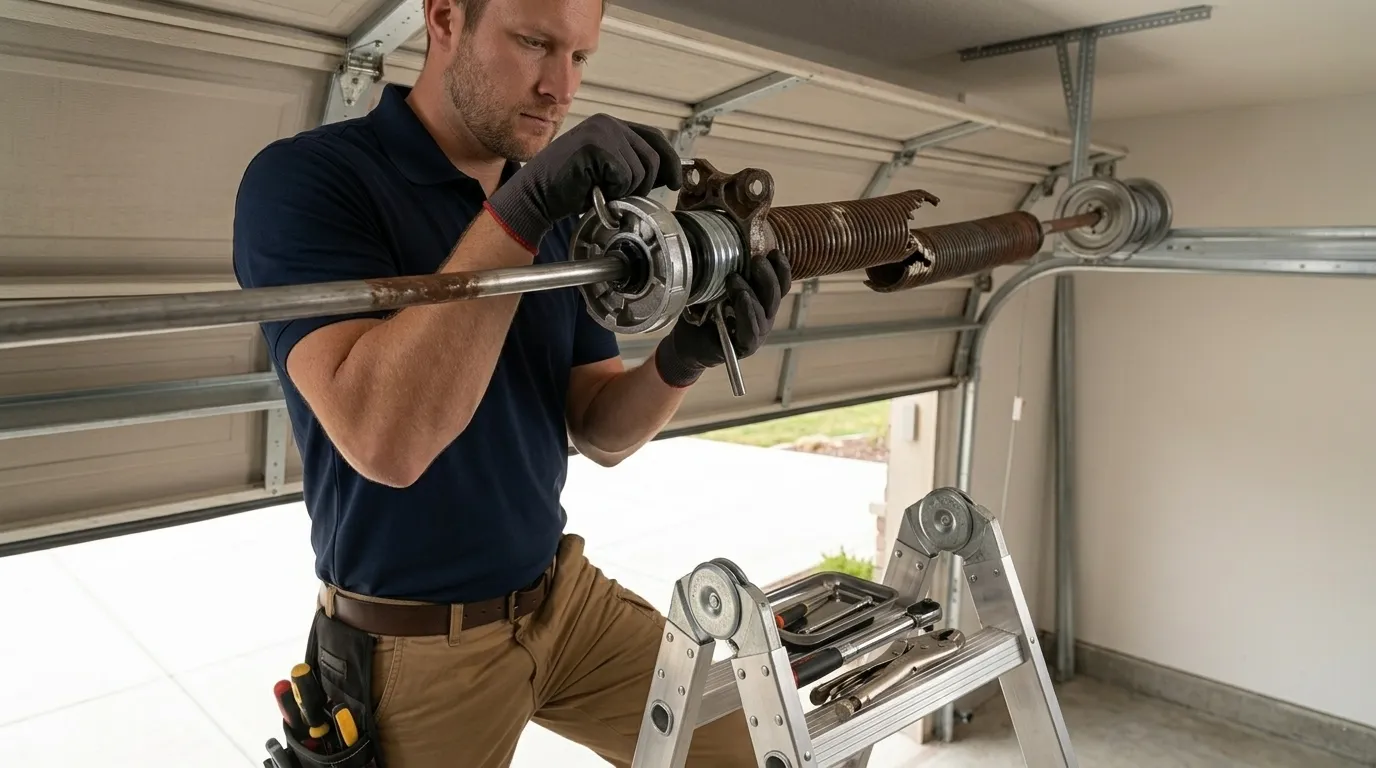
Not this one, and I'll say why plainly. A commercial door - especially anything wider than a standard two-car residential opening - runs a torsion spring system under enough stored energy to break a hand or worse if it lets go while you're working near it. That's true anywhere, not just here. What makes La Marque jobs specifically not a DIY project is the age of the hardware: original 1978-era brackets and drums weren't built to the same tolerances as what's sold today, and a mismatched replacement part under tension is how people get hurt. If your door is sagging on one side, binding at the same spot every cycle, or the opener is straining and reversing, that's a call, not a Saturday project. The one thing you can safely do yourself: pull the disconnect and operate the door manually if you need access before a tech gets there. Don't touch the spring, the cable drums, or anything under tension.
What the Fix Involves
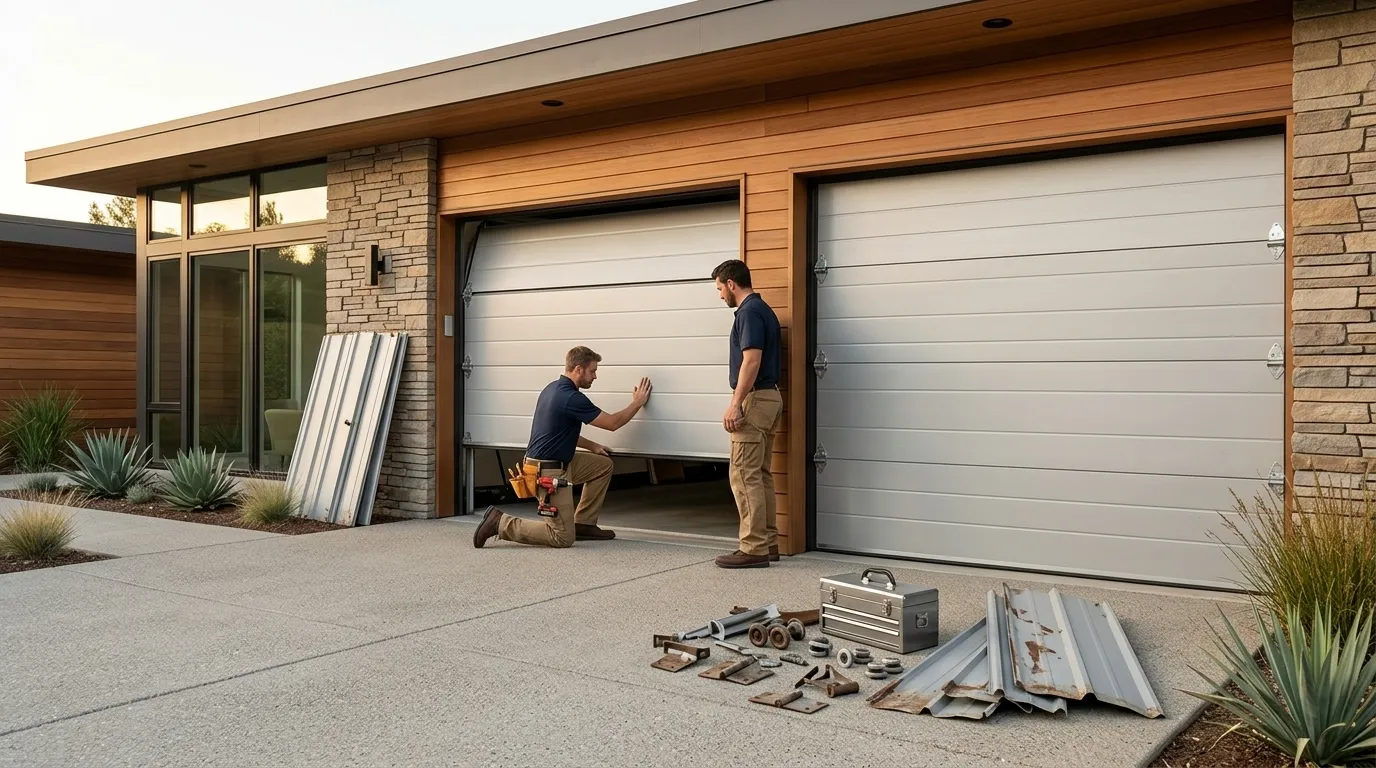
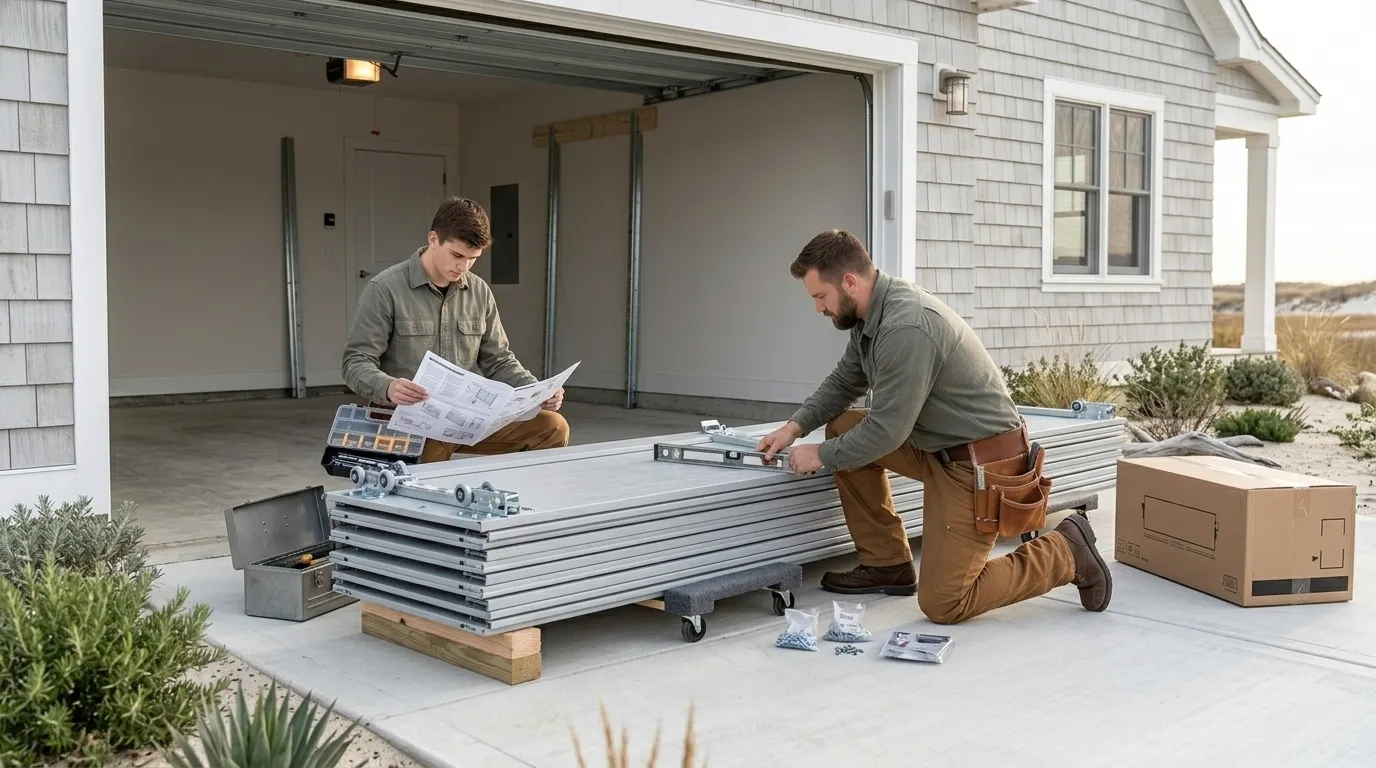
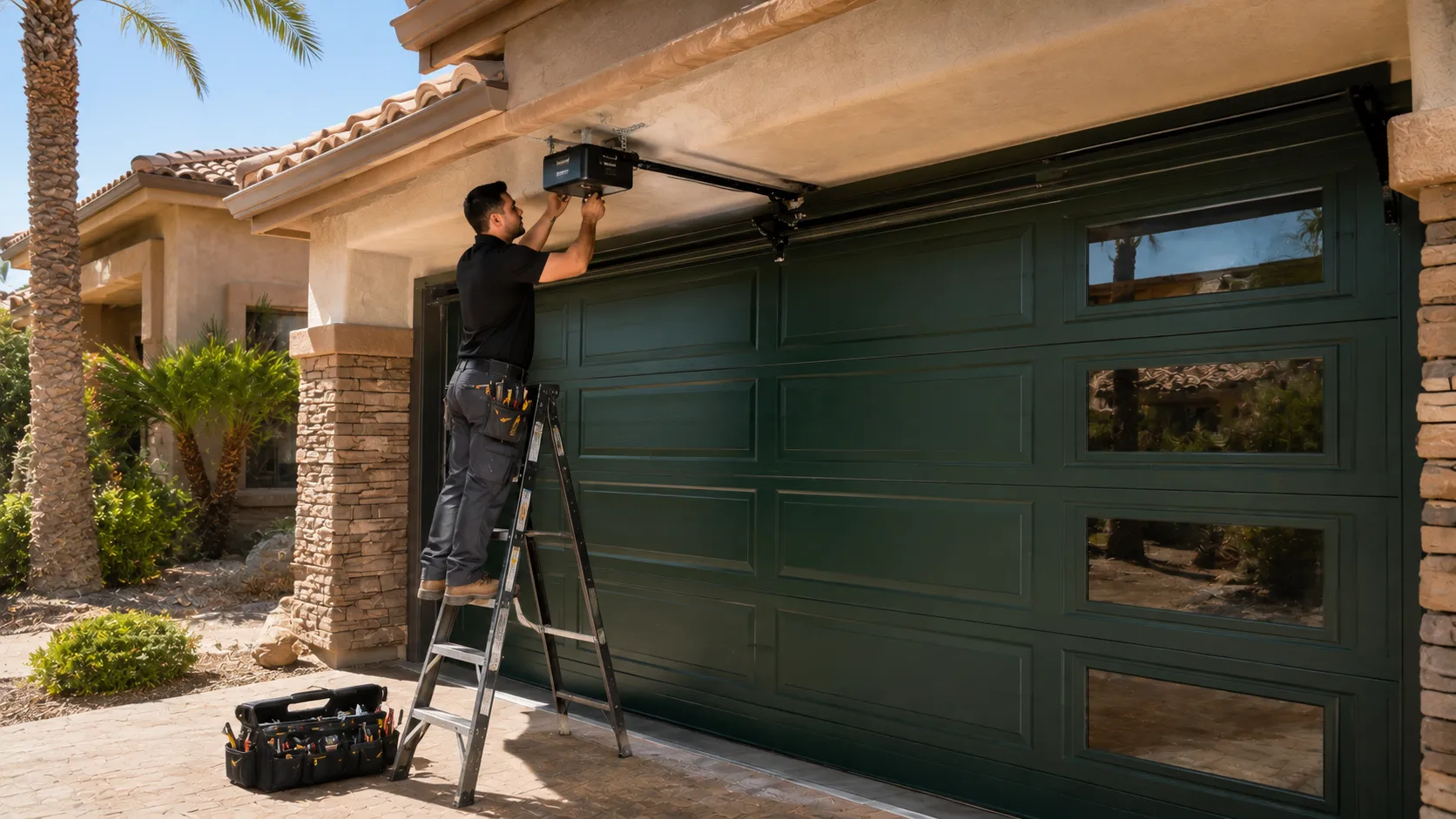
On a lot of these older La Marque commercial doors, the fix starts with figuring out what's original and what's been swapped. If the springs are original to a 1978 build, they're past any reasonable service life and get replaced outright rather than adjusted - there's no tuning forty-five-year-old steel back into spec. Track gets checked for the bracket spacing that was standard back then, which often doesn't match current mounting hardware, so we're fabricating or adapting rather than bolting on a stock part. Openers from that era are usually long gone, replaced with something newer, but the header bracket they're hung on frequently isn't - and that bracket has to hold, since a commercial door opener is heavier and cycles more than a residential one. The honest limitation here: if the door itself is warped, rusted through at the bottom panel, or the track is bent beyond straightening, we'll tell you replacement makes more sense than another repair. Chasing a fix on a door that's structurally done just moves the next failure down the road.
What You Are Seeing
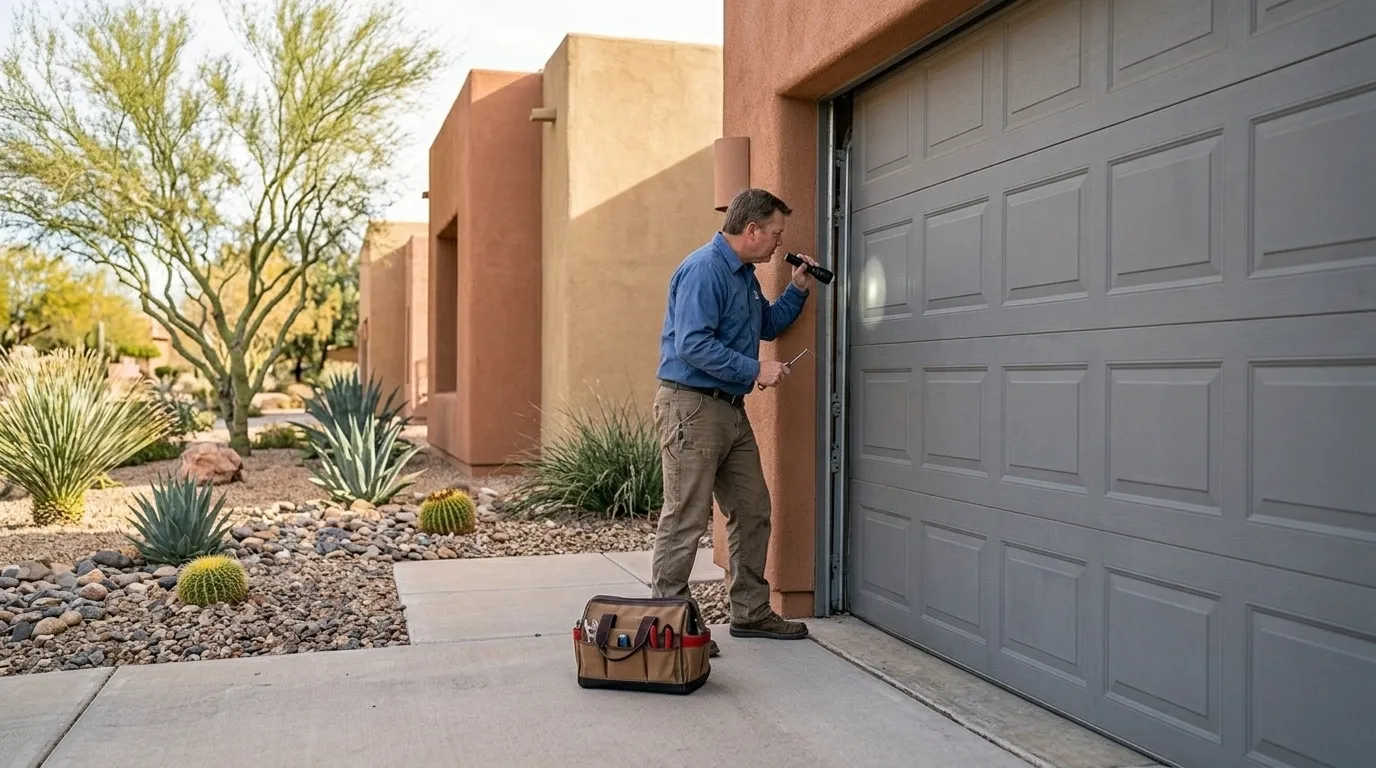
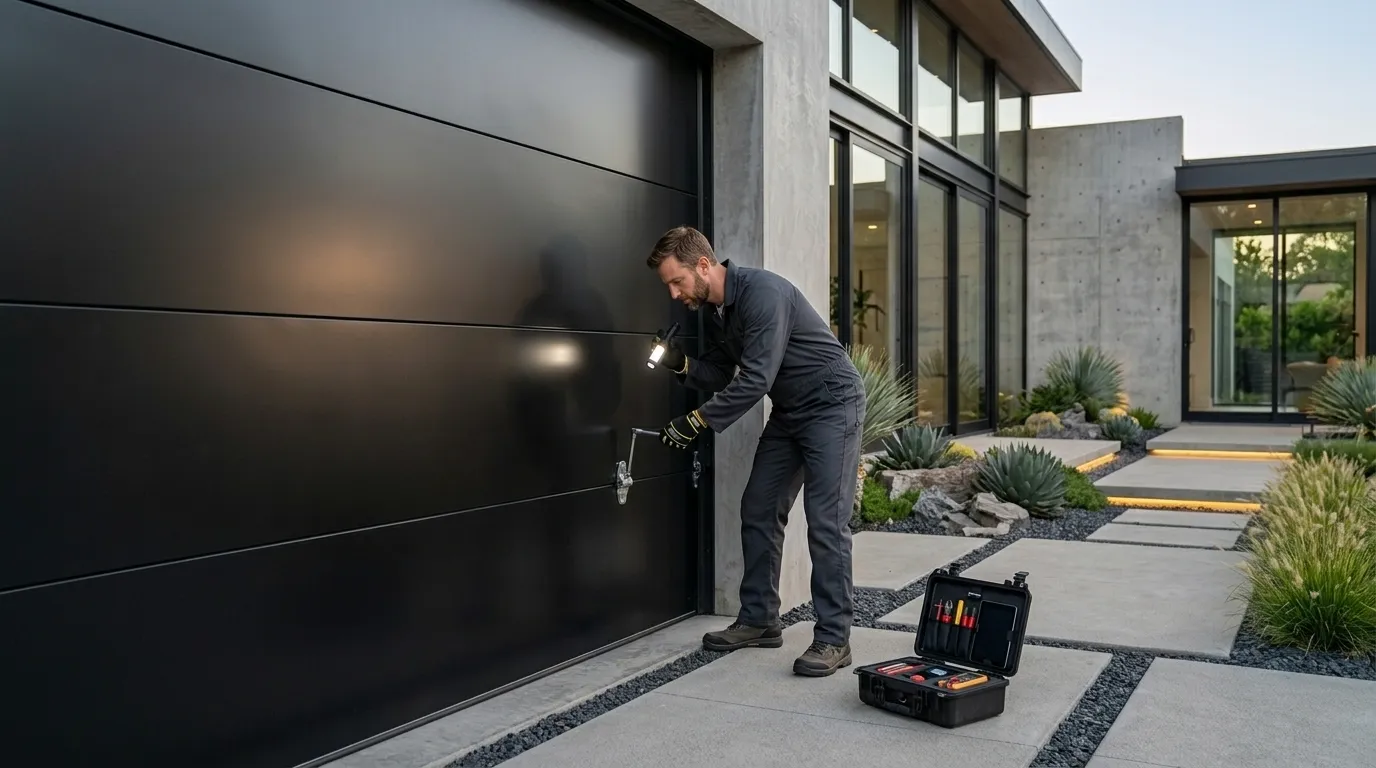
The tells on an original-hardware commercial door usually show up as a pattern, not a single event. A door that lifts fine for the first few inches then binds at the same spot every time - that's a track or bracket issue, not the spring. An opener that groans, strains, or reverses partway up is often compensating for a spring that's lost tension gradually rather than snapped. Visible rust on the torsion tube or drums, especially near the end bearing plates, tells you the hardware's original vintage even if nobody kept records. La Marque sits in a mild coastal climate band, so you're not dealing with the freeze-thaw cracking that ages hardware fast up north - the wear here is slower, which is exactly why fifty-year-old parts are still hanging on. Slow wear doesn't mean safe wear. If the door's noisier than it used to be, or the cycle time has crept up, that's the hardware telling you it's near the end, not the beginning, of its service life.
Getting It Booked In
We run this job out of Texas City, about 8 miles up the road from La Marque, so there's no separate branch here - just a truck that comes over for the call. That distance doesn't change what we can fix, but it's worth knowing going in: we're not a local La Marque outfit with a shop on your street, we're the Texas City crew covering the area. For general residential and garage door work in La Marque, see our La Marque page. For the rest of what we handle on the commercial side out of Texas City, that's covered on our commercial garage door page.