Can You Do This Yourself
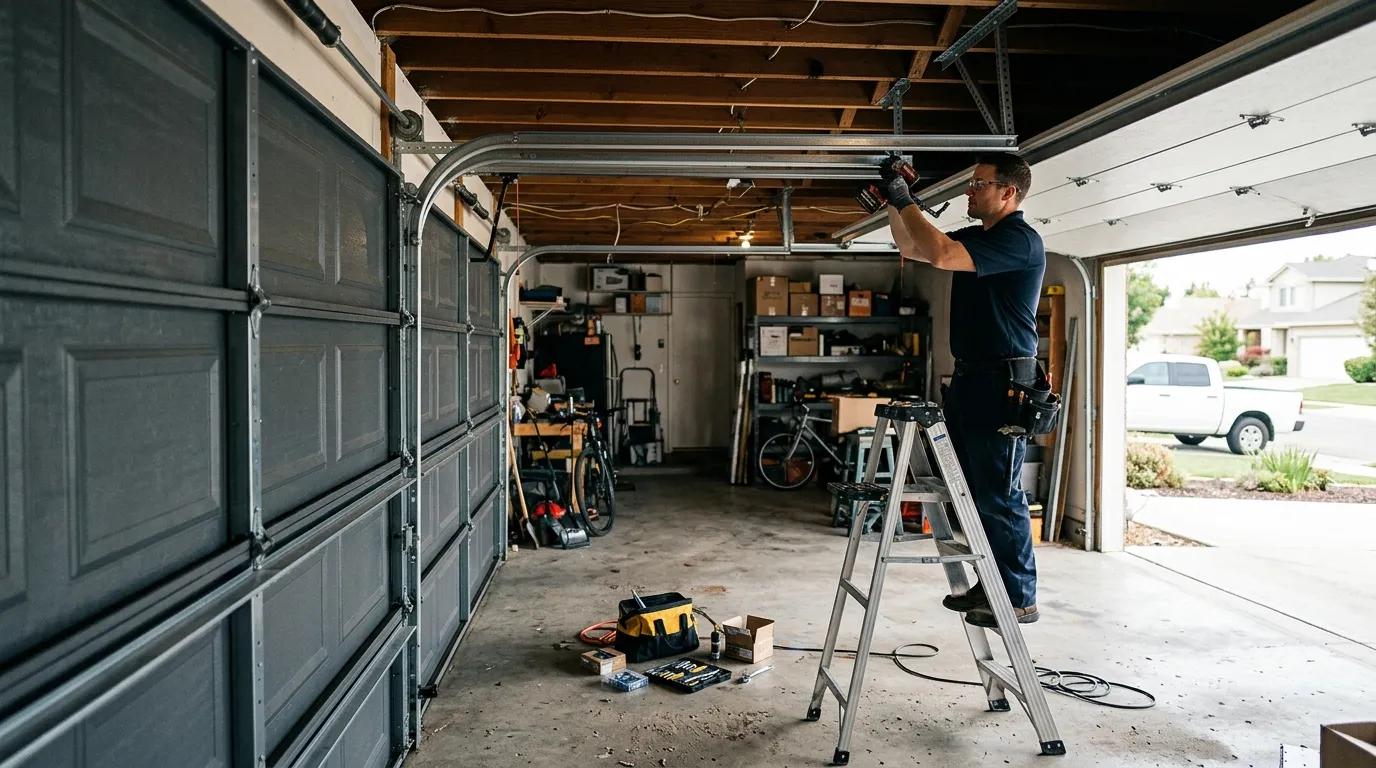
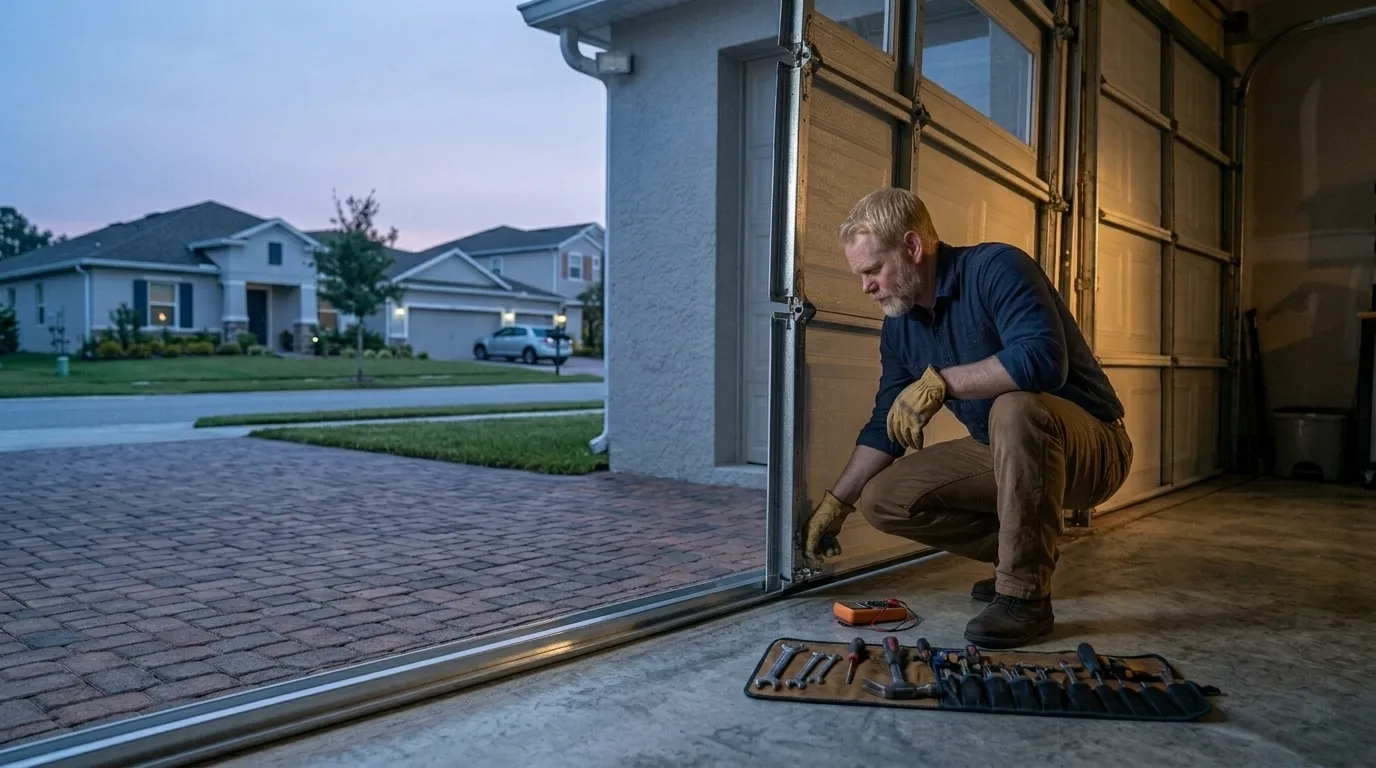
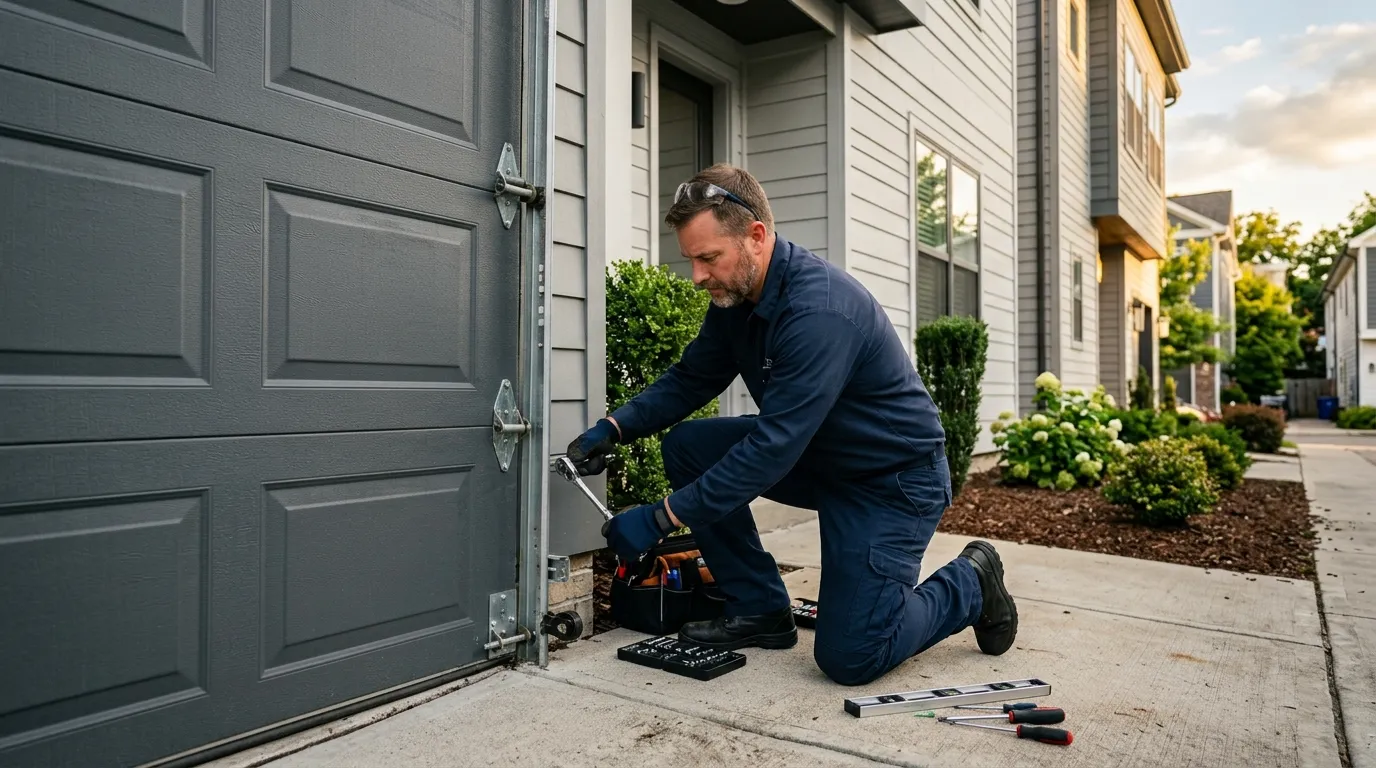
Some of it, yes. Lubricating hinges and rollers, tightening loose track brackets, replacing worn weatherstripping, and swapping a dead remote battery are all fine weekend jobs and won't void anything. A torsion spring is not on that list. Springs on a door this size hold enough stored energy to break a wrist or worse, and on a 1978-era door the winding cones and bearing plates are often original, which means they don't behave like the hardware on a spring-adjustment video shot on a ten-year-old door.
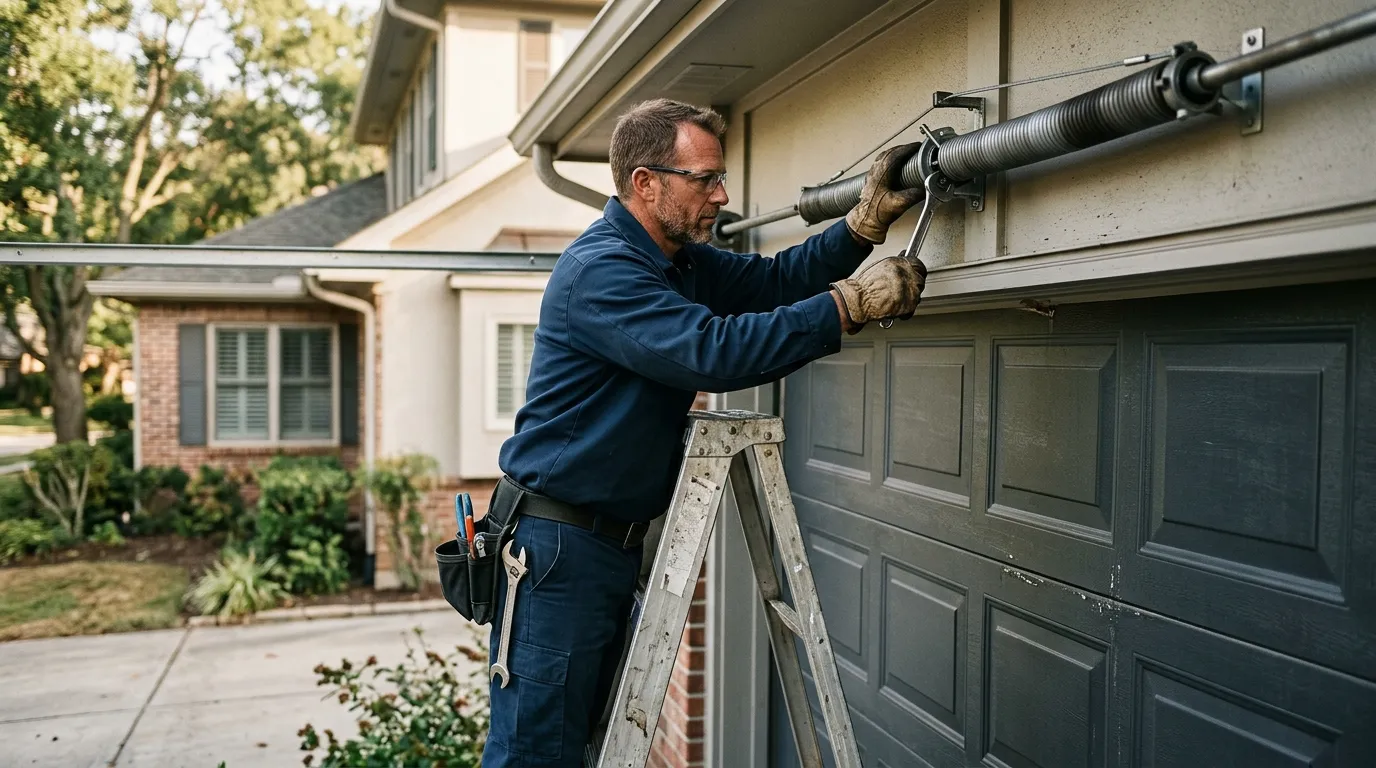
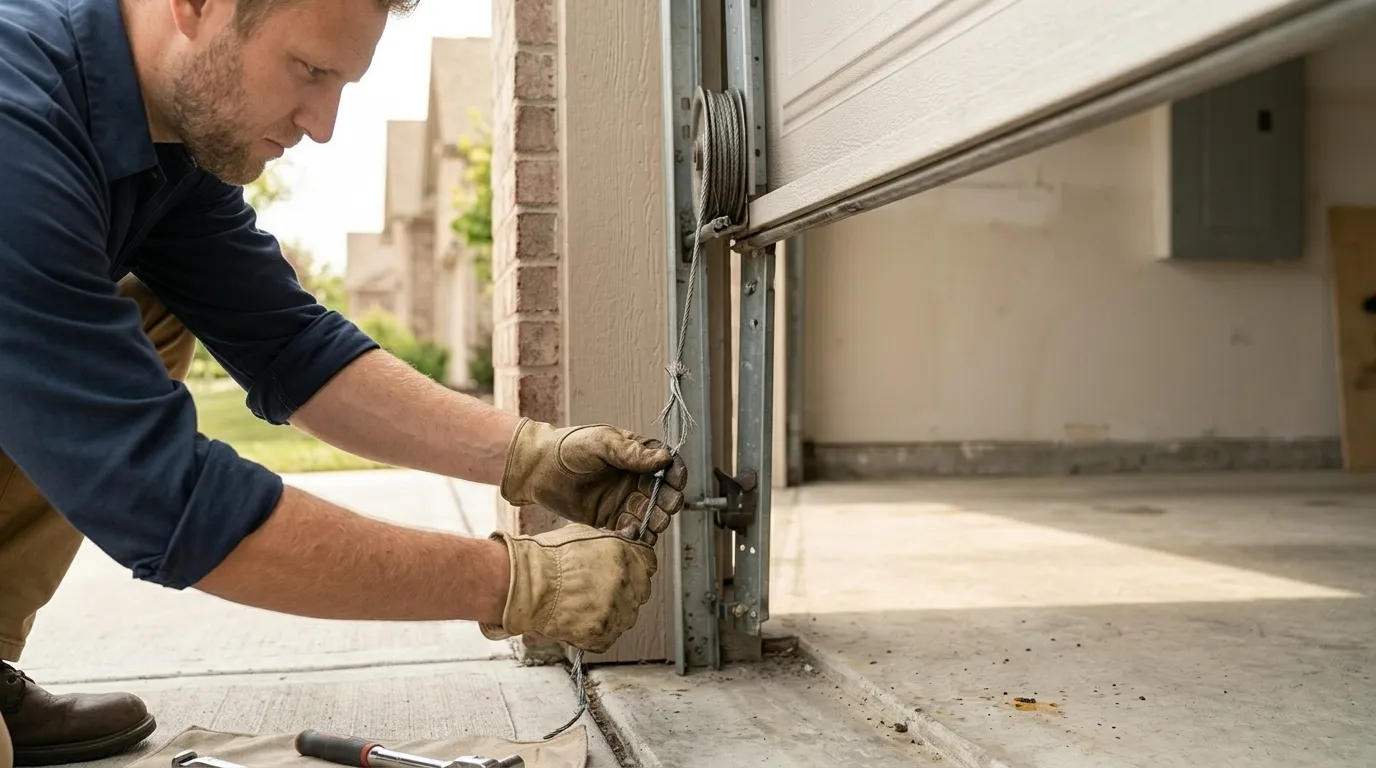
Cable replacement is the other one we tell people to skip. If a cable's frayed, the door is one cycle from dropping, and the tools to do it safely - winding bars, a properly rated ladder, clamps - aren't things most garages have lying around. If you're comfortable with a socket set and want to handle the small stuff, do it. Leave the spring and the cable to someone who does it daily.
What the Fix Involves
On a typical La Marque call, we're dealing with a torsion spring system installed when the house was built in or near 1978, which usually means a single spring on a double door rather than the dual-spring setup that became standard later. That single spring carries the full load, so when it goes, the door doesn't just squeak - it won't lift at all, or it slams down on the way closed.
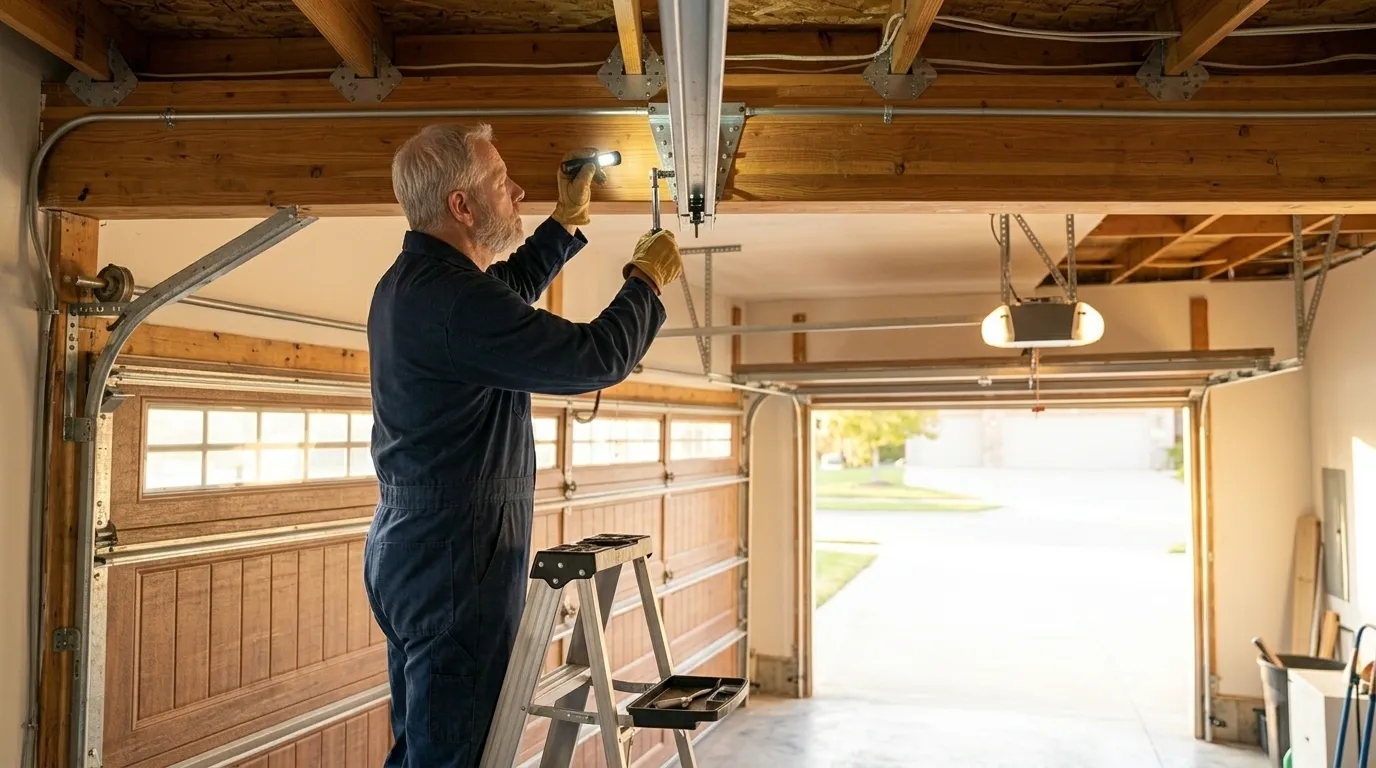
The fix is a full spring swap sized to the door's actual weight, not a generic size off the shelf, plus a check of the bearing plates and center bracket, since on a door this age those are usually the next parts to fail. We also check the cable drums for wear grooves and the track for the kind of bow you get after years of a spring compensating for itself as it weakens. If the opener's original to the house, we'll flag it, but replacing a working 1978 chain-drive opener isn't something we push just because it's old - if it still lifts smooth and reverses on contact, it can keep running.
What You Are Seeing
On the older end of the local housing stock, the pattern repeats: a door that's noticeably heavier to lift by hand than it used to be, a loud bang partway through the cycle, or the door hanging crooked on one side. That's a spring going, and on a single-spring setup from this era it tends to fail all at once rather than gradually.
A door that reverses on its own partway up, or an opener that hums but doesn't move the door, usually points to the opener's gears or the drive chain rather than the spring - worth mentioning because those two faults get confused on the phone constantly. If you're hearing metal-on-metal grinding from the tracks, that's rollers, and it's cheap to fix before it chews up the track itself. La Marque's climate sits in the same mild temperate band as the rest of the service area, so we don't see the deep-freeze failures some parts of the country do - most of what breaks here breaks from age and cycles, not weather.
Getting It Booked In
La Marque has roughly 7,193 households, a small slice of the 41,325 households across the full Texas City Garage Door Pros service area, and most of the repair calls we get from here follow the same shape: original hardware on a house that's 45-plus years old, one spring or cable finally giving out. We don't keep a separate crew or depot in La Marque - the truck comes from Texas City, about 8 miles away, same as it does for the rest of the area.
If you want the full rundown on what we cover in this suburb specifically, that's on the La Marque page. For the broader service list across every town we run to, including installs and maintenance plans that go beyond a single repair call, see the Texas City repair page.