
What You Are Seeing
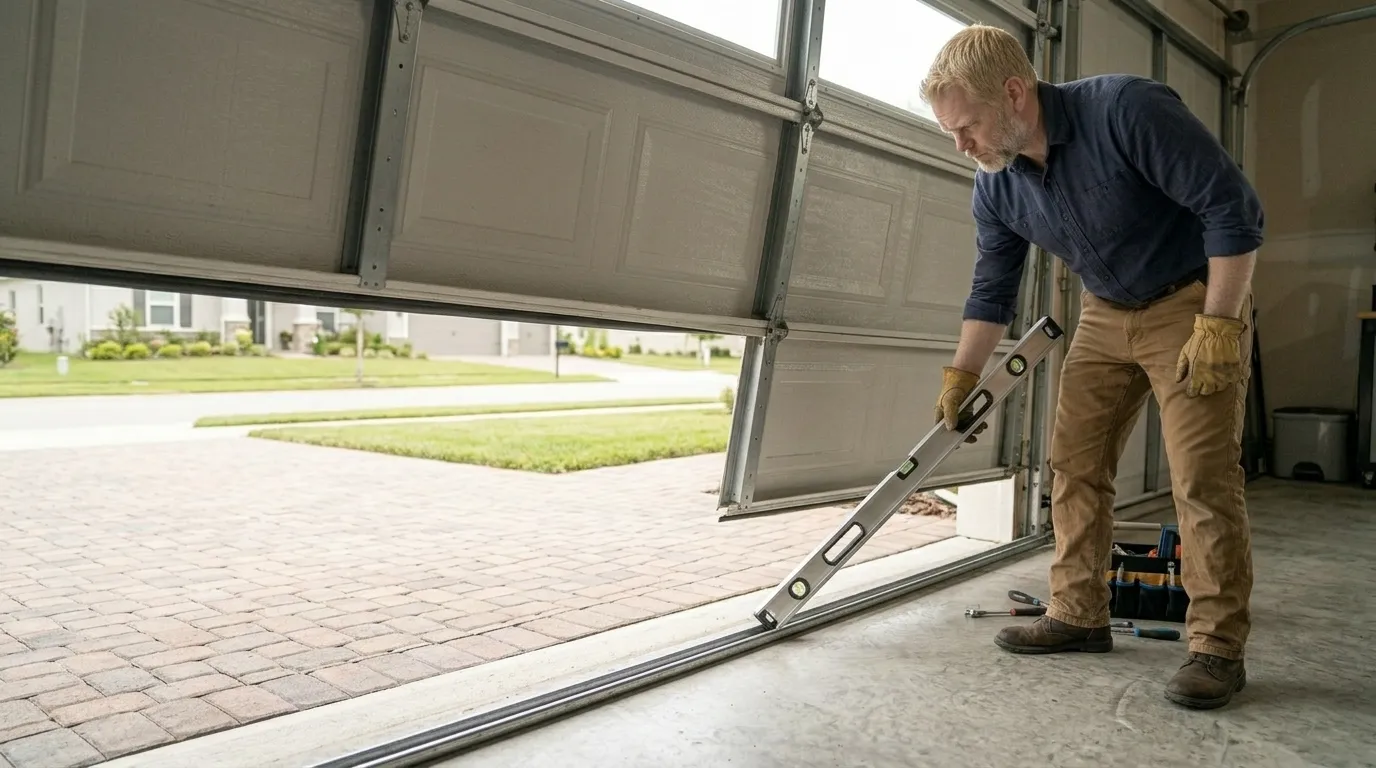
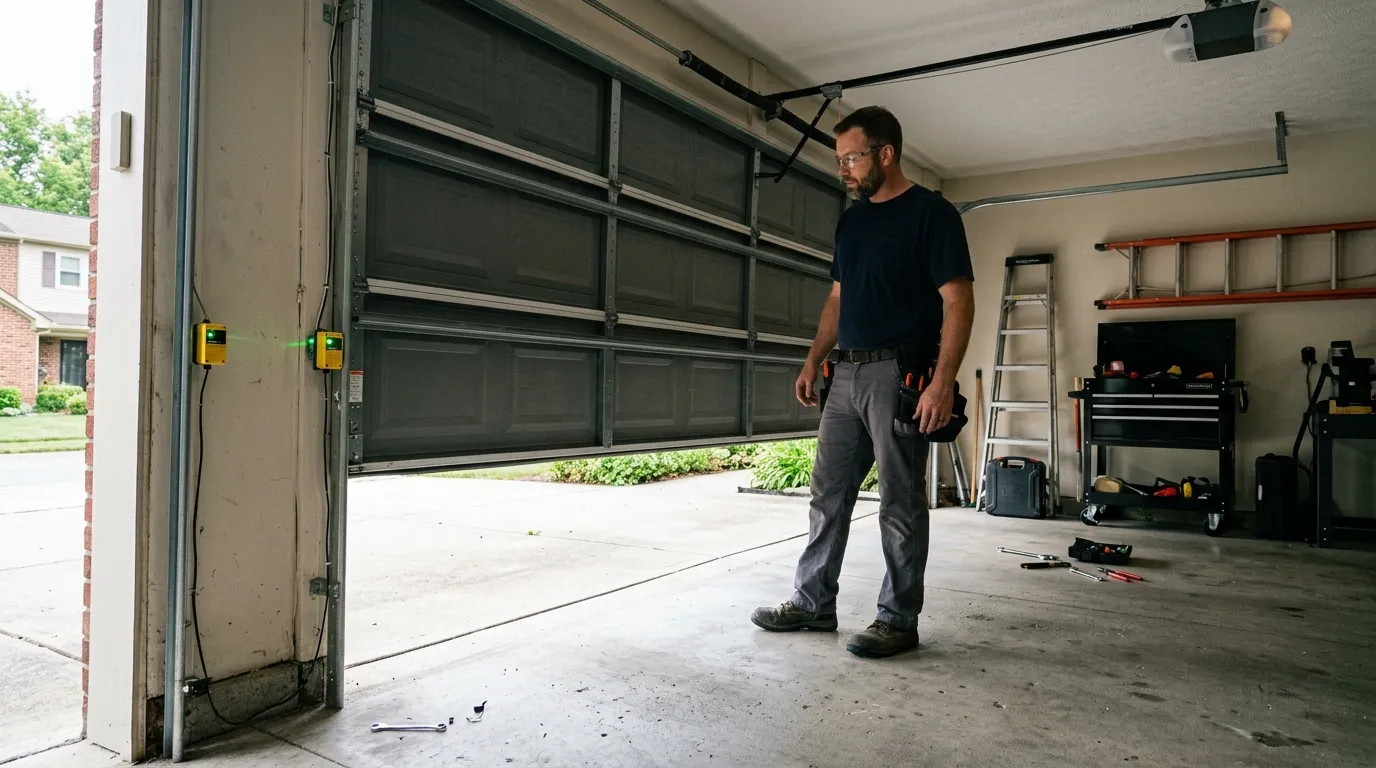
Median year built in Hitchcock runs around 1983, a good bit older than the newer stock elsewhere in the service area, which skews closer to 1990 and later. A door from that era usually still has its original steel rollers, or a first-generation nylon roller from a retrofit somebody did in the 90s. What you're seeing - grinding on the way up, a roller that looks flat on one side, a track that's worn a groove where the roller rides - is the roller itself giving out, not the opener struggling. Steel rollers wear the track down over time; nylon rollers wear themselves down first. Either way, the noise usually shows up before the door actually jams, which is the window you want to catch it in.
Can You Do This Yourself
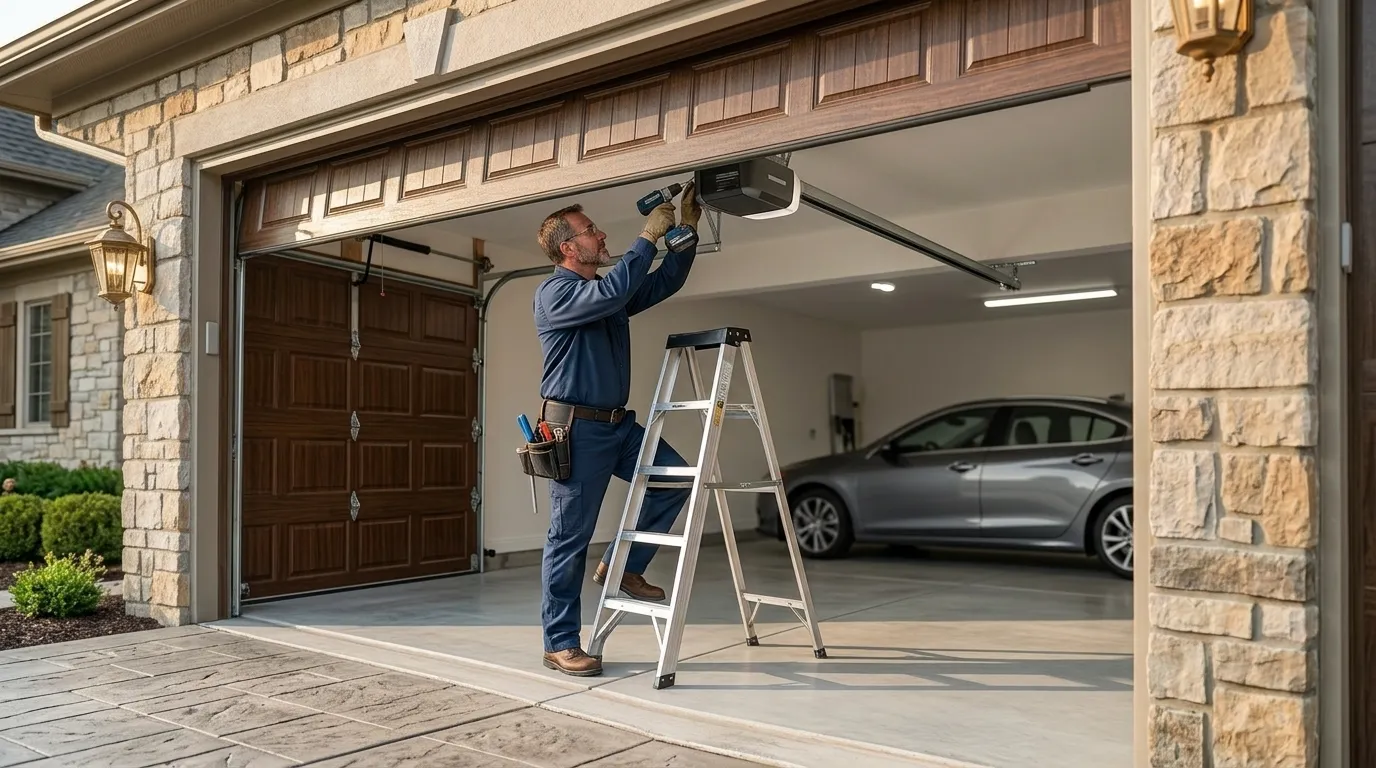
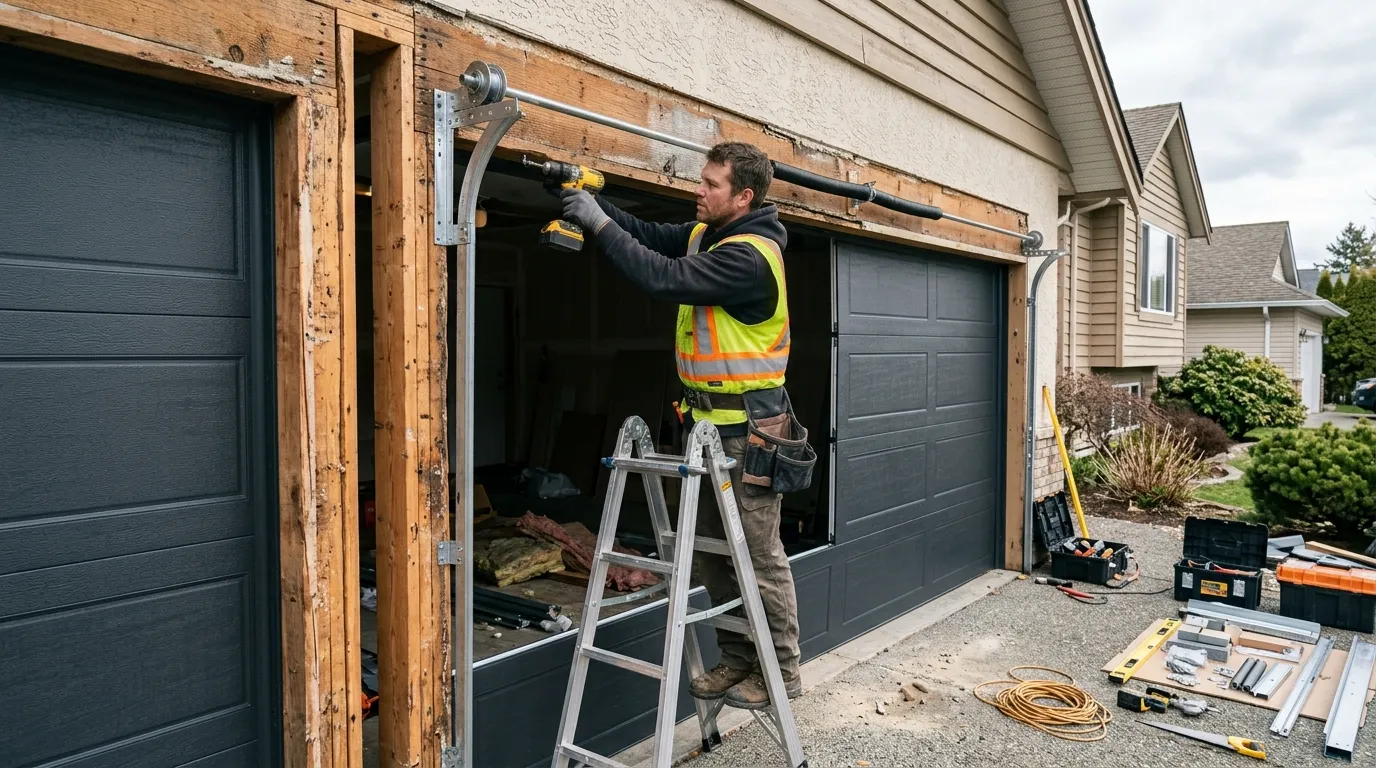
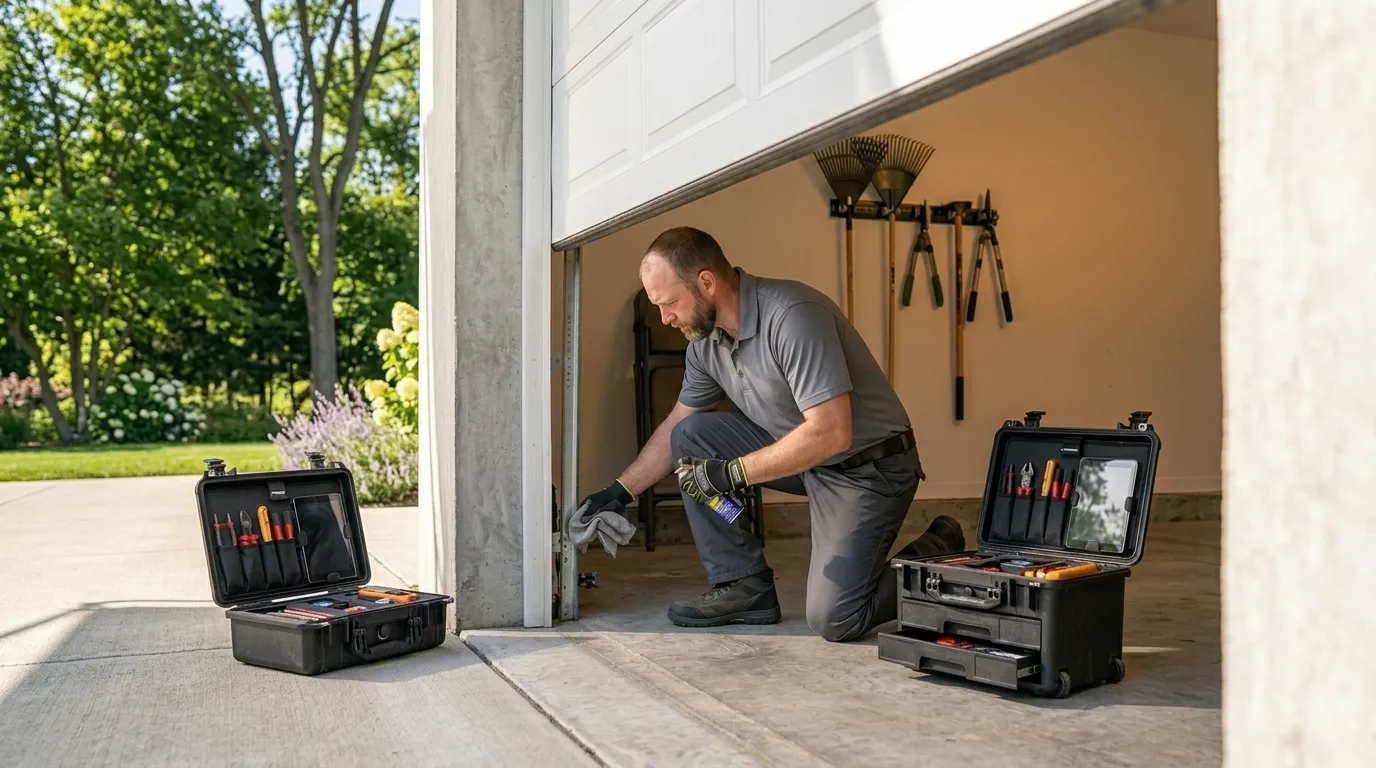
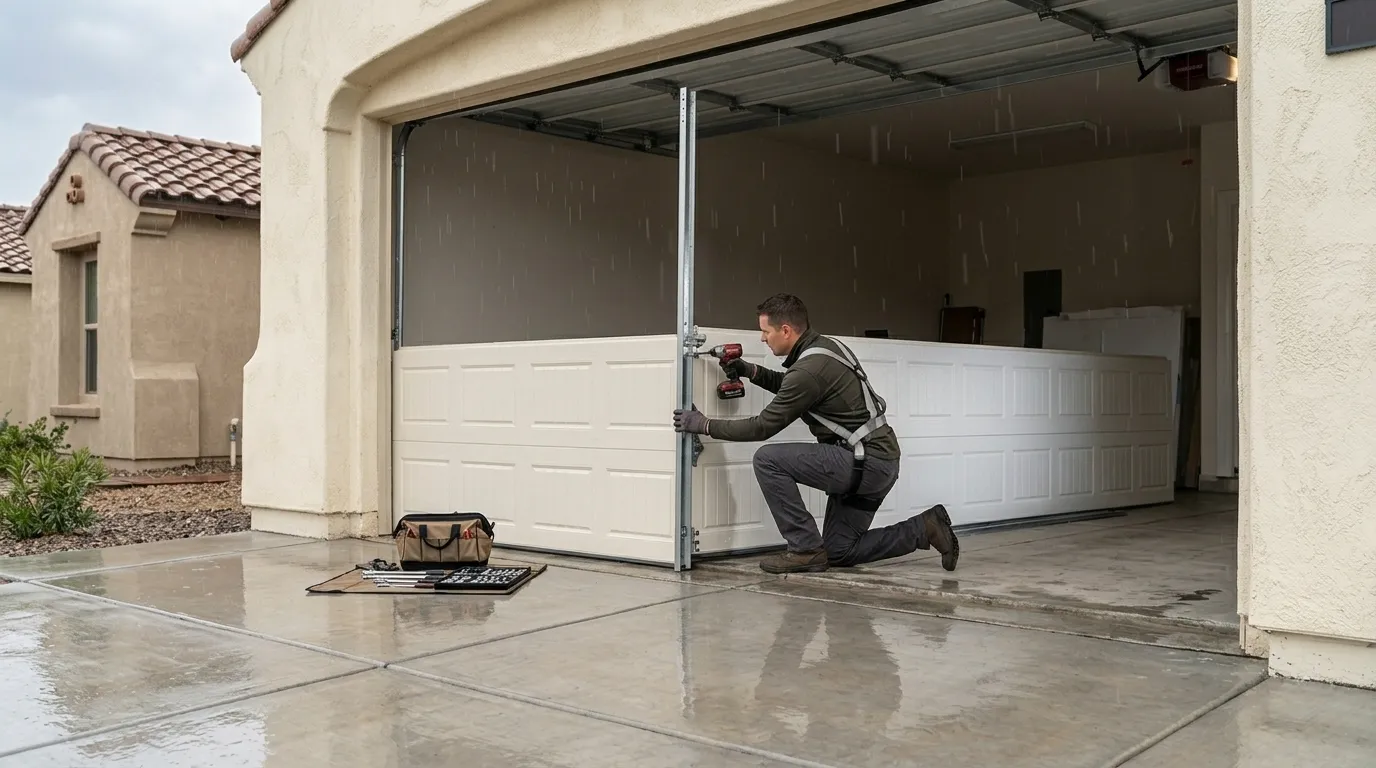
You can replace rollers on the bottom section of a door yourself without much risk, since those brackets aren't load-bearing on the cable side. The top rollers are a different story - they sit near the lift cable and the spring system, and on a 1983-era door that's likely still running the original torsion spring, which is under real tension. We'd rather you call for the top rollers and the track alignment than have you find out the hard way what a spring does when it lets go near your hand. If you're only swapping the bottom two, a socket wrench and fifteen minutes will do it. Anything past that, it's not worth the risk to save a service call.
What You Pay
We don't have a published roller price to quote you here - it depends on whether you're doing two bottom rollers or a full set of ten, and whether the track needs straightening at the same time. What we can tell you is the job comes from our Texas City base, about 12 miles out, so factor a short drive time into scheduling rather than same-hour arrival. A full roller set on an older door is usually a smaller job than people expect, especially compared to a spring replacement, and it's often the fix that also quiets down a door that everyone assumed just needed a new opener.